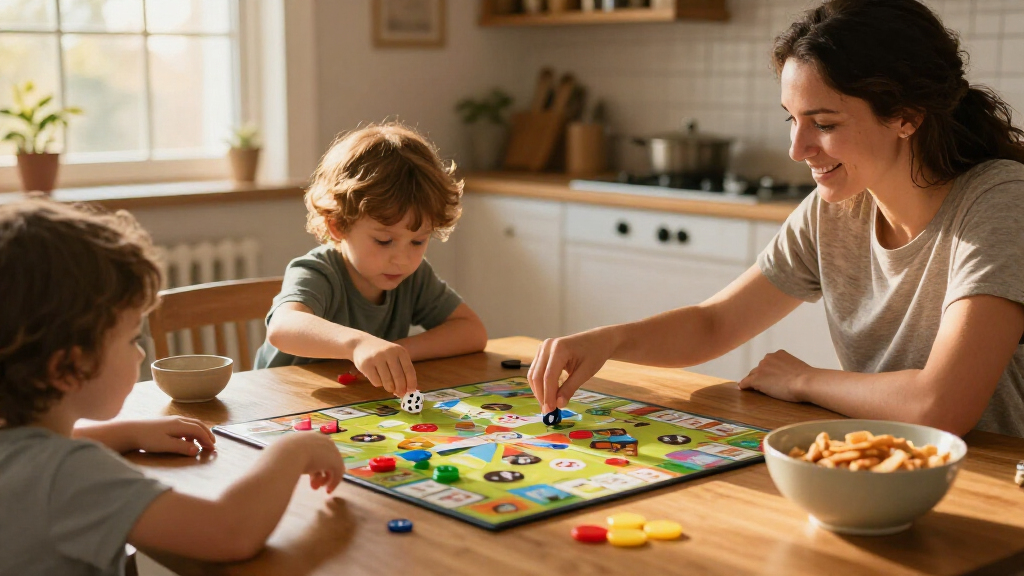

The best board games for families balance easy-to-learn rules with enough variety to keep different ages involved. I’d choose Hues and Cues as the best overall pick for its visual clues and broad group appeal; UNO is a simpler card-game alternative, while CATAN suits families ready for longer, more strategic sessions. The main tradeoffs are speed versus depth, luck versus planning, and whether everyone in your household enjoys words, puzzles, or competition. Read on for the full breakdown and my picks for different family game-night needs.

Turn the school run and nap time into listening time
- Thousands of audiobooks, podcasts and originals
- Listen on your phone, tablet or Echo — also offline
- Cancel anytime
Complete the kit


Key Takeaways
- Hues and Cues is my best overall pick because its color-clue format gives mixed-age groups a shared activity without requiring trivia knowledge or lengthy rules.
- UNO and Taco Cat Goat Cheese Pizza favor quick starts, but their fast turns and reaction demands may feel hectic for players who prefer calm, thoughtful play.
- CATAN and Monopoly ask for more time and patience than the lineup’s short card and party games, so they fit families who enjoy longer sessions and negotiation.
- The Uzzle 3.0 and Blank Slate offer different kinds of creative play: one centers on spatial puzzles, while the other rewards matching words and shared assumptions.
- Age labels alone do not predict a good family fit; reading comfort, attention span, group size, and tolerance for luck or competition matter just as much.
| The Original Tapple Family Word Game |  | Best for Fast Wordplay | Brand: USAOPOLY | Players: 2–8 | Age range: 8 years and up | VIEW LATEST PRICE | See Our Full Breakdown |
| The Uzzle 3.0 Board Game |  | Best for Mixed-Age Puzzle Races | Players: 1–4 | Age range: 4 years and up | Puzzles: 100 unique puzzles | VIEW LATEST PRICE | See Our Full Breakdown |
| Hues and Cues Color Guessing Board Game |  | Best for Creative Clues | Players: 3–10 | Age range: 8 years and up | Playing time: 30 minutes | VIEW LATEST PRICE | See Our Full Breakdown |
| Herd Mentality Board Game |  | Best for Large Family Gatherings | Players: 4–20 | Recommended age: 10 years and up | Game mechanic: Social deduction and majority guessing | VIEW LATEST PRICE | See Our Full Breakdown |
| CATAN Board Game, 6th Edition |  | Best for Strategic Family Game Night | Edition: 6th Edition | Players: 3–4 | Recommended age: 10 years and up | VIEW LATEST PRICE | See Our Full Breakdown |
| Do You Really Know Your Family? Family Card Game |  | Best for Conversation | Recommended age: 8 years and up | Players: 3–8 | Theme: Trivia | VIEW LATEST PRICE | See Our Full Breakdown |
| Clue Board Game for Ages 8 and Up, Reimagined Clue Game for 2-6 Players |  | Best for Mystery Fans | Recommended age: 8 years and up | Players: 2–6 | Estimated playing time: 45 minutes | VIEW LATEST PRICE | See Our Full Breakdown |
| Sorry! Board Game for Kids Ages 6 and Up |  | Best for Younger Kids | Recommended age: 6 years and up | Players: 2–4 | Estimated playing time: 120 minutes | VIEW LATEST PRICE | See Our Full Breakdown |
| Taco Cat Goat Cheese Pizza Card Game | 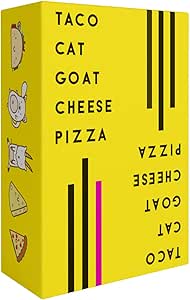 | Best for Quick, Lively Rounds | Recommended age: 7 years and up | Players: 2–8 | Play time: 10–15 minutes | VIEW LATEST PRICE | See Our Full Breakdown |
| Flip 7 Card Game |  | Best for Push-Your-Luck Play | Recommended age: 8 years and up | Players: 3 or more | Included components: 94 cards and rules | VIEW LATEST PRICE | See Our Full Breakdown |
| Mount Cleverest Original Edition True or False Trivia Game |  | Best for Large Groups | Game type: Trivia card game | Listed players: 2–12 | Maximum group size in description: Up to 30 | VIEW LATEST PRICE | See Our Full Breakdown |
| Mattel Games UNO Card Game for 2–10 Players, Ages 7+ |  | Best Classic Card Game | Players: 2–10 | Recommended age: 7 years and up | Included components: 112 cards and instructions | VIEW LATEST PRICE | See Our Full Breakdown |
| Blank Slate Board Game |  | Best for Wordplay | Players: 3–8 | Recommended age: 8 years and up | Playing time: 20–35 minutes | VIEW LATEST PRICE | See Our Full Breakdown |
| Hasbro Gaming Trouble Board Game for Ages 5 and Up |  | Best for Young Beginners | Players: 2–4 | Age range: 5 years and up | Edition: Classic Edition | VIEW LATEST PRICE | See Our Full Breakdown |
| Monopoly Classic Board Game with Storage Tray and Larger Tokens, Ages 8+, 2–6 Players |  | Best for Long Family Game Nights | Players: 2–6 | Recommended age: 8 years and up | Tokens: 8 larger metal tokens | VIEW LATEST PRICE | See Our Full Breakdown |
| board games for familie | Players | Included components | Recommended age | Language |
|---|---|---|---|---|
| The Original Tapple Family Wor | 2–8 | Portable Tapple wheel with built-in timer, 36 cards, instructions | — | English |
| The Uzzle 3.0 Board Game | 1–4 | — | — | English |
| Hues and Cues Color Guessing B | 3–10 | Game board, 100 color cards, 30 player pieces, rulebook, scoring frame | — | English |
| Herd Mentality Board Game | 4–20 | — | 10 years and up | — |
| CATAN Board Game | 3–4 | 19 terrain hexes, 6 sea frame pieces, 18 number discs, 4 player aids, 2 bonus victory point tiles, 96 wooden player pieces, 2 card trays, 2 dice, 120 cards, rules | 10 years and up | English |
| Do You Really Know Your Family | 3–8 | Cards | 8 years and up | English |
| Clue Board Game for Ages 8 and | 2–6 | Gameboard, 6 character tokens, 6 weapon tokens, 50 cards, solve envelope, notepad, 2 dice, and rules | 8 years and up | English |
| Sorry! Board Game for Kids Age | 2–4 | Gameboard, 12 pawns, 45 cards, and instructions | 6 years and up | — |
| Taco Cat Goat Cheese Pizza Car | 2–8 | Cards | 7 years and up | — |
| Flip 7 Card Game | 3 or more | 94 cards and rules | 8 years and up | English |
| Mount Cleverest Original Editi | — | Cards and 30 betting tokens | 6 years and up | — |
| Mattel Games UNO Card Game for | 2–10 | 112 cards and instructions | 7 years and up | English |
| Blank Slate Board Game | 3–8 | — | 8 years and up | English |
| Hasbro Gaming Trouble Board Ga | 2–4 | Gameboard, plastic game unit with Pop-O-Matic die roller, 16 pegs, and instructions | — | — |
| Monopoly Classic Board Game wi | 2–6 | — | 8 years and up | — |
More Details on Our Top Picks
The Original Tapple Family Word Game
Tapple is a strong fit for families who want short, lively rounds built around quick thinking rather than a long strategy session. Players name a word that fits a category and starts with an available letter before the built-in 10-second timer runs out, so everyone gets an active turn and the game moves briskly. Its 144 categories give the group plenty of prompts, while the wheel stores the cards for easier packing and cleanup. Compared with Hues and Cues, Tapple rewards fast recall instead of interpreting someone else’s clues, making it a better match for energetic word-game fans. That speed can also be its main drawback: players who need extra thinking time may feel rushed, and the youngest suggested players may find some categories challenging.
Pros:- Built-in timer keeps rounds brisk and gives turns a clear endpoint.
- Wheel stores the category cards, making the game easier to carry and put away.
- 144 categories provide variety across repeated play.
- Supports 2–8 players, covering small households and larger family groups.
Cons:- The 10-second limit can frustrate players who process words more slowly.
- Some categories may be difficult for younger players even though the game is listed for ages 8 and up.
- The product data lists no manufacturer warranty.
Best for: Families with children aged 8 and up who enjoy quick verbal challenges and want a portable game for short game-night rounds.
Not ideal for: Players who dislike timed pressure, need extra time to find words, or want a calm game with more room for discussion.
- Brand:USAOPOLY
- Players:2–8
- Age range:8 years and up
- Playing time:15 minutes
- Categories:144 across 36 cards
- Included components:Portable Tapple wheel with built-in timer, 36 cards, instructions
- Educational objective:Vocabulary and word association
- Language:English
Our verdict“Choose Tapple for a portable, fast-turn word game, but pick Hues and Cues if your family prefers collaborative clues over a timer.”
The Uzzle 3.0 Board Game
The Uzzle 3.0 suits families who want a visual puzzle challenge that can scale from easier tasks for young children to harder ones for adults. Players race to arrange, flip, spin, and combine patterned blocks to match a card, so the core activity is hands-on and quick to explain. Its 100 puzzles and four difficulty levels make it more adaptable across ages than Tapple, which asks everyone to keep up with the same timed word challenge. The tradeoff is that Uzzle’s race format favors quick visual processing and fast hands; a child or adult who needs more time may feel pressured rather than included. It also tops out at four players per game, so larger families need another activity or an additional copy. Pick it for mixed-age puzzle play, not for conversation or team strategy.
Pros:- Four difficulty levels let families select puzzles suited to different ages and abilities.
- 100 unique puzzles provide a range of challenges.
- The block-and-card format is quick to learn and keeps play physical and visual.
- Can be played solo or with up to four players.
Cons:- The race format can disadvantage players who work more slowly or dislike time pressure.
- A single game supports only four players, limiting use for larger gatherings.
- Pattern matching offers less social discussion than games such as Herd Mentality.
Best for: Families with children aged 4 and up who want hands-on pattern puzzles with difficulty levels that can challenge both kids and adults.
Not ideal for: Households with more than four players who want everyone in one game, or players who prefer wordplay and cooperative conversation to racing.
- Players:1–4
- Age range:4 years and up
- Puzzles:100 unique puzzles
- Difficulty levels:4
- Block size:1.7 × 0.8 inches
- Product dimensions:8 × 8 × 4 inches
- Weight:1.7 pounds
- Language:English
Our verdict“Choose The Uzzle 3.0 for adjustable, hands-on puzzle races with a small group, but look to Herd Mentality for larger family gatherings.”
Hues and Cues Color Guessing Board Game
Hues and Cues makes communication the main event: one player gives a one- or two-word clue, and others try to identify the intended shade among 480 colors. The simple clue format makes it approachable for families, while the many close shades create room for surprising interpretations and discussion. Compared with Tapple, it is less about racing to retrieve a word and more about how different people connect language to color. That gives it a gentler, more conversational feel, though it also means the result can depend heavily on how players interpret both clues and hues. The listed minimum of three players rules it out for a two-person household, and its 30-minute playtime asks for a longer gathering than a quick word game. Choose it for groups that enjoy creative communication, not precise answers.
Pros:- Supports groups of 3–10 players.
- One- or two-word clues make the basic rules easy to grasp.
- The 480-color board creates many possible targets and encourages nuanced clues.
- Prompts communication and creative interpretation across the group.
Cons:- Players may interpret colors and clues differently, making outcomes feel subjective.
- The 30-minute playing time is longer than Tapple’s listed 15 minutes.
- The product is designed for indoor play.
Best for: Families of three or more with children aged 8 and up who enjoy giving clues, comparing interpretations, and talking through creative guesses.
Not ideal for: Two-player households or anyone who wants a short, tightly scored game with little ambiguity.
- Players:3–10
- Age range:8 years and up
- Playing time:30 minutes
- Colors:480
- Included components:Game board, 100 color cards, 30 player pieces, rulebook, scoring frame
- Dimensions:2.5 × 10 inches
- Weight:1.22 kg
- Language:English
Our verdict“Choose Hues and Cues for a larger family that enjoys open-ended clue giving, but choose Tapple for faster, more direct word challenges.”
Herd Mentality Board Game
Herd Mentality is the clearest choice here for a big, mixed group: it supports 4–20 players and asks everyone to guess what the others will answer to a prompt. Matching the majority earns cows; being the odd one out brings the pink cow of doom. That shared-answer hook makes it easier to involve a crowd than The Uzzle 3.0, which caps play at four, and it needs less color interpretation than Hues and Cues. The game’s appeal depends on enjoying the group’s shared assumptions, though; families looking for individual strategy or puzzle-solving may find the choices repetitive. The recommended age is 10 and up, so it is a weaker fit for households centered on younger children. Choose it for lively gatherings where social guessing matters more than a traditional board-game challenge.
Pros:- Supports 4–20 players, making it suitable for larger family groups.
- The majority-answer goal is easy to explain and gets the whole group involved.
- The pink cow penalty adds a memorable consequence for going against the group.
- Includes 20 extra questions for added prompt variety.
Cons:- The stated age recommendation of 10 and up may exclude younger children.
- Enjoyment depends on players liking social guessing and group consensus.
- Less suited to players who want hands-on puzzles or deeper strategy, unlike The Uzzle 3.0 or CATAN.
Best for: Families and friends with at least four players, including teens and adults, who want a simple group game for gatherings.
Not ideal for: Families with mostly children under 10, small households, or players seeking strategic decisions rather than majority-guessing prompts.
- Players:4–20
- Recommended age:10 years and up
- Game mechanic:Social deduction and majority guessing
- Included extras:20 extra questions
- Material:Cardboard
- Dimensions:7.4 × 5.8 inches
- Weight:449 g
- Included rulebook:Printed
Our verdict“Choose Herd Mentality when your family needs one simple game for a large gathering, but skip it if younger children or strategic play are the priority.”
CATAN Board Game, 6th Edition
CATAN is the pick for families ready to spend more time building a shared game around resource gathering, trading, and expansion. Players develop roads, settlements, and cities while racing to 10 victory points; the modular hex board changes the island layout between games, giving repeat sessions a different map to work with. Compared with the short-round choices such as Tapple, CATAN asks for a 60–90-minute commitment and rewards planning, negotiation, and adapting to available resources. That makes it a better fit for older children and adults who want a substantial game-night centerpiece, but a less convenient choice for younger players or a quick after-dinner round. The base game supports only three or four players. A separately sold extension raises that limit to five or six, adding a separate purchase for larger families.
Pros:- Combines resource gathering, trading, and building for varied strategic decisions.
- Modular hex tiles change the board layout between sessions.
- Wooden player pieces and a wide set of cards and tiles support a substantial game experience.
- A separately sold extension can expand play to five or six players.
Cons:- The 60–90-minute playing time is a larger commitment than the other games in this batch.
- The base game supports only 3–4 players.
- Players need the separately sold extension to include five or six people.
Best for: Families with children aged 10 and up who have three or four players and want a longer game built around trading and strategic expansion.
Not ideal for: Families seeking a quick game, households with fewer than three or more than four players without an extension, or groups with younger children.
- Edition:6th Edition
- Players:3–4
- Recommended age:10 years and up
- Playing time:60–90 minutes
- Game mechanics:Trading and area development
- Included components:19 terrain hexes, 6 sea frame pieces, 18 number discs, 4 player aids, 2 bonus victory point tiles, 96 wooden player pieces, 2 card trays, 2 dice, 120 cards, rules
- Language:English
- Manufacturer:Asmodee
Our verdict“Choose CATAN for an older family that wants a long, strategic game-night centerpiece, but choose Herd Mentality for larger groups or Tapple for a quicker round.”
Do You Really Know Your Family? Family Card Game
Do You Really Know Your Family? is the best fit here when the point of family game night is talking and laughing, rather than keeping score through a complicated strategy. Its trivia prompts and silly challenges give kids, teens, and adults ways to join in, while the small tin is easier to bring along than a full board game such as Clue. That open-ended, social feel sets it apart from Flip 7, where players focus more on push-your-luck decisions. The tradeoff is that the fun depends on players being willing to answer questions and take part in challenges; it offers less of a structured game arc than Clue or Sorry!. It also needs at least three players, so it is a poor match for a parent-and-child game night with only two people.
Pros:- Trivia prompts and silly challenges encourage family interaction.
- Designed for mixed-age groups, with a recommended age of eight and up.
- Compact tin makes the cards convenient to store and carry.
- Requires no batteries or electronic setup.
Cons:- Requires at least three players, ruling it out for smaller groups.
- Conversation-driven play may not suit players who prefer structured strategy.
- Listed for indoor use only.
Best for: Families of three to eight who enjoy conversation prompts and playful challenges more than tactical competition.
Not ideal for: Two-player households or families who prefer a clear strategy, score, and winner over discussion-based play.
- Recommended age:8 years and up
- Players:3–8
- Theme:Trivia
- Included components:Cards
- Material:Cardstock
- Container:Tin
- Language:English
- Power:Manual; no batteries required
- Dimensions:2 x 4.7 x 6.7 inches
Our verdict“Choose it for a three-or-more-player family that wants a portable, conversation-led alternative to the more structured play of Clue.”
Clue Board Game for Ages 8 and Up, Reimagined Clue Game for 2-6 Players
Clue earns its place for families who want a longer, clue-driven game rather than the quick reactions of Taco Cat Goat Cheese Pizza or the conversation prompts in Do You Really Know Your Family?. Players track evidence and use deduction to identify the suspect, room, and weapon, giving older children a reason to reason through each turn instead of relying only on luck. The reimagined setting, character pieces, and weapon tokens add atmosphere, while Clue cards can speed up the search and introduce surprises. At about 45 minutes, though, it asks for more time and attention than a compact card game. Its murder-mystery theme may also be a mismatch for younger or sensitive players, despite the recommended age of eight, and newcomers may need help following the deduction process.
Pros:- Deduction and note-taking give players more to do than simply race or react.
- Supports two to six players, including two-player sessions.
- Clue cards add twists and can help move the investigation along.
- Includes detailed character and weapon pieces alongside the illustrated board.
Cons:- Its roughly 45-minute play time is a larger commitment than Taco Cat Goat Cheese Pizza.
- The mystery rules and tracking can be harder for younger players to follow without help.
- Murder-mystery subject matter will not suit every family.
Best for: Families with children eight and up who enjoy mysteries, note-taking, and a more involved game night with two to six players.
Not ideal for: Families seeking a very short, low-focus game, or households with younger children who may not enjoy a murder-mystery theme.
- Recommended age:8 years and up
- Players:2–6
- Estimated playing time:45 minutes
- Game mechanics:Deduction, dice rolling, elimination
- Included components:Gameboard, 6 character tokens, 6 weapon tokens, 50 cards, solve envelope, notepad, 2 dice, and rules
- Language:English
- Material:Plastic
- Dimensions:15.75 x 10.5 inches
- Power:Manual; no batteries required
Our verdict“Pick Clue when your family wants a substantial mystery to solve together and has more time than a fast card game requires.”
Sorry! Board Game for Kids Ages 6 and Up
Sorry! is a family-friendly pick for introducing younger children to turn-taking, simple choices, and the highs and lows of a race game. Players move pawns toward home, but card draws and the chance to send an opponent back to start keep the outcome unpredictable. Compared with Clue, it asks for less deduction and works at a younger recommended age; compared with Taco Cat Goat Cheese Pizza, it does not depend on lightning-fast reactions. That makes it easier for mixed ages to play together, though the reversals can feel frustrating to children who dislike losing progress. It supports only two to four players, and the listed play time of 120 minutes makes it a less reliable choice when the family wants a short game.
Pros:- Recommended from age six, younger than Clue’s listed starting age.
- Simple racing rules make it approachable for children and adults.
- Card choices create movement changes and opportunities for strategic decisions.
- No batteries are required.
Cons:- Supports only two to four players, fewer than Taco Cat Goat Cheese Pizza.
- Sending a pawn back to start can frustrate children who dislike losing progress.
- The listed estimated playing time is 120 minutes, a long commitment for a children’s game.
Best for: Families with children six and up who want a straightforward board race with simple rules and room for light strategy.
Not ideal for: Large families, players who dislike setbacks, or anyone looking for a reliably short game-night option.
- Recommended age:6 years and up
- Players:2–4
- Estimated playing time:120 minutes
- Game mechanics:Racing, modular board
- Included components:Gameboard, 12 pawns, 45 cards, and instructions
- Educational objectives:Critical thinking and strategy
- Material:Plastic
- Dimensions:10.51 x 10.51 inches
- Power:Manual; no batteries required
Our verdict“Choose Sorry! for a small family with younger children who enjoy a simple race and can handle setbacks along the way.”
Taco Cat Goat Cheese Pizza Card Game
Taco Cat Goat Cheese Pizza suits families who want a lively game that can be explained quickly and played without setting up a board. Players chant while laying cards, then race to slap the pile when the spoken word matches the card; action cards add movement and surprise. Its two-to-eight-player range makes it more flexible for groups than Sorry!, while its 10–15-minute play time is a much shorter commitment than Clue. That speed comes with a real tradeoff: success depends on quick reactions, so younger players or anyone uncomfortable with a fast scramble may feel left behind. The pile-slapping action can also get hectic. It is a strong choice for an energetic break or travel, but less suited to families seeking careful strategy or calm conversation.
Pros:- Simple rules make it quick to teach and start playing.
- A 10–15-minute play time fits short breaks and repeat rounds.
- Supports two to eight players, a wider range than Sorry!.
- Compact card format is easy to take on trips.
Cons:- Fast reactions and slapping the pile can disadvantage some players.
- The rapid, noisy play may not suit families looking for a calm game.
- Requires at least two players and offers little for a solo player.
Best for: Families with children seven and up who want quick, energetic rounds for two to eight players, including during travel.
Not ideal for: Players who prefer quiet, thoughtful turns or have difficulty reacting quickly and joining a fast-paced pile-slapping game.
- Recommended age:7 years and up
- Players:2–8
- Play time:10–15 minutes
- Included components:Cards
- Edition:Original
- Manufacturer:Dolphin Hat Games
- Model number:73626
Our verdict“Pick Taco Cat Goat Cheese Pizza for short, high-energy group play, but choose Clue or Do You Really Know Your Family? for a calmer, more thoughtful evening.”
Flip 7 Card Game
Flip 7 gives families a compact card game built around one recurring decision: bank the points or risk another draw. Players try to reveal seven different numbers in a row, with action and modifier cards changing how a round unfolds. That push-your-luck tension makes it more decision-focused than Taco Cat Goat Cheese Pizza, which rewards speed, and less involved than Clue, which asks players to track a mystery over a longer session. The portable format is handy for travel, but the game is listed for three or more players, so it cannot fill a two-player slot the way Clue can. A duplicate number can wipe out a player’s progress for the round, which adds suspense but can frustrate children who prefer steady progress.
Pros:- Press-your-luck decisions give players a meaningful choice between banking points and risking another card.
- Action and modifier cards vary the rounds.
- Travel-sized format is convenient to carry.
- A simple card-based setup avoids a large board.
Cons:- Listed for three or more players, so it does not suit two-player game nights.
- Drawing a duplicate number can bust a player out of the round.
- The 200-point win condition may require repeated rounds.
Best for: Families with at least three players, ages eight and up, who enjoy weighing risk against a chance to score more.
Not ideal for: Two-player households or players who dislike losing a round’s progress after a duplicate draw.
- Recommended age:8 years and up
- Players:3 or more
- Included components:94 cards and rules
- Material:Paper
- Language:English
- Special feature:Portable, travel-sized
- Model year:2025
- Winning condition:First player to reach 200 points
Our verdict“Choose Flip 7 for a three-or-more-player family that enjoys risk-taking in a portable format, and skip it if you need a two-player game.”
Mount Cleverest Original Edition True or False Trivia Game
For families who want a quiz that can include the whole gathering, Mount Cleverest is a more group-friendly choice than Trouble, which supports just two to four players. Its true-or-false questions keep the basic decision simple for younger participants, while betting tokens add a small layer of risk: players can commit to an answer instead of only guessing. The portable box also suits trips and parties where a full board setup would be inconvenient. There is a player-count wrinkle, though: the specs list 2–12 players, while the description says it can accommodate groups of up to 30, so I would check the rules before planning for a very large group. Trivia knowledge and guesswork are central, which makes this less appealing for families who prefer wordplay or hands-on challenges.
Pros:- True-or-false questions offer a straightforward entry point for younger players.
- Thirty betting tokens add a choice beyond simply answering each question.
- Compact boxed format is suited to travel and party play.
- Description says the game can include groups of up to 30.
Cons:- The listed limit of 2–12 conflicts with the description’s claim of groups up to 30.
- Trivia recall and guessing may leave some family members at a disadvantage.
- The cardboard components may be less suited to rough handling than sturdier pieces.
Best for: Families who want a portable trivia game for mixed-age gatherings, parties, or travel and are comfortable checking the player limit before inviting a large group.
Not ideal for: Families who avoid trivia-based play, or anyone who needs a clearly confirmed capacity above 12 players.
- Game type:Trivia card game
- Listed players:2–12
- Maximum group size in description:Up to 30
- Recommended age:6 years and up
- Included components:Cards and 30 betting tokens
- Material:Cardboard
- Portability:Portable
- Item dimensions:1.75 × 5.75 × 6.5 inches
Our verdict“Choose Mount Cleverest for portable, trivia-led family gatherings, but confirm the player limit if your group exceeds 12.”
Mattel Games UNO Card Game for 2–10 Players, Ages 7+
UNO earns its place for families who want familiar rules that work with a broad range of group sizes. Players match by color or number, so the basic turn is easier to teach than the property buying and money management in Monopoly Classic. Action and wild cards add tactical surprises without changing the central matching task, and the three customizable wild cards let a household add its own rules. The included graphic color symbols can help colorblind players identify cards, a useful distinction from games where colors carry information without another visual cue. UNO supports two to ten players, though the recommended age is seven and up, so it is not the best fit for families seeking a game for preschoolers. The 500-point win condition can also stretch play across multiple rounds.
Pros:- Color- and number-matching rules are straightforward to teach.
- Supports two to ten players, giving it more group flexibility than Trouble.
- Graphic symbols help players distinguish colors.
- Three customizable wild cards allow families to create house rules.
Cons:- Recommended for ages seven and up, limiting its fit for younger children.
- The first player or team must reach 500 points, which can require multiple rounds.
- Action cards can create abrupt reversals that may frustrate players who prefer steady progress.
Best for: Families looking for a familiar, easy-to-teach card game that can accommodate anything from a small household to a group of ten.
Not ideal for: Families with children under seven, or players who want a board-based game with a fixed, short session.
- Players:2–10
- Recommended age:7 years and up
- Included components:112 cards and instructions
- Special features:Graphic color-identifying symbols and 3 customizable Wild Cards
- Win condition:First player or team to reach 500 points
- Language:English
- Brand:Mattel Games
- Model number:GDJ85
Our verdict“Pick UNO for an adaptable family card game with simple matching rules, provided your youngest players meet its age recommendation.”
Blank Slate Board Game
Blank Slate is a strong fit for families who enjoy guessing how another person thinks. Each player completes a phrase and tries to match someone else’s answer without giving hints, so success depends on shared associations rather than trivia knowledge. That makes it a different kind of conversation game from Mount Cleverest, where players respond to factual true-or-false prompts. The set includes 500 cues and reusable dry-erase slates, giving groups plenty of prompts without needing fresh paper for every round. It supports three to eight players, but that minimum rules out a two-person household unless they bring in another player. The age recommendation is eight and up, and small parts may pose a choking hazard, so it is a less suitable choice for families with very young children.
Pros:- Phrase-completion rules are quick to explain and focus play on shared associations.
- Five hundred cues provide a broad pool of prompts.
- Reusable dry-erase slates reduce the need for disposable answer sheets.
- Supports groups of up to eight players.
Cons:- Requires at least three players, unlike UNO, which can be played by two.
- Wordplay and matching answers may be less accessible to younger children or players with different language skills.
- Small parts may pose a choking hazard.
Best for: Families and friend groups of three to eight who enjoy word associations, shared jokes, and reading one another’s answers.
Not ideal for: Two-player households, families with children under eight, or anyone looking for a game centered on movement or strategy rather than words.
- Players:3–8
- Recommended age:8 years and up
- Playing time:20–35 minutes
- Cue cards:250 double-sided cards with 500 cues
- Other contents:Scoreboard, 8 dry-erase slates, and rules
- Game mechanics:Word association, guessing, and deduction
- Language:English
- Format:Standard Edition
Our verdict“Choose Blank Slate for a group of at least three that would rather compare word associations than compete over trivia or board movement.”
Hasbro Gaming Trouble Board Game for Ages 5 and Up
Trouble suits families who want a simple first board game: players press the Pop-O-Matic bubble to roll and move their pegs around the track. That built-in die roller keeps the die attached to the game and makes the main action easy for young children to follow. Its recommended age of five and up is lower than UNO and Blank Slate, making Trouble the more natural choice for families introducing board games to younger players. The rules offer little strategic control, however, because movement comes from a die roll. A player can also send an opponent’s peg back to start by landing on its space, which adds excitement but can make progress feel fragile. With a two-to-four-player limit, it is less flexible for larger gatherings than Mount Cleverest.
Pros:- Pop-O-Matic roller makes the die easy to use and keeps it attached to the game.
- Simple movement rules are accessible to younger players.
- Classic rules and optional Power Up spaces offer two ways to play.
- Designed for children and adults to play together.
Cons:- Supports only two to four players, fewer than UNO or Mount Cleverest.
- Dice-driven movement gives players limited control over their progress.
- Opponents can send a peg back to start, which may frustrate children.
Best for: Families with children aged five and up who want a simple, tactile race-around-the-board game for two to four players.
Not ideal for: Large families, groups seeking meaningful strategy, or players who dislike losing progress when an opponent lands on their space.
- Players:2–4
- Age range:5 years and up
- Edition:Classic Edition
- Included components:Gameboard, plastic game unit with Pop-O-Matic die roller, 16 pegs, and instructions
- Optional rules:Power Up spaces version
- Brand:Hasbro
- Model number:A5064
Our verdict“Choose Trouble as a straightforward first board game for younger children, not as a strategy game or large-group option.”
Monopoly Classic Board Game with Storage Tray and Larger Tokens, Ages 8+, 2–6 Players
Monopoly Classic is the pick here for families who want property trading and a longer session of buying, collecting rent, and managing money. Compared with Trouble, where turns mainly advance pegs around a track, Monopoly asks players to make decisions about properties and keep track of cash. The storage tray helps keep the money and cards sorted between turns, while larger metal tokens, houses, and hotels are easier to handle than small pieces. It is still a more involved choice than UNO or Trouble: the recommended age is eight and up, and players need to manage several types of components and transactions. The two-to-six-player range also makes it less useful for large gatherings. This edition suits households ready for a substantial board-game session, not families seeking a quick, low-complexity round.
Pros:- Property buying and rent collection give players decisions beyond dice-driven movement.
- Storage tray helps organize money and cards during play and between sessions.
- Larger metal tokens and larger houses and hotels are easier to handle.
- Includes family game records.
Cons:- Money management and multiple components make it more involved than Trouble or UNO.
- Recommended age is eight and up, limiting its fit for younger children.
- Supports only two to six players, so it is not suited to large gatherings.
Best for: Families with children aged eight and up who enjoy property trading, money management, and longer sessions around a shared board.
Not ideal for: Families seeking a quick, simple game for young children or a title that can include more than six players.
- Players:2–6
- Recommended age:8 years and up
- Tokens:8 larger metal tokens
- Components:Game board, money, Title Deeds, houses, hotels, Banker’s storage tray, and family game records
- Game type:Property trading board game
- Storage:Banker’s storage tray
- Brand:Hasbro
Our verdict“Choose this Monopoly edition for an older family group that wants property trading and organized components, rather than a quick game with simple turns.”
How We Picked
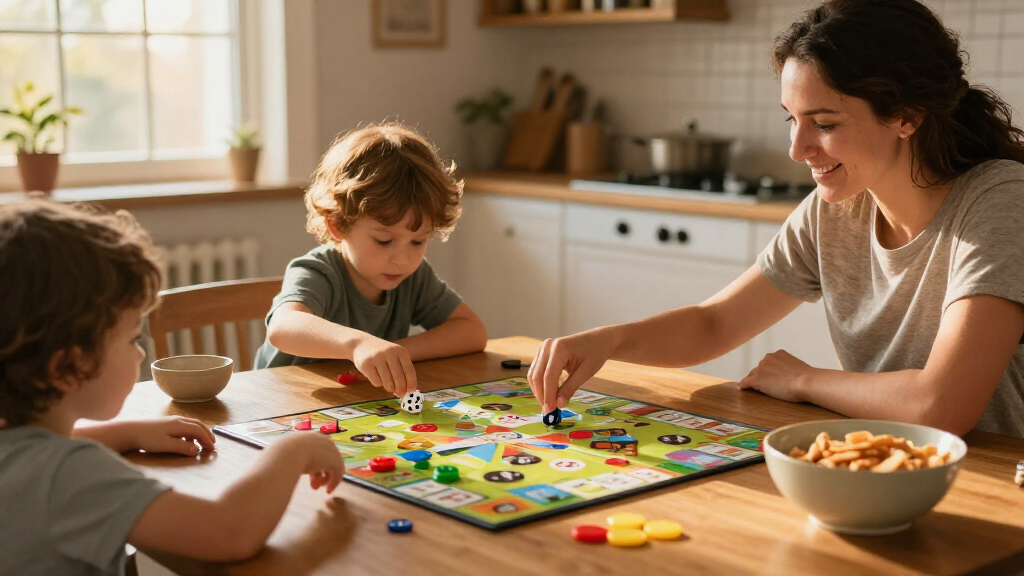
I compared these games by how readily a family can get started, how well their play styles suit mixed ages, and how much the rules ask players to read, plan, react, or know in advance. I also weighed group-size flexibility, likely session length, replay variety, and whether the game can keep less experienced players involved. A game that works with a wide range of ages and does not require a specialist interest ranks ahead of one with a narrower audience.
That puts Hues and Cues first for its approachable, group-friendly format. Short, familiar card games such as UNO earn their place as convenient picks, while titles such as CATAN rank lower for general family use because they ask for more time and strategic attention. The ranking reflects fit for a broad family audience, not a claim that every household will prefer the same style.
Factors to Consider When Choosing Best Board Games For Families
Before choosing a game, I’d match its demands to how your household actually plays together. A title that sounds appealing on the box may not suit your group’s ages, patience, or appetite for competition.
Match the Rules to Your Youngest Regular Player
Age guidance is a useful starting point, but it does not tell you whether a child can follow the turn order, read cards independently, or stay focused through a full session. Think about the youngest person who will play often, not only the oldest child in the household. A game with simple rules can still be frustrating if it relies on quick reading or rapid reactions. Adults can help younger players, but doing so every turn may shift the experience from shared play to coaching. If ages vary widely, favor games where players can participate without equal reading or strategy skills. Save more demanding rules for households that enjoy teaching and learning together.
Choose a Session Length Your Family Will Finish
Play time affects whether a game becomes a weeknight habit or an occasional weekend event. A longer game can give players room to plan and negotiate, but it also makes early setbacks harder to shrug off. Short games are easier to fit between activities and can be replayed with different outcomes, though some depend on speed or repeated luck. Check whether the game has natural stopping points or a clear end condition before you buy. If your family often gets interrupted, a game that wraps up cleanly is usually a better fit than one that builds toward a long finale. The aim is not simply the shortest game, but one your group will willingly finish.
Pick a Play Style That Includes Everyone
Families often focus on the theme and overlook what players must do each turn. Word games reward language play, trivia favors players with broad knowledge, and spatial puzzles suit people who like visual problem-solving. Reaction games can be lively, but they may exclude players who need more time to process a prompt or move. Consider what your group enjoys doing together rather than assuming every family wants direct competition. A mix of cooperative-feeling discussion, personal choices, and light rivalry can help a game appeal across ages. If one player’s strength is likely to dominate, look for a format where guessing, luck, or creative answers give others a way to stay involved.
Check Group Size and Table Space
A game that works well for four people may feel awkward with two or overcrowded with a large gathering. Confirm the player range against your usual group, and think about whether the game needs everyone to act at once or take turns around the table. Large boards, cards, tokens, and puzzle pieces can be difficult to manage on a small surface. Compact card games are easier to bring on trips, while board-heavy games may need a dedicated table and storage space. Also consider how often your group changes; a flexible player count can matter more than a feature you use only occasionally. For gatherings, prioritize games that keep waiting players engaged rather than leaving long gaps between turns.
Balance Replayability Against Complexity
Some games stay fresh through changing clues, answers, or player choices; others rely on a familiar loop that works best as a short, casual diversion. More rules do not automatically mean more replay value, just as a simple game is not automatically disposable. Ask whether your family enjoys learning new strategies or prefers to get straight to playing. A game with variable prompts can suit a household that repeats game night often, while a predictable classic may be welcome when ease matters most. Avoid buying several titles that offer the same pace and interaction, since variety across a collection makes it easier to match a game to the day. Choose depth when your group wants to master a system, and simplicity when low setup friction is the real benefit.
Think About Competition and Bad-Luck Tolerance
Family games can bring out strong feelings, especially when a player loses progress or is targeted by others. Random draws and dice keep outcomes unpredictable, but they can leave strategic players feeling that their choices do not matter. Negotiation and direct competition create memorable moments for some groups and tension for others. Consider how your family responds to take-that moves, elimination, or a wide gap between the leader and the rest of the table. If younger players are still learning to lose gracefully, a shorter game can make setbacks easier to accept. Agreeing on the kind of rivalry everyone enjoys is often more useful than choosing the most competitive game available.
Frequently Asked Questions
Which of these games is the easiest choice for a family with different ages?
I’d start with Hues and Cues if your group can enjoy giving and interpreting visual clues together. It does not depend on trivia expertise or a long strategy lesson, which can help narrow the gap between adults and children. For a more familiar card-game format, UNO is another accessible option, though players still need to follow changing rules and card effects. The best fit depends on whether your family prefers open-ended clues or a quick turn-by-turn contest. Check the youngest regular player’s comfort with the game’s reading and pace before deciding.
What should I choose for a family game night with more than six players?
Start by checking the listed player range rather than assuming a game scales well just because it is a party title. Herd Mentality is designed for larger groups, while quick word or card games may also work if their player limits fit your gathering. A large group can make games with long individual turns feel slow, even when everyone is technically included. Look for simultaneous answers, short rounds, or ways for the whole table to stay engaged while one person acts. If your group size changes often, favor a game that accommodates both your usual household and occasional guests.
Are strategy games like CATAN a good fit for a family with younger children?
They can be, if the children enjoy planning, negotiation, and longer turns, but age alone is not a reliable guide. A younger player may need help understanding resource choices or handling setbacks, and that support can change the pace for everyone. If your family is new to strategy games, consider whether the group is happy to learn rules together and play through a longer session. A lighter party or card game may be a better first purchase when attention spans vary. Choose CATAN for a household that wants a shared strategic challenge, not simply because it is a well-known board game.
Should I buy a fast card game or a longer board game for weeknight play?
For a busy evening, a quick card game is easier to set up, pause between rounds, and fit around other plans. Titles such as UNO and Flip 7 offer a different commitment from longer board games like CATAN or Monopoly. A long game can still work on a weeknight if your family has a reliable block of time and enjoys staying with one session. Think about interruptions and cleanup as well as the advertised play experience. If you are unsure, a short game is the lower-commitment way to establish a regular game-night routine.
How do I avoid choosing a game that leaves one family member out?
Look beyond the age range and ask what each player needs to do to participate: read quickly, remember facts, solve visual puzzles, or react fast. A game can be easy for most people and still disadvantage one player because of a specific skill demand. Consider whether adults can support younger players without making decisions for them, and whether there are ways to take a turn at a comfortable pace. It also helps to rotate game types rather than choosing only trivia, wordplay, or strategy titles. When possible, include the family in the choice so the game’s style feels appealing before the first round begins.
Conclusion
Hues and Cues is my best overall recommendation for families seeking an approachable game that invites discussion across ages. For best value in an easy-to-play format, I’d choose UNO, especially for households that want a familiar, portable card game. CATAN is my best premium-style pick for families who want a more involved strategic session, while Sorry! or Trouble can suit beginners who prefer straightforward, luck-driven turns. For specific needs, choose Herd Mentality for a larger group, The Uzzle 3.0 for spatial puzzle play, or Blank Slate for word-based guessing. Match the game to your family’s time, group size, and preferred style of interaction, and the right choice should be clear.