Choosing the best developmental toys for kids often means balancing educational value with sheer fun. My top recommendation is the LeapFrog Learning Friends 100 Words Book for its exceptional audio engagement and word retention benefits. For hands-on learners, the Montessori Busy Board offers superior fine motor practice, while Wooden Building Blocks remain the gold standard for open-ended spatial reasoning. The main tradeoff here is between structured learning aids and free-play tools; the former builds specific skills, while the latter fosters creativity. Continue reading to see how these and other options stack up against one another.

Turn the school run and nap time into listening time
- Thousands of audiobooks, podcasts and originals
- Listen on your phone, tablet or Echo — also offline
- Cancel anytime
Complete the kit


Key Takeaways
- The LeapFrog 100 Words Book outperformed other flashcard sets because it combines audio feedback with tactile page-turning, reducing the need for constant parental guidance.
- Montessori-inspired wooden toys like the Busy Board and Shape Sorter offer longer lifespan and durability compared to battery-operated electronic toys, which often break after short use.
- Stacking cups and rings (like The First Years and Sassy) are far more versatile than single-purpose toys, allowing children to progress from color matching to complex engineering challenges.
- Electronic toys with talking features (such as Aullsaty or Airbition) provide immediate feedback, which helps with early language association, but they lack the open-ended play value of wooden blocks.
- Fine motor skills are best developed through varied resistance levels; Spike the Fine Motor Hedgehog stands out by offering multiple difficulty settings in one compact unit.


| developmental toys for kid | Brand | Age range | Material |
|---|---|---|---|
| The First Years Stack & Count | The First Years | 9 months and up | Made without BPA |
| BLCXTOYZ Montessori Shape Sort | BLCXTOYZ | 12 months–10 years (listed) | — |
| Aullsaty Talking Flash Cards f | Aullsaty | — | — |
| LeapFrog Learning Friends 100 | LeapFrog | 18 months–4 years | — |
| Grarain Montessori Busy Board | Grarain | — | Wood |
| Yetonamr Montessori Wooden Sta | Yetonamr | 1-3 years | Wood |
| Fisher-Price Baby’s First Bloc | Fisher-Price | 6 months and up | BPA-free plastic |
| Airbition Talking Flash Cards | Airbition | 12 months–6 years | Plastic |
| Learning Resources Spike the F | Learning Resources | 18 months and up | Plastic |
| Melissa & Doug 100-Piece Woode | — | 2+ years | Solid wood |
| Melissa & Doug First Bead Maze | Melissa & Doug | 12+ months | Wood, Plastic, Soft-coated Wire |
| Sassy Stacks of Circles Stacki | Sassy | 6-24 months | — |
| Play-Act Farm Number Train Mon | Play-Act | — | Plastic |
| hahaland Montessori Cloth Fish | hahaland | Toddler | — |
| Melissa & Doug Wooden Shape So | Melissa & Doug | — | Wood |
More Details on Our Top Picks
The First Years Stack & Count Stacking Cups, 8 Count
For toddlers just beginning to stack, nest, and explore cause and effect, these eight cups offer more than a single play pattern. Children can build towers, fit the cups together, or watch water drain through the holes; embossed numbers add a simple counting prompt as they play. Compared with the Fisher-Price Baby’s First Blocks, this set is more open-ended and works for bath play, but it offers less variety in shape-matching challenges. The cups are made without BPA and are easy to clean, which suits frequent handling and water use. The tradeoff is that the learning stays at an early level: children who have mastered basic stacking may move on sooner than they would with a shape sorter or multi-activity toy.
Pros:- Eight cups support stacking, nesting, and open-ended pretend play
- Embossed numbers introduce counting and number recognition during play
- Drain holes make the cups useful for water and bath play
- Made without BPA and easy to clean
Cons:- The basic stacking activities may hold less interest as children grow
- Does not offer the varied shape-matching tasks found in a dedicated sorter
Best for: Caregivers of babies and young toddlers who want a simple, washable toy for stacking, early counting, and supervised water play
Not ideal for: Families seeking longer-term puzzles or more advanced problem-solving, since the play centers on basic stacking, nesting, and pouring
- Brand:The First Years
- Cup count:8
- Material:Made without BPA
- Age range:9 months and up
- Number feature:Embossed numbers
- Water-play feature:Holes for pouring and draining
Our verdict“Choose these cups for flexible, easy-to-clean early play, but pick a shape sorter if you want more structured challenges.”
BLCXTOYZ Montessori Shape Sorter Activity Cube – 6 Piece Multi-Sensory Learning Toy for Toddlers
This activity cube brings several early-learning actions into one compact set: toddlers can handle textured pieces, sort shapes, stack rings, and explore stretchy bands. That mix gives it a broader sensory and fine-motor focus than The First Years Stack & Count Stacking Cups, which is simpler and better suited to stacking and water play. The cube’s variety may help keep a curious toddler moving between tasks without batteries or electronic prompts. Its limits are just as clear: the six-piece count means fewer components than a larger building set, and the listed age range extends well beyond the toddler stage even though the activities are aimed at early learners. I’d choose it for a young child who benefits from tactile variety, not for families looking for a toy that scales into complex construction or outdoor play.
Pros:- Combines shape sorting, stacking rings, textured pieces, and stretchy bands
- Supports fine-motor practice and hand-eye coordination through hands-on tasks
- No batteries are required
- Compact format suits short independent-play sessions
Cons:- Six pieces provide less scope for extended building than a larger block set
- Designed for indoor use
- The toddler-focused activities may lose appeal as a child grows
Best for: Caregivers of toddlers around their first birthday who want a battery-free indoor toy combining tactile exploration, sorting, and simple stacking
Not ideal for: Families wanting a large construction set, outdoor activity toy, or increasingly complex challenges for older children
- Brand:BLCXTOYZ
- Piece count:6
- Age range:12 months–10 years (listed)
- Included components:Puzzle pieces, sensory blocks, shape sorter, stacking rings, textured balls
- Power:No batteries required
- Usage:Indoor
- Color:Multicolor
- Model number:XB6601
Our verdict“Pick this cube for varied tactile and sorting activities in a small indoor toy; choose a larger block set for more open-ended building.”
Aullsaty Talking Flash Cards for Toddlers, 224 Words, Blue
This card reader turns picture cards into a screen-free listening and naming activity, with 224 listed words across everyday themes, a repeat function, and three nursery rhymes. It suits families who want language prompts on the go; the included dinosaur bag and USB-rechargeable reader make it easier to pack than the larger LeapFrog Learning Friends 100 Words Book. The LeapFrog book, by contrast, offers touch-page interaction and English-Spanish switching, while Aullsaty lists more words and a portable card format. One buying caveat is the product information itself: the description says 224 words, while the included-components listing specifies 124 double-sided cards, so the exact card inventory is unclear. Audio and pictures can prompt practice, but they do not guarantee speech or developmental gains.
Pros:- Screen-free audio pairs spoken words with picture cards
- Lists 224 words across 12 everyday themes
- USB-rechargeable reader and travel bag support portable use
- Repeat function and three English nursery rhymes add listening options
Cons:- The stated 224 words and the listing of 124 double-sided cards leave the exact card inventory unclear
- Audio and picture prompts do not guarantee speech or developmental gains
- Does not list the English-Spanish switching offered by the LeapFrog Learning Friends 100 Words Book
Best for: Families with toddlers or preschoolers who want portable, screen-free picture-and-audio vocabulary practice during trips or quiet time
Not ideal for: Buyers who need clearly documented card quantities or want bilingual instruction and page-based interaction in one toy
- Brand:Aullsaty
- Recommended age:12 months–6 years
- Words:224 listed
- Themes:12 everyday themes
- Cards:124 double-sided cards listed in included components
- Songs:3 English nursery rhymes
- Power:USB rechargeable
- Included components:Card reader, flash cards, USB cable, user guide, dinosaur bag
- Warranty:Lifetime warranty against manufacturer’s defects
Our verdict“Choose Aullsaty for portable, single-language word practice with a large stated vocabulary, but choose LeapFrog for bilingual page interaction.”
LeapFrog Learning Friends 100 Words Book
The defining advantage here is its English-and-Spanish mode: children tap pictures to hear vocabulary, sound effects, and facts, turning a book format into an interactive language activity. That makes it a more focused pick for bilingual exposure than the Aullsaty Talking Flash Cards, which list more words and are easier to pack but do not list a second language. LeapFrog keeps the experience organized around 100 words and familiar animal characters, a manageable scope for younger learners. The tradeoff is less breadth than Aullsaty’s stated 224-word set, and the book relies on two AA batteries; included batteries are for demonstration, so regular use may require replacements. It is best for children who enjoy tapping and listening, rather than families seeking tactile construction or open-ended fine-motor play.
Pros:- Switches between English and Spanish for bilingual listening
- Touch pages pair pictures with words, sounds, and facts
- Animal characters and songs give vocabulary practice a clear theme
- Includes two AA batteries for demonstration
Cons:- Limited to 100 words, fewer than the 224 words listed for Aullsaty Talking Flash Cards
- Requires two AA batteries, and the included batteries may need replacement for regular use
- Listening and tapping offer less tactile fine-motor practice than sorting or building toys
Best for: Families with children 18 months to 4 years who want structured English-and-Spanish vocabulary exposure through interactive picture pages
Not ideal for: Buyers seeking a battery-free developmental toy, a larger listed vocabulary, or hands-on building and sorting activities
- Brand:LeapFrog
- Age range:18 months–4 years
- Vocabulary:100 words
- Languages:English and Spanish
- Power:2 AA batteries required
- Dimensions:9.4 × 9.2 × 1.9 inches
- Weight:1.5 lb
- Form factor:Electronic learning book toy
Our verdict“Choose this book for bilingual, page-based vocabulary play; choose Aullsaty for a more portable card format and a larger stated word list.”
Grarain Montessori Busy Board with LED Lights for Toddlers
Small dimensions and switch-based play make this busy board the lineup’s most travel-friendly fine-motor pick. Its 23 LED lights respond to interactive switches, giving toddlers an immediate visual cue as they explore cause and effect and practice finger control. Compared with the BLCXTOYZ Montessori Shape Sorter Activity Cube, Grarain is less varied in its sorting and tactile pieces but takes up less space and is listed for indoor and outdoor use. The wooden board also includes a clock design and an alphanumeric chart, though the product details do not specify how much guided learning those elements provide. Its main practical drawback is power: two AAA batteries are required and not included. The compact size is convenient for travel, but it also means a smaller play surface than a larger activity cube.
Pros:- Compact 6.7 × 5.3-inch footprint is easy to pack
- Interactive switches and 23 LED lights invite cause-and-effect exploration
- Wooden board supports hands-on finger and coordination practice
- Listed for indoor and outdoor use
Cons:- Requires two AAA batteries, which are not included
- Smaller play area offers less room for varied activities than the BLCXTOYZ activity cube
- The product details do not explain how the clock and alphanumeric chart are used for guided learning
Best for: Caregivers of children ages 1–3 who need a compact switch-and-light activity for travel or short independent-play sessions
Not ideal for: Families who want battery-free play, a large surface, or a wide range of sorting and building tasks in one toy
- Brand:Grarain
- Recommended age:12 months–3 years
- Material:Wood
- Dimensions:6.7 × 5.3 × 1.1 inches
- Lights:23 LED lights
- Power:2 AAA batteries, not included
- Number of players:1
- Usage:Indoor and outdoor
- Model:SH-100136
Our verdict“Choose Grarain when portability and switch-based exploration matter most, but choose a multi-piece activity cube for broader play variety.”
Yetonamr Montessori Wooden Stacking Puzzle for Toddlers (20 Pieces)
This Yetonamr wooden stacking puzzle stands out for families who prefer natural materials over plastic. The 20 chunky, food-safe blocks are specifically sized for toddler hands, making grasping and stacking intuitive for children aged 12 months and up. Compared to the Fisher-Price Baby’s First Blocks, which relies on a single bucket for storage, this set offers more variety in shapes and colors, encouraging deeper engagement with geometric sorting. However, the limited play modes mean it may become repetitive faster than open-ended building toys. Cleaning wooden pieces also requires more care than wiping down plastic alternatives, which is a practical tradeoff for parents prioritizing eco-friendly materials.
Pros:- Made with high-quality, non-toxic, food-safe materials
- Chunky pieces are easy for toddlers to grasp and stack
- Effective for developing fine motor skills and shape recognition
Cons:- Limited to stacking and sorting activities, which may become repetitive
- Wooden pieces may require careful cleaning compared to plastic alternatives
Best for: Parents seeking non-toxic, wooden toys for early sensory and motor development
Not ideal for: Families who prioritize easy, dishwasher-safe cleanup or long-term variety
- Brand:Yetonamr
- Material:Wood
- Piece Count:20
- Age Range:1-3 years
- Shapes:4 Geometric Shapes
- Colors:5 Colors
- Safety:Non-toxic, food-safe paint
Our verdict“This pick makes the most sense for eco-conscious families focused on early motor skills.”
Fisher-Price Baby’s First Blocks
The Fisher-Price Baby’s First Blocks is an excellent entry-level option for infants as young as six months. Its BPA-free plastic construction and ASTM compliance address safety concerns that might make parents hesitant about smaller parts. Unlike the Yetonamr Montessori Wooden Stacking Puzzle, this set includes a bucket with a shape-sorter lid, adding a problem-solving element to simple stacking. The compact design and easy-carry handle make it highly portable, a clear advantage over bulkier wooden sets. However, the single-player focus and lack of warranty mean it is less durable for long-term use compared to premium wooden alternatives.
Pros:- Effective for developing fine motor skills and hand-eye coordination
- Includes a convenient bucket with a handle for easy storage
- Made from safe, BPA-free plastic that meets ASTM standards
Cons:- Limited to a single player
- No warranty provided by the manufacturer
Best for: Parents of infants (6+ months) needing a safe, portable starter toy
Not ideal for: Older toddlers who need complex building challenges or multi-player interaction
- Brand:Fisher-Price
- Age Range:6 months and up
- Material:BPA-free plastic
- Included Components:1 bucket with lid, 10 blocks
- Item Weight:11.84 ounces
- Item Dimensions:5.12 x 4.92 x 8.27 inches
- Safety Standard:ASTM F963 compliant
Our verdict“This model is better suited to young infants needing a safe, portable introduction to stacking.”
Airbition Talking Flash Cards for Toddlers, 224 Words, English, Blue
This Airbition Talking Flash Cards set shifts the focus from physical manipulation to auditory and visual learning. With 224 illustrated words and a rechargeable reader, it offers a screen-free alternative to tablet-based apps. Compared to the Learning Resources Spike the Fine Motor Hedgehog, which targets tactile skills, this product excels in language acquisition through real animal sounds and spoken audio. The five-level volume control and automatic shutoff are practical features for household noise management. However, its plastic construction feels less durable than wooden options, and the undefined charging time is a minor inconvenience for busy parents.
Pros:- 224 illustrated words with spoken audio and real animal sounds
- Screen-free learning with repeat button and adjustable volume
- Rechargeable battery lasts up to 4 hours per charge
Cons:- The product information does not specify a charging time
- Designed for young children, so may have limited use as they grow older
Best for: Parents focusing on early language development and vocabulary expansion
Not ideal for: Children who need tactile, hands-on motor skill development
- Brand:Airbition
- Word Count:224
- Language:English
- Age Range:12 months–6 years
- Material:Plastic
- Battery:Rechargeable; up to 4 hours
- Volume Control:5 levels
Our verdict“This option stands out for families prioritizing auditory learning and vocabulary growth.”
Learning Resources Spike the Fine Motor Hedgehog
The Learning Resources Spike the Fine Motor Hedgehog is engineered specifically to refine pincer grasp and coordination. The 14-piece set includes chunky quills that require deliberate placement into holes, offering a more targeted motor skill challenge than the Fisher-Price Baby’s First Blocks. Its self-contained storage design, where quills fit inside the hedgehog, simplifies cleanup compared to loose-block sets. While it supports counting and pattern play, the single toy format limits social interaction possibilities. Parents should note the lack of a manufacturer warranty, which contrasts with some premium wooden brands that offer longer support.
Pros:- Chunky quills are sized for toddler and preschool hands
- Supports fine motor skill development
- Encourages counting, sorting, color recognition, and pattern play
Cons:- No manufacturer warranty
- Limited to a single toy format, reducing social play options
Best for: Toddlers (18 months+) needing focused practice on pincer grasp and dexterity
Not ideal for: Children looking for open-ended imaginative play or multi-player games
- Brand:Learning Resources
- Age Range:18 months and up
- Pieces:14
- Includes:2-piece hedgehog, 12 quills
- Hedgehog Diameter:About 6 inches
- Material:Plastic
- Model Number:LER8904
Our verdict“This pick makes the most sense for parents targeting specific fine motor milestones.”
Melissa & Doug 100-Piece Wooden Building Blocks Set with Storage Box
The Melissa & Doug 100-Piece Wooden Building Blocks offers unmatched versatility for growing minds. With 9 shapes and 4 colors, this set supports open-ended construction that evolves from simple stacking to complex architectural designs, unlike the Yetonamr Montessori Puzzle which has fixed sorting goals. The solid wood construction ensures durability that plastic sets like the Airbition Flash Cards cannot match. However, the cardboard storage box is a weak point, often failing to withstand rough handling by toddlers. Despite this, the FSC certification adds ethical value for eco-aware buyers.
Pros:- Encourages open-ended building and imaginative play
- Supports fine motor skills and early math learning
- Made with solid wood blocks
Cons:- Storage box is cardboard and may wear out quickly
- FSC certification applies to new inventory only
Best for: Families wanting a long-lasting toy that grows with their child’s creativity
Not ideal for: Parents who need robust, plastic storage containers for frequent travel
- Pieces:100
- Material:Solid wood
- Colors:4
- Shapes:9
- Age range:2+ years
- Storage:Cardboard box with handle
- Certification:Forest Stewardship Council (FSC)
Our verdict“This model is better suited to families seeking a durable, versatile foundation for creative play.”
Melissa & Doug First Bead Maze Wooden Educational Baby Toy
This wooden bead maze stands out as a classic choice for early dexterity. Unlike the Play-Act Farm Number Train, which focuses on sorting and storytelling, this toy isolates the skill of tracking moving objects with hands and eyes. The soft-coated wires are gentle on delicate fingers, while the suction cup base ensures stability on high chairs or floors, preventing the frustration of a wobbling toy. It is less versatile than multi-activity boards but more focused on specific developmental milestones. The smooth wooden beads provide tactile feedback that plastic alternatives often lack, offering a warmer, more natural sensory experience. However, it lacks the interactive noise or lights that might hold a distracted child’s attention for longer periods.
Pros:- Secure suction base keeps the toy steady during vigorous play.
- Soft-coated wires are safe for tender baby hands.
- Wooden construction offers a tactile, natural feel.
Cons:- Limited play variety compared to multi-activity centers.
- No manufacturer warranty listed for peace of mind.
Best for: Parents prioritizing fine motor development and sensory exploration for babies starting solid foods.
Not ideal for: Children who need high-stimulation toys with lights or sounds to stay engaged.
- Brand:Melissa & Doug
- Age Range:12+ months
- Material:Wood, Plastic, Soft-coated Wire
- Components:1 Bead Maze, 18 Wooden Beads, 3 Rings, Suction Cup Base
- Model Number:3042
- UPC:000772030427
Our verdict“Ideal for building <strong>hand-eye coordination</strong> with a stable, tactile design.”
Sassy Stacks of Circles Stacking Ring STEM Learning Toy, 9-Piece Set
This stacking set is engineered for frustration-free STEM learning. Unlike the Melissa & Doug First Bead Maze, which tracks movement, this toy teaches sequencing and sizing through tactile variation. Each ring has a unique texture and weight, helping infants understand size differences before they can visually distinguish them. The uniform center allows stacking in any direction, removing the barrier of precise alignment that can discourage young toddlers. While the Play-Act Farm Number Train offers narrative play, this set focuses purely on logical ordering. The plastic material is lighter and easier to clean than wood, though some parents may prefer the natural feel of wooden options. It is compact but requires supervision due to smaller pieces.
Pros:- Varied textures enhance sensory and tactile development.
- Uniform centers allow flexible, frustration-free stacking.
- Lightweight plastic build is easy for small hands to grip.
Cons:- Plastic material may not appeal to eco-conscious parents.
- Small parts require close supervision for younger infants.
Best for: Families introducing early STEM concepts like sorting and sequencing to infants.
Not ideal for: Parents seeking wooden toys or those concerned about plastic materials.
- Brand:Sassy
- Model Name:Stacks of Circles
- Age Range:6-24 months
- Number of Pieces:9
- Dimensions:4.25 x 4.25 x 8 inches
- Weight:0.26 kg
- Safety:BPA Free, Non-Toxic
Our verdict“A focused tool for teaching <strong>sizing and sequencing</strong> with sensory-rich rings.”
Play-Act Farm Number Train Montessori Learning Toy with 9 Farm Animals
This train set bridges the gap between sorting and imaginative play. Unlike the Sassy Stacks of Circles, which is limited to stacking, this toy allows children to load, unload, and sort animals into numbered barns. The inclusion of animal hand puppets adds a narrative layer that pure educational toys often miss. It is more complex than the Melissa & Doug Wooden Shape Sorting Cube, offering a wider range of play scenarios from counting to role-playing. However, the small dimensions (5 x 4 x 2 inches) make it less impressive as a standalone centerpiece. The plastic construction is durable but lacks the premium feel of wooden alternatives. It is best for children who need variety to stay engaged.
Pros:- Combines sorting, counting, and color recognition in one set.
- Animal puppets encourage interactive storytelling.
- No power source required for open-ended play.
Cons:- Small footprint (5 x 4 x 2 inches) may feel insubstantial.
- Age range up to 10 years may be optimistic for older children.
Best for: Toddlers who need multiple play modes combining counting and role-play.
Not ideal for: Parents looking for a large, substantial toy or wooden construction.
- Brand:Play-Act
- Model:51053
- Included Components:Farm number train, farm animals, farm barns
- Recommended Age:12 months–10 years
- Material:Plastic
- Dimensions:5 × 4 × 2 inches
- Operation Mode:Manual
Our verdict“A versatile set that teaches <strong>numbers and colors</strong> through farm-themed storytelling.”
hahaland Montessori Cloth Fishing Toy Set for Toddlers
This cloth fishing set excels in portability and ease of maintenance. Unlike the Play-Act Farm Number Train, which has rigid plastic pieces, this toy is made entirely of soft felt and fabric, making it safe for quiet environments and easy to pack. The ocean mat doubles as a storage bag, solving the common problem of scattered small pieces. It supports color sorting and counting similar to the Melissa & Doug Wooden Shape Sorting Cube, but with a softer, less rigid interaction. The Velcro fishing mechanism is simpler than magnetic versions, which may frustrate older toddlers seeking precision. However, it is machine washable, a significant advantage for messy play sessions. It is ideal for on-the-go families who prioritize convenience.
Pros:- Machine washable fabric pieces ensure easy cleanup.
- Ocean mat serves as a compact storage bag for travel.
- Soft felt materials are safe for indoor and car play.
Cons:- Velcro mechanism lacks the satisfying click of magnets.
- Fabric pieces may wear out faster than plastic or wood.
Best for: Parents who need a travel-friendly, washable toy for quiet play.
Not ideal for: Children who prefer magnetic or rigid mechanical interactions.
- Brand:hahaland
- Age range:Toddler
- Pieces:22
- Includes:1 fishing pole, 15 fish, 5 stackable buckets, 1 ocean mat/storage bag
- Materials:Felt and fabric
- Fishing method:Velcro and felt
- Care:Machine washable
Our verdict“A <strong>portable and washable</strong> option for families on the move.”
Melissa & Doug Wooden Shape Sorting Cube with 12 Shapes
This wooden cube is a timeless staple for shape recognition. Unlike the hahaland Cloth Fishing Set, which relies on soft materials, this toy uses hardwood construction to withstand heavy use and provide distinct auditory and tactile feedback. It focuses on problem-solving by requiring children to rotate and orient shapes correctly, a skill less emphasized in the Sassy Stacks of Circles. The 12 chunky shapes are easy for small hands to grasp, reducing frustration. While it lacks the narrative complexity of the Play-Act Farm Number Train, its simplicity ensures it remains relevant as children grow. The primary drawback is that the play pattern can become repetitive once mastered, and the lack of a warranty is a minor concern for long-term durability.
Pros:- Sturdy wooden construction ensures long-lasting durability.
- 12 easy-to-grip shapes promote independent problem-solving.
- Encourages color and shape recognition through repetition.
Cons:- Play may become repetitive after initial mastery.
- No manufacturer warranty provided for peace of mind.
Best for: Toddlers developing spatial awareness and shape recognition skills.
Not ideal for: Parents seeking multi-functional toys with varied play modes.
- Brand:Melissa & Doug
- Material:Wood
- Included Components:12 wooden shapes and wooden shape sorter
- Piece Count:13
- Recommended Age:24 months to 5 years
- Model Number:575
- UPC:681147005709
Our verdict“A durable, classic toy for teaching <strong>shape orientation and logic</strong>.”
How We Picked
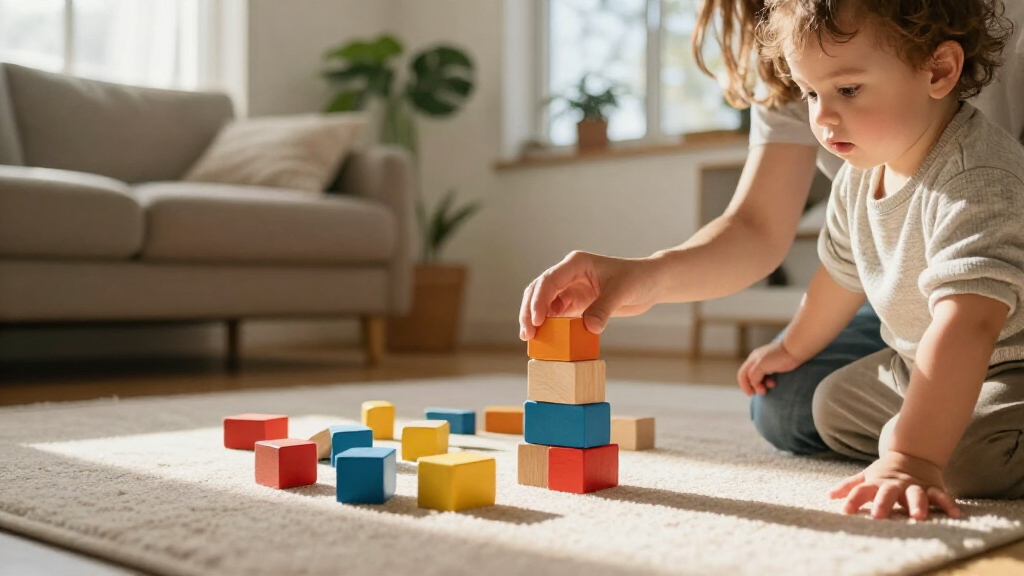
I evaluated these products based on their ability to support specific developmental milestones: fine motor skills, language acquisition, spatial reasoning, and problem-solving. I prioritized toys that offer multi-stage play, meaning they remain engaging as a child grows, rather than items that are outgrown within a few months. Durability and safety materials were also key factors, especially for items intended for toddlers under three years old.
The ranking logic favors versatility and educational depth. Products that combine multiple sensory inputs or allow for open-ended construction ranked higher than single-function toys. I also considered ease of cleanup and storage, as practicality significantly impacts how often a toy is actually used in a busy household.
| developmental toys for kid | Material |
|---|---|
| The First Years Stack & Count | Made without BPA |
| BLCXTOYZ Montessori Shape Sort | — |
| Aullsaty Talking Flash Cards f | — |
| LeapFrog Learning Friends 100 | — |
| Grarain Montessori Busy Board | Wood |
| Yetonamr Montessori Wooden Sta | Wood |
| Fisher-Price Baby’s First Bloc | BPA-free plastic |
| Airbition Talking Flash Cards | Plastic |
| Learning Resources Spike the F | Plastic |
| Melissa & Doug 100-Piece Woode | Solid wood |
| Melissa & Doug First Bead Maze | Wood, Plastic, Soft-coated Wire |
| Sassy Stacks of Circles Stacki | — |
| Play-Act Farm Number Train Mon | Plastic |
| hahaland Montessori Cloth Fish | — |
| Melissa & Doug Wooden Shape So | Wood |
Factors to Consider When Choosing Best Developmental Toys For Kids
Selecting the right developmental toy requires looking beyond the packaging claims. You need to match the toy’s complexity to your child’s current abilities while leaving room for growth. Here are the critical factors to weigh before making a purchase.
Open-Ended vs. Structured Play
One of the biggest mistakes parents make is buying only structured toys that have one correct way to be used. Open-ended toys, like wooden blocks or stacking cups, encourage creativity and can be used in dozens of ways, fostering divergent thinking. In contrast, structured toys, such as shape sorters or busy boards, teach specific cause-and-effect relationships. A healthy play environment needs a mix of both; use structured toys to introduce concepts, then move to open-ended sets to let the child explore those concepts independently.
The Value of Multi-Sensory Feedback
Toddlers learn through touch, sight, and sound simultaneously. Toys that provide multi-sensory feedback help solidify neural connections more effectively than those relying on a single sense. For instance, a talking flashcard pairs visual recognition with auditory reinforcement, while a textured busy board combines tactile exploration with visual problem-solving. When comparing options, ask yourself if the toy engages at least two senses. If it only offers one, it may hold attention for shorter periods.
Durability and Material Safety
Developmental toys often face rough handling. Wooden toys generally offer superior longevity compared to plastic, but they must be made from non-toxic, sealed materials to prevent splinters or chemical exposure. Electronic toys introduce battery compartments and small parts that can fail or become choking hazards if broken. I prioritized items with reinforced joints and rounded edges. If you choose plastic, look for BPA-free labels and check for small detachable parts that could pose risks to children under three.
Fine Motor Skill Progression
Fine motor development is not linear; it moves from gross grasps to precise pincer movements. Toys like Spike the Hedgehog or threading beads target specific muscle groups in the hands. When selecting these, consider the resistance level. If a toy is too easy, the child gets bored; if too hard, they get frustrated. The best options allow for gradual difficulty increases, such as adding more pieces or choosing smaller components as the child’s dexterity improves.
Storage and Cleanup Practicality
A toy’s educational value is negated if it is never used because it is too difficult to clean up. Sets with integrated storage, like the Building Blocks with a box or the Busy Board with a stand, save time and encourage the child to put things away. Loose pieces like individual flashcards or small animal figures require external bins, which adds friction to the play routine. I ranked items higher when they included self-contained organization systems, as this promotes independence in the child.
Frequently Asked Questions
At what age should I introduce Montessori-style toys?
You can introduce simple Montessori-inspired items like stacking cups or basic shape sorters as early as six to twelve months, provided they are large enough to prevent choking. These toys focus on real-world skills like grasping and spatial awareness. However, more complex busy boards or threading toys are better suited for toddlers aged two to three, when fine motor control has developed enough to handle smaller components without frustration. Start simple and increase complexity as your child masters each stage.
Are electronic developmental toys better than wooden ones?
Neither is universally better; they serve different purposes. Electronic toys like talking books provide immediate auditory feedback, which is excellent for language acquisition and maintaining attention. Wooden toys offer tactile feedback and encourage open-ended problem-solving without battery dependency. I recommend a hybrid approach: use electronic tools for specific learning goals like vocabulary, and wooden tools for creative play and motor skill refinement. This balance ensures both structured learning and free exploration.
How do I know if a toy is too advanced for my toddler?
Watch for signs of frustration rather than curiosity. If your child throws the toy, ignores it immediately, or needs constant physical help to manipulate the pieces, it is likely too advanced. A good developmental toy should allow for scaffolding, where the child can succeed at a basic level and gradually tackle harder challenges. If they can only play with it in one very specific way that they cannot figure out, put it away and revisit it in a few months when their skills have matured.
Do stacking toys really help with STEM skills?
Yes, stacking toys are foundational for early STEM (Science, Technology, Engineering, Math) understanding. They teach concepts of balance, gravity, and geometry intuitively. When a tower falls, the child learns about weight distribution and base stability. As they progress to counting and color sorting, they engage in early mathematical logic. Unlike abstract worksheets, these toys provide physical feedback, making the concepts concrete and easier to internalize for young children.
How many developmental toys does a child actually need?
Quality matters far more than quantity. A cluttered play area can overwhelm a child and reduce deep engagement. I recommend rotating a small selection of four to six high-quality toys that cover different developmental areas: one for building, one for fine motor skills, one for language, and one for sensory play. Rotate them weekly to maintain novelty. This approach prevents overstimulation and ensures each toy gets the focused attention needed to maximize its educational benefit.
Conclusion
The best developmental toys for kids depend entirely on your child’s current stage and your parenting style. For best overall value, the LeapFrog Learning Friends 100 Words Book offers unbeatable language support. If you prefer screen-free, durable play, the Montessori Busy Board is the superior choice for fine motor skills. For beginners starting their developmental journey, Stacking Cups provide the simplest entry point with the highest versatility. Finally, for parents seeking premium, long-term engagement, the Wooden Building Blocks Set will serve your child from toddlerhood through early elementary years. Match the tool to the milestone, and you will see the most significant growth.