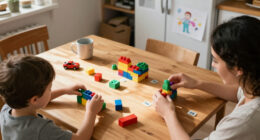
For most families, the original Hasbro Jenga is the best overall stacking game: its simple rules, familiar wooden blocks, and tense turns suit a wide range of ages. BUILDZI is a better fit for families who want quick, competitive building rounds, while Nene Toys’ 4-in-1 set offers more ways to play with younger children. The main choice is between a classic tower that rewards patience, a color or card game with extra rules, and a fast-paced challenge that favors quick hands. Block count, age suitability, and whether the set supports more than one game also affect the fit. Read on for the full breakdown of all 15 options and how they compare.

Turn the school run and nap time into listening time
- Thousands of audiobooks, podcasts and originals
- Listen on your phone, tablet or Echo — also offline
- Cancel anytime
Complete the kit


Key Takeaways
- Classic Jenga is the clearest all-around fit: The original wooden tower format has the broadest appeal for family game night, while the two Hasbro classic listings appear to serve nearly the same kind of play.
- Speed changes the family dynamic: BUILDZI makes quick building its main draw, so it suits energetic rounds better than a slow, suspenseful tower game.
- Extra rules can add variety but also add friction: Dice, cards, colors, and multiple game modes offer more options, though families seeking an easy first game may prefer basic block stacking.
- Age range should guide the purchase: Sets marketed for younger children, such as the Nene Toys 4-in-1 game and the 48-piece balance blocks, are worth comparing against a family’s youngest player and their comfort with small pieces and turn-taking.
- Piece count alone does not decide value: A larger set such as ApudArmis’ 60-piece tower may offer a different build and play experience, but game variety and rule simplicity matter just as much.
| Coogam Wooden Tower Stacking Game with Dice |  | Best for Young Beginners | Material: Wood | Included pieces: 36 colorful blocks, 7 larger blocks, 1 die | Standard block dimensions: 1.57 × 0.59 inches | VIEW LATEST PRICE | See Our Full Breakdown |
| ALKISTA 48-Piece Tetra Tower Balance Stacking Game |  | Best for Teen Game Nights | Material: ABS plastic | Included components: 48 blocks, 1 base, 22 draw cards | Block colors: Blue, red, green, yellow | VIEW LATEST PRICE | See Our Full Breakdown |
| Official Hasbro Games Jenga Game | Digital Die for 6 More Ways to Play | Original Wood Block Game | Stacking Tower | Ages 6+ | 1+ Players | Party Games |  | Best for Classic Play with Extra Challenges | Brand: Hasbro Gaming | Included components: 54 hardwood blocks, stacking sleeve, instructions | Recommended age: 6 years and up | VIEW LATEST PRICE | See Our Full Breakdown |
| Color Stack Challenge, Color Matching Game by Relatable |  | Best for Fast Head-to-Head Puzzles | Included components: 2 racks, 80 rings, 50 challenge cards, instructions | Players: 2 | Play modes: Solo and competitive | VIEW LATEST PRICE | See Our Full Breakdown |
| Toywoo Wooden Color Matching and Stacking Game |  | Best for Screen-Free Preschool Play | Material: Wood | Included components: 1 wooden rack, 60 rings | Recommended age: 3 years and up | VIEW LATEST PRICE | See Our Full Breakdown |
| BUILDZI by TENZI Fast Stacking Building Block Game |  | Best for Variety | Brand: TENZI | Players: 2–4; party games for up to 8 | Recommended age: 6 years and up | VIEW LATEST PRICE | See Our Full Breakdown |
| ApudArmis 60-Piece Pine Wooden Tumble Tower Game |  | Best for Outdoor Groups | Brand: ApudArmis | Material: Pine wood | Included components: 60 blocks, 1 die, 1 scoreboard, 1 zippered carrying bag | VIEW LATEST PRICE | See Our Full Breakdown |
| Color Challenge Color-Matching Stacking Game, 2-Pack |  | Best for Two-Player Head-to-Head Play | Brand: Hcusus | Players: 2 | Minimum age: 6 years | VIEW LATEST PRICE | See Our Full Breakdown |
| Nene Toys 4-in-1 Wooden Tumble Tower Game for Kids Ages 3–9 |  | Best for Younger Children | Brand: Nene Toys | Material: Wood | Age range: 3 years and up | VIEW LATEST PRICE | See Our Full Breakdown |
| 64-Piece Stacking Tower Game with 22 Cards |  | Best for Mixed-Age Family Groups | Brand: Gdaytao | Number of players: 2–4 | Pieces: 64 | VIEW LATEST PRICE | See Our Full Breakdown |
| Tower Stack, Exciting Tower Building Game by Relatable |  | Best for Card-Driven Family Play | Brand: Relatable / What Do You Meme? | Listed blocks: 24 in item details; 32 in product highlight | Listed cards: 36 in item details; 44 in product highlight | VIEW LATEST PRICE | See Our Full Breakdown |
| Hasbro Gaming Jenga Classic Wooden Block Stacking Game |  | Best Overall for Traditional Family Play | Brand: Hasbro Gaming | Material: Hardwood | Blocks: 54 | VIEW LATEST PRICE | See Our Full Breakdown |
| Hasbro Gaming Jenga Classic Wood Block Game |  | Best No-Frills Classic | Brand: Hasbro Gaming | Material: Hardwood | Blocks: 54 | VIEW LATEST PRICE | See Our Full Breakdown |
| 48Pcs Balance Stacking Blocks Game, Gift for Kids Ages 3-14 |  | Best for Colorful, Younger-Kid Play | Brand: Ziogogco | Material: Plastic / ABS | Blocks: 48 | VIEW LATEST PRICE | See Our Full Breakdown |
| Stack Attack Tower Stacking Game Set |  | Best for Flexible Group Play | Brand: DiFFY Toys and Games | Material: Plastic | Included components: Wobble base, 48 stacking blocks, 36 game cards | VIEW LATEST PRICE | See Our Full Breakdown |
| family stacking game | Material | Players | Recommended age | Included components |
|---|---|---|---|---|
| Coogam Wooden Tower Stacking G | Wood | 2 or more | 3 years and up | — |
| ALKISTA 48-Piece Tetra Tower B | ABS plastic | 2 or more | 13 years and up | 48 blocks, 1 base, 22 draw cards |
| Official Hasbro Games Jenga Ga | — | 1 or more | 6 years and up | 54 hardwood blocks, stacking sleeve, instructions |
| Color Stack Challenge | Plastic | 2 | — | 2 racks, 80 rings, 50 challenge cards, instructions |
| Toywoo Wooden Color Matching a | Wood | 2 | 3 years and up | 1 wooden rack, 60 rings |
| BUILDZI by TENZI Fast Stacking | Plastic | 2–4; party games for up to 8 | 6 years and up | 32 BUILDZI blocks, 32 double-sided Tower Cards, 32 Block Cards, instructions |
| ApudArmis 60-Piece Pine Wooden | Pine wood | — | — | 60 blocks, 1 die, 1 scoreboard, 1 zippered carrying bag |
| Color Challenge Color-Matching | — | 2 | — | — |
| Nene Toys 4-in-1 Wooden Tumble | Wood | — | — | Cards, dice |
| 64-Piece Stacking Tower Game w | — | — | 3 years and up | — |
| Tower Stack | Not specified | 1 or more | Teen listed in item details | — |
| Hasbro Gaming Jenga Classic Wo | Hardwood | 1 or more | 6 years and up | 54 hardwood blocks, stacking sleeve, instructions |
| Hasbro Gaming Jenga Classic Wo | Hardwood | 1 or more | 6 years and up | 54 hardwood blocks, stacking sleeve, instructions |
| 48Pcs Balance Stacking Blocks | Plastic / ABS | Multiplayer; exact count not specified | 3–14 years | 48 blocks, base, 22 draw cards |
| Stack Attack Tower Stacking Ga | Plastic | 1–12 | 4 years and up | Wobble base, 48 stacking blocks, 36 game cards |
More Details on Our Top Picks
Coogam Wooden Tower Stacking Game with Dice
Color-led turns make this a friendly first tower game for families with preschoolers. Players use the die to guide which colorful block to move, adding a simple decision to the familiar challenge of keeping the tower upright. Its lightweight wooden pieces are sized for small hands, while the larger blocks offer an easier grasp than the standard pieces in Hasbro Jenga with Digital Die. The age recommendation of 3 years and up also makes it a better fit for younger children than that Jenga set, which is listed for ages 6 and up.
The tradeoff is a shorter, more straightforward experience: play ends when someone topples the tower, and the set is intended for indoor use. I’d choose it for color recognition and basic turn-taking, not for the varied challenges or longer-lasting replay structure of card-driven ALKISTA Tetra Tower.
Pros:- Color die gives young players a clear, simple prompt each turn.
- Lightweight wooden blocks are designed for small hands.
- Includes larger blocks alongside the standard pieces.
- Supports color recognition and fine motor practice through play.
Cons:- The game ends when a player knocks down the tower, limiting variety.
- Indoor-use design is less flexible for picnics or outdoor gatherings.
Best for: Families introducing children ages 3 and up to turn-taking, color matching, and careful hand movements.
Not ideal for: Families seeking varied challenge cards, outdoor play, or a game that avoids ending with a toppled tower.
- Material:Wood
- Included pieces:36 colorful blocks, 7 larger blocks, 1 die
- Standard block dimensions:1.57 × 0.59 inches
- Larger block dimensions:3.94 × 3.94 inches
- Recommended age:3 years and up
- Players:2 or more
- Weight:278 g
- Usage:Indoor
Our verdict“Choose Coogam for a simple, color-guided introduction to stacking games for preschool-age players.”
ALKISTA 48-Piece Tetra Tower Balance Stacking Game
ALKISTA is the most age-specific pick here: its 13-and-up recommendation makes it a better match for teen gatherings and adult family game nights than Coogam Wooden Tower Stacking Game, which is aimed at children from age 3. The set pairs 48 colored ABS blocks with a base and 22 draw cards, giving turns more direction than a basic tower game and making the pieces easy to sort by color. That card-based structure can help a group get started without relying only on the usual pull-and-place routine.
Its main limitation is family reach. The age guidance rules it out for younger children, even though the colorful parts may look kid-friendly, and indoor-only use limits where it fits. Compared with Hasbro Jenga with Digital Die, ALKISTA uses physical cards rather than a phone-based die for added prompts; I’d favor it when the group wants a self-contained card-and-block format, not a preschool game or a classic wooden tower.
Pros:- Includes 48 blocks, a base, and 22 draw cards for varied turns.
- Four block colors make pieces easy to distinguish.
- Portable set suits travel and indoor gatherings.
- Designed for two or more players.
Cons:- Recommended for ages 13 and up, excluding younger family members.
- Indoor-use design limits play locations.
- ABS plastic pieces offer a different feel from the wooden blocks in Jenga.
Best for: Families with teenagers and adults who want a colorful, card-guided balance game for indoor gatherings.
Not ideal for: Households with younger children looking for an all-ages stacking game, or families who want outdoor play.
- Material:ABS plastic
- Included components:48 blocks, 1 base, 22 draw cards
- Block colors:Blue, red, green, yellow
- Base size:2.7 × 6.7 inches
- Recommended age:13 years and up
- Players:2 or more
- Weight:11.36 oz
- Usage:Indoor
Our verdict“Pick ALKISTA for teen-and-adult groups who want a portable, card-guided balance game rather than a preschool-friendly tower.”
Official Hasbro Games Jenga Game | Digital Die for 6 More Ways to Play | Original Wood Block Game | Stacking Tower | Ages 6+ | 1+ Players | Party Games
This Jenga set keeps the familiar wooden tower at its center but gives families six optional digital-die challenges, including thumbs-only turns and a race against the clock. That makes it more adaptable for mixed-age groups than ALKISTA 48-Piece Tetra Tower, whose listed age recommendation starts at 13, while the 54 hardwood blocks offer a straightforward choice for families who want a recognizable stacking format. The stacking sleeve also helps with setup and packing, a practical advantage for game nights away from home.
The added modes depend on accessing a phone web app via QR code, so this is not the most screen-free option in the lineup. Families who want simple, self-contained play may prefer Coogam Wooden Tower Stacking Game with Dice, which uses a physical die and is intended for younger children. Jenga’s age guidance starts at 6, and the tower still ends in a collapse, so the extra rules add variety without changing the core tension.
Pros:- 54 hardwood blocks deliver the familiar Jenga tower format.
- Six optional challenges add variety to classic turns.
- Stacking sleeve supports setup and storage.
- Listed for solo play as well as group play.
Cons:- The digital die requires access to a phone web app.
- The age recommendation begins at 6, so it is less suited to preschoolers.
- Play still centers on a tower that falls to end the game.
Best for: Families with children ages 6 and up who want classic wooden tower play plus optional party challenges.
Not ideal for: Families avoiding phone-assisted play, shopping for children under 6, or seeking a stacking game without a collapse ending.
- Brand:Hasbro Gaming
- Included components:54 hardwood blocks, stacking sleeve, instructions
- Recommended age:6 years and up
- Players:1 or more
- Estimated playing time:20 minutes
- Block material:Hardwood
- Digital challenges:6 additional ways to play
- Setup and storage:Stacking sleeve included
Our verdict“Choose this Jenga edition if your family wants a familiar wooden tower with optional challenges and does not mind using a phone for the digital die.”
Color Stack Challenge, Color Matching Game by Relatable
This is a speed-and-sorting contest, not a tower that players try to keep upright. Two players race to rearrange rings from a challenge card, moving one ring at a time and placing it only on an empty post or a matching color. Easy and hard modes give families a way to adjust the puzzle, while 50 cards make it a stronger repeat-play option than the fixed color-die turns in Coogam Wooden Tower Stacking Game. Solo puzzles are also available when only one player wants to practice.
The format suits siblings or adults who enjoy quick, competitive logic tasks, but it is less inclusive for larger groups: the listed player count is two, and simultaneous racing can frustrate players who prefer a slower pace. Unlike Hasbro Jenga with Digital Die, it does not test balance or careful block removal. I’d choose it when family stacking means building color sequences, not balancing a tower.
Pros:- Two racks let players race head-to-head at the same time.
- Includes 50 challenge cards and easy and hard modes.
- Solo mode offers puzzle play without a second player.
- Compact pieces support storage and quick resets.
Cons:- Listed for two players, limiting larger family participation.
- Speed-based competition may not suit players who prefer relaxed turns.
- Color-sequencing puzzles differ from traditional tower stacking.
Best for: Two-player families, siblings, or puzzle fans who enjoy quick color-matching races and solo challenges.
Not ideal for: Families wanting a group game for more than two players, a slow cooperative activity, or traditional tower-balancing play.
- Included components:2 racks, 80 rings, 50 challenge cards, instructions
- Players:2
- Play modes:Solo and competitive
- Difficulty:Easy and hard modes
- Material:Plastic
- Item dimensions:10.5 × 2.5 inches
- Educational focus:Problem-solving and logical thinking
- Model:CG4138
Our verdict“Pick Color Stack Challenge for two players who want quick, replayable color puzzles instead of a balance tower.”
Toywoo Wooden Color Matching and Stacking Game
Toywoo combines color sequencing with hands-on ring movement in a compact tabletop format for children ages 3 and up. The wooden rack and 60 rings give young players a practical way to practice patterns, counting, and fine motor control, while the water-based, non-toxic paint is a reassuring material detail for families choosing a preschool activity. Compared with Color Stack Challenge by Relatable, Toywoo is listed for two players and focuses on manual, sequential movement rather than racing through challenge cards; that can make it a calmer fit for younger children.
The narrow player count is also its clearest limit. Families wanting a larger group game may get more flexibility from ALKISTA Tetra Tower, designed for two or more, though ALKISTA is recommended only for ages 13 and up. Toywoo’s small rings also mean it is not intended for children under 3. I’d choose it for screen-free practice at a table, not as a party game for a crowd.
Pros:- Wooden rack and colorful rings create a hands-on tabletop activity.
- 60 rings support pattern recognition and counting practice.
- Water-based, non-toxic paint is specified.
- Manual play offers a screen-free option for young children.
Cons:- Listed for two players, limiting use with larger families.
- Small parts are unsuitable for children under 3.
- Color-sequencing play does not offer the tension of a balancing tower.
Best for: Caregivers seeking a screen-free color and pattern activity for two players, including children ages 3 and up.
Not ideal for: Families needing a game for three or more players, or households with children under 3 who may handle small rings.
- Material:Wood
- Included components:1 wooden rack, 60 rings
- Recommended age:3 years and up
- Players:2
- Dimensions:11 × 3.1 inches
- Weight:2.2 pounds
- Game type:Color matching and sequential movement
- Operation mode:Manual
Our verdict“Choose Toywoo for two-player, screen-free color and pattern practice with young children, rather than for a larger-group tower game.”
BUILDZI by TENZI Fast Stacking Building Block Game
BUILDZI is the most adaptable pick here: seven ways to play let families switch between racing, building, and cooperative challenges instead of repeating one tower format. Its blocks and cards give children different prompts for practicing spatial reasoning and teamwork, while adjustable play makes it easier to include players with different skill levels. Compared with the Nene Toys 4-in-1 Wooden Tumble Tower Game, BUILDZI offers more listed modes and a stronger focus on card-directed tower challenges, but Nene Toys is recommended for younger children and includes imaginative building and domino play. The tradeoff is pace: several BUILDZI versions reward speed, which may frustrate players who prefer a calm, turn-by-turn game. Some card challenges also lack color cues, so they may take longer to interpret.
Pros:- Seven play variations give families room to change the format
- Cooperative play offers an alternative to racing
- Cards and blocks support both competitive and cooperative challenges
- Rules can be adapted for different ages and skill levels
Cons:- Faster modes may not suit players who dislike timed competition
- Some Tower Card challenges are harder to interpret without color cues
Best for: Families with children ages 6 and up who want several ways to play and the option to cooperate or compete
Not ideal for: Families seeking a slow, traditional one-player-at-a-time tower game or a game suitable for children under 6
- Brand:TENZI
- Players:2–4; party games for up to 8
- Recommended age:6 years and up
- Included components:32 BUILDZI blocks, 32 double-sided Tower Cards, 32 Block Cards, instructions
- Ways to play:7
- Material:Plastic
- Manufacturer:Carma Games
Our verdict“Choose BUILDZI if your family wants a flexible, card-driven stacking game with both team and racing options.”
ApudArmis 60-Piece Pine Wooden Tumble Tower Game
ApudArmis is the large-format choice for family gatherings where a taller tower and portable set matter more than compact storage. The 60 pine blocks start at 1.7 feet and can build to 3.2 feet, creating a more imposing group challenge than the smaller, card-led BUILDZI. A die and scoreboard add structure beyond simply taking turns, and the zippered bag helps with transport between indoor and outdoor play. That size is also the main limitation: the tower needs a stable surface and enough clear space, and a full-height build may be awkward around younger children. Its listed age range starts at 16, so this is less clearly aimed at young family players than Nene Toys, which is designed for ages 3 and up. Choose it for older groups rather than a mixed-age children’s game night.
Pros:- 60 pine blocks create a tall group-play tower
- Die and scoreboard provide additional play structure
- Zippered bag makes the set easier to carry and store
- Designed for indoor and outdoor use
Cons:- The tower can reach 3.2 feet and needs substantial clear space
- Requires a stable surface and a group for its main stacking play
- Listed age range begins at 16 years
Best for: Families with teens and adults who want a portable, oversized wooden tower for gatherings or outdoor play
Not ideal for: Households with young children, limited table space, or a preference for a compact game with clearly stated child-friendly rules
- Brand:ApudArmis
- Material:Pine wood
- Included components:60 blocks, 1 die, 1 scoreboard, 1 zippered carrying bag
- Block dimensions:4.75 × 1.6 × 1 in
- Starting height:1.7 ft
- Maximum height:3.2 ft
- Age range:16 years and up
- Use:Indoor and outdoor
Our verdict“Pick ApudArmis for older family groups with room to build a tall tower, not for small spaces or young-child play.”
Color Challenge Color-Matching Stacking Game, 2-Pack
Color Challenge is built for a direct two-player contest, not for a whole family to take turns around one tower. Each player gets a rack, and 100 cards across Easy and Hard modes give pairs a clear color-matching task to race through. That makes the challenge more structured than the open-ended balance play in Hasbro Jenga Classic, while the bell adds a quick finish to each race. The set can also become a combined solo puzzle, giving it a use when a second player is unavailable. Still, its two-player design limits participation during larger family game nights; BUILDZI is a better fit when a group wants more varied ways to join in. Manual matching and stacking are the whole activity, so players looking for a conventional tower that gradually becomes less stable should choose a different style.
Pros:- Two stack racks support head-to-head play
- Easy and Hard modes offer different challenge levels
- 100 cards provide a range of color-matching puzzles
- Drawstring bag makes the set convenient to store or carry
Cons:- Designed for two players, limiting larger family participation
- Gameplay depends on manual color matching and stacking
- Its puzzle-race format differs from a traditional tumbling tower game
Best for: Two siblings or adults who want a compact, competitive color-matching challenge with adjustable difficulty
Not ideal for: Families who need one game to include three or more players at once or want traditional balance-based tower play
- Brand:Hcusus
- Players:2
- Minimum age:6 years
- Modes:Easy and Hard
- Challenge cards:100 (50 Easy, 50 Hard)
- Rings and poles:120 rings, 16 poles
- Stack racks:2
- Dimensions:10 × 7 in
- Included accessories:Bell, drawstring storage bag, instructions
Our verdict“Choose Color Challenge for a pair who enjoys quick color-matching races, and skip it if your game group is larger.”
Nene Toys 4-in-1 Wooden Tumble Tower Game for Kids Ages 3–9
Nene Toys is the clearest fit for younger children, with a stated starting age of 3 and four play modes that move beyond a single stacking challenge. Color matching and animal-card selection give play a simple prompt, while imaginative building and domino chains let children use the wooden pieces in less competitive ways. Compared with BUILDZI, it is aimed at a younger age group and offers open-ended building, though BUILDZI provides more listed variations and a stronger focus on fast card challenges. The tradeoff is that the product data lists cards and dice but does not specify the number of wooden pieces, so buyers have less detail about the set’s scale. Its suggested age range is also more child-focused than ApudArmis, making it a better choice for early family play than a tall group tower.
Pros:- Four modes include matching, imaginative building, and domino play
- Designed for children ages 3 and up
- Natural wood has rounded, polished edges
- Non-toxic, water-based paint is specified
Cons:- Component details do not specify the number of wooden pieces
- Its child-focused age range may feel less suited to older players seeking a serious challenge
Best for: Families with preschool and early elementary children who want several simple ways to play with wooden pieces
Not ideal for: Older children and adults seeking a tall, competitive tower challenge or shoppers who need detailed component counts before choosing
- Brand:Nene Toys
- Material:Wood
- Age range:3 years and up
- Included components:Cards, dice
- Number of players:1+
- Estimated playing time:10 minutes
- Game modes:Color matching, animal card selection, imaginative building, domino chains
- Paint:Non-toxic, water-based
- Model number:NT-0015
Our verdict“Choose Nene Toys for younger children who will benefit from varied, flexible play more than a high-tension tower contest.”
64-Piece Stacking Tower Game with 22 Cards
This 64-piece set is a straightforward group option for families wanting a balance-and-strategy game for two to four players. Its stated age starts at 3, giving it broader listed age coverage than Color Challenge, which is aimed at two players aged 6 and up. The 22 cards suggest an added prompt or strategy element alongside the tower, but the product details do not explain how those cards affect play. That missing explanation makes it harder to judge how much variety they add compared with the clearly defined modes in Nene Toys or BUILDZI. Material is also unspecified, so buyers cannot compare its feel or durability with the pine blocks in ApudArmis or the wood in Nene Toys. It suits families who value a simple group format, provided those unknowns are acceptable.
Pros:- Supports two to four players for family or party play
- Combines balance challenges with a stated strategy element
- Includes 64 pieces and 22 cards
- Recommended for ages 3 and up
Cons:- The piece material is not specified
- The product details do not explain how the 22 cards are used
Best for: Families of two to four who want a group stacking activity with a broad stated age range and a card component
Not ideal for: Buyers who need clearly explained card rules, a specified piece material, or detailed play modes before choosing
- Brand:Gdaytao
- Number of players:2–4
- Pieces:64
- Cards:22
- Genre:Abstract strategy
- Edition:Standard Edition
- Recommended age:3 years and up
- Model number:TT11303
Our verdict“Pick this set for a simple two-to-four-player family stacking game if you are comfortable with limited material and card-rule details.”
Tower Stack, Exciting Tower Building Game by Relatable
Tower Stack adds prompt cards to the stacking formula, giving family turns a little more direction than the straightforward block removal in Jenga Classic. The product information lists a tower body and base alongside blocks and cards, so it suits households that want a structured tabletop activity rather than only a balance test. Its small listed dimensions also make it a more packable option than a larger wooden tower set. The main drawback is that the listing gives conflicting component counts: one section says 24 blocks and 36 cards, while another says 32 blocks and 44 cards. I would verify what comes in the box before buying. With that uncertainty, this is a better fit for families drawn to card prompts than for buyers who want the clear, established setup of Jenga.
Pros:- Combines a tower structure with cards for more guided play
- Listed as suitable for kids and adults
- Compact listed dimensions are convenient for storage or travel
Cons:- Product details conflict on the number of blocks and cards included
- The listed blocks are not identified as hardwood
- Card-led play may be less appealing to families who prefer Jenga’s simple rules
Best for: Families looking for a compact stacking game with cards to guide or vary turns
Not ideal for: Buyers who want confirmed component counts or a simple, traditional wooden block tower
- Brand:Relatable / What Do You Meme?
- Listed blocks:24 in item details; 32 in product highlight
- Listed cards:36 in item details; 44 in product highlight
- Other included components:Tower body, tower base, instructions
- Players:1 or more
- Recommended age:Teen listed in item details
- Material:Not specified
- Dimensions:7.85 × 2 inches listed
Our verdict“Choose Tower Stack if your family wants card prompts in a compact stacking game and you can confirm the included pieces before purchase.”
Hasbro Gaming Jenga Classic Wooden Block Stacking Game
Jenga Classic is my strongest all-around pick here for families who want stacking to be the whole game: players remove a wooden block and place it on top, with tension building naturally as the tower shifts. Its 54 hardwood blocks and simple rules make it easier to bring mixed ages together than a card-driven option such as Tower Stack. The stacking sleeve also helps with setup, while the handled tube supports carrying and storage. The tradeoff is the familiar one: every move can destabilize the tower, so a steady surface and careful hands matter. Families who want changing prompts or team-based challenges may prefer Stack Attack, which offers cards and more play modes; Jenga’s appeal is its direct, repeatable format rather than variety within the box.
Pros:- 54 hardwood blocks provide the classic tower-building format
- Simple turn structure is accessible across a range of ages
- Can be played solo or with a group
- Stacking sleeve and handled tube support setup, storage, and carrying
Cons:- The tower becomes less stable as blocks are removed
- Requires a steady surface and careful handling
- Offers less built-in variety than card-based Stack Attack
Best for: Families with children aged six and up who want a straightforward, reusable block-stacking game for groups or solo play
Not ideal for: Families seeking card prompts, team challenges, or a game that stays steady on an uneven or crowded surface
- Brand:Hasbro Gaming
- Material:Hardwood
- Blocks:54
- Players:1 or more
- Recommended age:6 years and up
- Included components:54 hardwood blocks, stacking sleeve, instructions
- Packaging:Tube-shaped box with handle
Our verdict“Pick Jenga Classic for a dependable, easy-to-teach family stacking game built around tension and careful moves.”
Hasbro Gaming Jenga Classic Wood Block Game
This Jenga Classic listing keeps the family game-night choice uncomplicated: 54 hardwood blocks, a stacking sleeve, and rules for solo or group play. Like the handled-tube version, it delivers the familiar remove-and-restack challenge, so I would choose between these two Jenga listings based on the packaging details rather than expecting a different game. Against the more varied Stack Attack, this version has fewer built-in ways to change a round, but its clean rules are a plus for families who want to start playing without card instructions or extra modes. The tower’s instability is part of the challenge, not a flaw that can be removed; it also means this is a poor match for shaky surfaces or players who dislike suspense. The listing provides no warranty information.
Pros:- Includes 54 hardwood blocks for traditional stacking play
- Simple rules work for solo play or a family group
- Stacking sleeve helps with setup and storage
- Portable design is suitable for taking along
Cons:- Tower can topple as blocks are removed
- No warranty is listed in the supplied product details
- Less varied than Stack Attack, which includes challenge cards and multiple modes
Best for: Families who want the classic hardwood tower game and do not need extra prompts or play modes
Not ideal for: Buyers who want card-based variety, a stated warranty, or an alternative to a tower that can topple
- Brand:Hasbro Gaming
- Material:Hardwood
- Blocks:54
- Players:1 or more
- Recommended age:6 years and up
- Included components:54 hardwood blocks, stacking sleeve, instructions
- Unit count:1
Our verdict“Choose this listing for the familiar Jenga format and hardwood blocks, but favor Stack Attack if your family wants more play modes.”
48Pcs Balance Stacking Blocks Game, Gift for Kids Ages 3-14
The Ziogogco Balance Stacking Blocks Game swaps Jenga’s plain hardwood pieces for 48 colored plastic bricks, a base, and 22 draw cards. That combination gives younger children visual cues and card prompts to work with, making it a more activity-led choice than the classic remove-and-restack game. The product describes the material as ABS and lists an age range of 3–14, so it may suit families choosing a game for children who are not yet ready for the recommended age on Jenga Classic. Unlike Stack Attack, this listing specifies four brick colors and a travel storage bag, but it does not detail the card rules or player count. I would not choose it for buyers who prioritize hardwood pieces or need clearly documented play instructions before ordering.
Pros:- 48 blocks in four colors provide clear visual variety
- Includes a base and 22 draw cards
- ABS plastic construction is described as resistant to paint chipping
- Travel storage bag is noted in the product highlight
Cons:- The supplied details do not explain how the draw cards affect play
- Player count is listed only as multiplayer
- Plastic pieces offer a different feel from the hardwood blocks in Jenga Classic
Best for: Families with younger children who want colorful plastic pieces and card prompts for shared tabletop play
Not ideal for: Buyers seeking a traditional hardwood tower, clearly specified rules, or a confirmed player count
- Brand:Ziogogco
- Material:Plastic / ABS
- Blocks:48
- Colors:Blue, red, green, and yellow
- Included components:48 blocks, base, 22 draw cards
- Recommended age:3–14 years
- Players:Multiplayer; exact count not specified
- Dimensions:6.69 × 5.51 × 2.75 inches
Our verdict“This is a sensible pick for families wanting a colorful, younger-child-friendly alternative to Jenga, provided the less-detailed rules are acceptable.”
Stack Attack Tower Stacking Game Set
Stack Attack earns its place for families who want more than one way to play: it supports solo, team, and card-based turns, with 48 blocks, a wobble base, and 36 challenge cards. That variety gives it a broader group-game role than either Jenga Classic listing, which centers on the familiar block-removal challenge. The compact listed dimensions and portable format also make it easier to bring to gatherings or trips than a large tabletop game. Its plastic construction is the main compromise; families who prefer the weight and feel of hardwood should choose Jenga instead. The product lists a starting age of four, but challenge cards and multiple modes may need adult guidance for younger players. For households wanting one stacking set that can adapt to different group sizes, this is the more flexible pick.
Pros:- Three play approaches: solo, team, and card-based
- 36 challenge cards add variety beyond standard block removal
- 48 blocks and a wobble base support balance-focused play
- Compact dimensions suit travel and group gatherings
Cons:- Plastic construction lacks the hardwood feel of Jenga Classic
- Multiple modes may require adult help for younger players
- The supplied data does not give exact rules for each play mode
Best for: Families, classrooms, and hosts who want solo, team, and card-based stacking options in one portable set
Not ideal for: Buyers who prefer hardwood blocks or want a traditional, single-rule tower game for children aged six and up
- Brand:DiFFY Toys and Games
- Material:Plastic
- Included components:Wobble base, 48 stacking blocks, 36 game cards
- Recommended age:4 years and up
- Players:1–12
- Weight:1.2 pounds
- Dimensions:6.7 × 2.3 inches
- Model number:STA-OS-7000
Our verdict“Choose Stack Attack if your family values multiple group formats and portable play more than the classic hardwood feel of Jenga.”

How We Picked
I ranked these games by how well they fit shared family play: easy-to-learn rules, clear turn-taking, and enough suspense or variety to keep different ages involved. I also weighed the play style each set supports, from classic tower removal to color matching, card prompts, and timed building. Age guidance, piece count, and whether a product offers multiple modes matter because they affect who can join and how often a set may come out.
The order favors options with a clear family-game role and low barriers to starting a round. A familiar tower game ranks ahead of more specialized challenges for broad appeal, while speed, matching, and multi-game sets rise for families who specifically want those features. Similar Jenga listings are treated as close alternatives rather than distinct game concepts; buyers should compare the exact listing details and included components before choosing between them. Where product details do not establish a clear advantage, I avoid treating a larger piece count or a more elaborate title as proof of better play.
Factors to Consider When Choosing Best Family Stacking Games
The best choice depends less on the word “stacking” than on how your family likes to play together. Use these questions to match the game’s pace, rules, and physical demands to your group before choosing.
Choose the pace your family will enjoy
A tower game creates suspense through careful, alternating turns, while a speed-building game rewards quick decisions and fast hands. These formats can feel very different at the same table, even when both use blocks. Think about whether your group enjoys waiting for a tense moment or prefers short rounds with everyone building at once. Younger players may enjoy the movement of stacking but find long waits hard to manage. A timed or competitive format can also make a relaxed game night feel more intense. Match the pace to your usual mood rather than choosing only by the game’s theme.
Match the rules to the youngest regular player
Age labels are a useful starting point, but they do not tell the whole story about turn-taking, reading, counting, or following a sequence of rules. A basic tower can be easier to explain than a game with cards, dice, color matching, or several modes. Those added instructions may be welcome for older children and adults, but they can slow down a first round with younger players. Consider whether an adult will need to guide play and whether that suits your family. If ages vary widely, look for a core activity that everyone can attempt, with optional rules for players who want more challenge. Avoid assuming that a game marketed for a broad age range will feel equally simple to every player.
Decide how much variety you will actually use
Multi-mode sets and games with prompt cards or dice can give a familiar stacking activity new twists. That variety may help when your family likes changing rules, but it can go unused if players prefer to start quickly and repeat the same format. Extra components also create more pieces to sort, store, and explain. Before paying for added modes, ask whether your group tends to replay one favorite or explore different rules. A simpler set can be the better choice for casual rounds, even if it offers fewer ways to play. Look for variety that changes the experience in a way your family will enjoy, not just a longer list of instructions.
Look beyond the piece count
A higher number of blocks does not automatically mean longer, better, or more balanced family play. Block size, shape, and the way pieces fit together also affect how easy the game is to build and handle. A larger set may suit families who want a taller or more involved construction, but it can take up more storage space and require a stable playing surface. Check what is included, including any dice, cards, or instructions, rather than relying on the headline count. If children will help put the game away, think about whether the pieces can be stored together without a complicated reset. Choose a count that fits your space and the kind of rounds you expect to play.
Consider where and how the game will be played
Stacking games need a reasonably steady surface, but some formats are more forgiving than others when played around a busy family table. Small or lightweight pieces can be easier for children to handle, yet they may also be easier to scatter or lose. A compact set can make sense for travel or limited storage, while a larger tower may be more suited to a dedicated game-night spot. Think about whether the game will be played indoors, taken to gatherings, or stored between occasional rounds. Check any care and storage guidance from the maker, especially if the set includes multiple components. A game that is easy to reset and keep together is more likely to stay ready for spontaneous play.
Frequently Asked Questions
Which kind of stacking game is easiest to teach to a mixed-age family?
A straightforward tower game is often the easiest starting point because players can focus on taking turns and handling blocks rather than learning several special rules. Families with younger children may still want an adult to explain safe play and help keep turns moving. Color, dice, and card rules can be fun additions, but they may make the first round take longer. If your group has a wide age spread, start with the simplest available mode and add variations only if everyone wants them. That approach lets younger players join without ruling out more involved play later.
Should I choose a classic tower game or a speed-building game?
Choose a classic tower if your group likes suspense, careful movements, and taking turns. A speed-building game makes more sense for families who want brisk rounds and direct competition over who can build or match a structure first. Neither format is automatically better for family play; the key difference is whether patience or pace is the main source of fun. If your family has both kinds of players, a set with a clear, quick activity may be easier to bring out between longer games. Think about how much waiting and pressure your group enjoys before deciding.
Are games with cards, dice, or extra modes worth choosing?
Extra components are useful when your family enjoys changing the rules or needs different ways to keep repeat sessions fresh. They are less valuable if most players want to open the box and start stacking right away. Cards and dice can add decisions or surprises, but they can also require more explanation and more careful storage. Check whether the basic game still works as a simple activity, so the extra rules remain optional. A few well-used variations may be more valuable to your family than a long list of modes no one remembers.
How should I compare two similar Jenga listings?
Start by checking the exact product name, included pieces, instructions, and any stated added features rather than assuming two listings are identical or meaningfully different. The roundup includes multiple Hasbro Jenga entries, including a digital-die version and classic listings, so the advertised play options may not match across them. Compare the listing details for the particular edition you plan to buy. If you want the plain tower experience, prioritize a clear description of the classic wooden block game. If you want added rules, confirm that the feature you expect is included in that specific set.
What should I prioritize when buying a stacking game for younger children?
Look at the manufacturer’s age guidance, the difficulty of the rules, and whether children can manage the pieces and turns with the supervision your household expects. A younger-child-focused set may offer matching or multiple activities, but those features should still be checked against your child’s interests and abilities. Consider whether small pieces could be a concern in your home and follow the product’s safety guidance. A basic game can be easier to demonstrate, while a multi-mode set can provide more ways to adapt play as children grow. Pick the option your child can join comfortably now, rather than relying only on a broad age range in the title.
Conclusion
For the best overall family pick, I would start with the original Hasbro Jenga format for its familiar, easy-to-explain tower play. The best value in play variety is a multi-mode option such as Nene Toys’ 4-in-1 set, especially for households that will use more than one activity; it is less appealing if you want one simple game. For a premium-style choice focused on a distinctive challenge, BUILDZI suits families who prefer fast building over slow tower suspense, though it is a more specialized fit. For beginners and mixed-age groups, choose a basic wooden tower before adding card or dice rules. For color-matching play, compare Color Stack Challenge, Toywoo, and the Color Challenge 2-Pack; for a larger tower set, consider ApudArmis’ 60-piece option. Check the exact components and age guidance on the listing, then choose the format your family will want to play again.