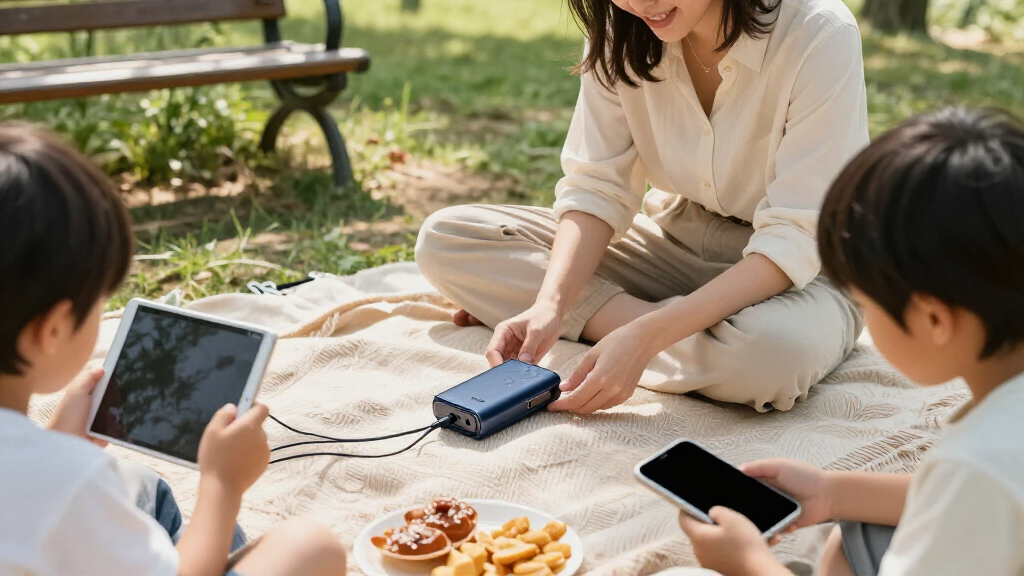

When your family travels, the right power bank has to charge several devices at once, survive a full day away from outlets, and still fit in a bag you can carry. After comparing 15 popular options, the GRECELL 500W Portable Power Station stands out as the best overall pick for families thanks to its 519Wh capacity and ability to run small appliances, not just phones. The GOODaaa Portable Charger Set is the best value for multi-kid households — three separate 10,000mAh banks means no more arguments over one shared charger — and the Anker SOLIX C300 earns the premium spot with fast charging and a trusted build. The main tradeoff in this category is capacity versus portability: 50,000mAh power banks are heavy bricks, while compact stations with AC outlets open up laptop and medical-device options at the cost of weight. Continue reading for the full breakdown, including which models make the most sense for road trips versus power outages.

Turn the school run and nap time into listening time
- Thousands of audiobooks, podcasts and originals
- Listen on your phone, tablet or Echo — also offline
- Cancel anytime
Complete the kit


Key Takeaways
- The single biggest differentiator in this lineup was output type: true power stations (GRECELL, Jackery Explorer 300, Anker SOLIX C300) can run AC appliances, while high-capacity power banks (IAPOS, Moihosso, SOARAISE) only charge USB devices no matter how large their mAh rating.
- Built-in cables and multi-bank sets solved the most common family complaint — missing cables — which is why the GOODaaa three-pack and the SOARAISE four-cable model ranked above higher-capacity rivals.
- Solar charging on the SOARAISE and Nuynix proved more of an emergency backup than a practical feature; panel size is too small for reliable daily recharging, so I treated it as a bonus rather than a deciding factor.
- The 150–300Wh middle class (DaranEner, Apowking, Anker SOLIX C200, R101 Lite) is the sweet spot for families who want AC power without a 10-plus-pound station, but surge limits mean hair dryers and kettles stay off-limits.
- Battery chemistry mattered for longevity: LiFePO4 models like the DaranEner claim far more charge cycles than standard lithium-ion banks, a real advantage for families buying for years of use rather than one season.
| MARBERO Portable Power Station, 88Wh, 120W Surge, 24,000mAh |  | Best Compact Power Station for Camping Trips | Capacity: 88Wh (24,000mAh) | Output wattage: 80W (120W surge) | Output ports: 8 (AC, USB-A, USB-C PD, car DC) | VIEW LATEST PRICE | See Our Full Breakdown |
| Portable Power Bank with 100W AC Outlet and 65W USB-C PD, 27,000mAh |  | Best for Laptop-Toting Parents | Battery capacity: 27,000mAh (98Wh) | AC output: 100W, 110V | USB-C PD: 65W input and output | VIEW LATEST PRICE | See Our Full Breakdown |
| GRECELL 500W Portable Power Station, 519Wh |  | Best Overall for Whole-Family Power | Capacity: 519Wh (140,400mAh) | AC outlets: 2 pure sine wave, 110V, 500W | USB: 3x USB-A QC3.0 (18W), 1x USB-C PD (60W) | VIEW LATEST PRICE | See Our Full Breakdown |
| SOARAISE 48,000mAh Solar Power Bank with Wireless Charging and 4 Built-In Cables |  | Best Cable-Free Pick for Kids’ Devices | Battery capacity: 48,000mAh lithium-polymer | Built-in cables: USB-C, Phone, USB-A, Micro | Ports: 2x USB-A output, 1x USB-C input/output | VIEW LATEST PRICE | See Our Full Breakdown |
| Moihosso 50000mAh Portable Charger with Built-In Cables |  | Best Value for Multi-Day Phone Charging | Battery capacity: 50,000mAh lithium-ion | Charging speed: 22.5W fast charging | Ports: 3 total, plus built-in USB-C and iOS cables | VIEW LATEST PRICE | See Our Full Breakdown |
| GOODaaa Portable Charger Set with Three 10,000mAh Power Banks and Charging Dock |  | Best for Multi-Kid Households | Capacity per bank: 10,000mAh | Quantity: 3 power banks plus charging dock | Cables: Built-in USB-C and iOS | VIEW LATEST PRICE | See Our Full Breakdown |
| IAPOS 60,000mAh 22.5W Portable Charger with 3-in-1 Cable |  | Best High-Capacity Power Bank | Capacity: 60,000mAh | Max output: 22.5W | Simultaneous devices: Up to 5 | VIEW LATEST PRICE | See Our Full Breakdown |
| Anker SOLIX C300 Portable Power Station, 288Wh |  | Best Premium Family Power Station | Capacity: 288Wh | Output: 300W (600W surge) | Ports: 3 AC, 1 car socket (120W), 3 USB-C (2×140W), 1 USB-A | VIEW LATEST PRICE | See Our Full Breakdown |
| DaranEner 192Wh Portable Power Station with LiFePO4 Battery |  | Best Value Power Station | Capacity: 192Wh LiFePO4 | Cycle life: 3,500+ cycles | AC output: 300W pure sine wave, 600W surge | VIEW LATEST PRICE | See Our Full Breakdown |
| Nuynix 49,800mAh Solar Power Bank with 15W USB-C Fast Charging |  | Best Rugged Backup for Emergency Kits | Capacity: 49,800mAh lithium polymer | Max output: 15W USB-C | Ports: 3 (USB-A and USB-C) | VIEW LATEST PRICE | See Our Full Breakdown |
| R101 Lite Portable Power Station, 89.6Wh, 100W |  | Best Lightweight Pick | Battery capacity: 89.6Wh | Battery type: LiFePO4 | AC output: Dual 100W outlets; 200W peak | VIEW LATEST PRICE | See Our Full Breakdown |
| Anker SOLIX C200 DC Portable Power Station, 192Wh, 200W |  | Best for Gadget-Heavy Families | Battery capacity: 192Wh | Output: 200W | Battery type: LiFePO4 (3,000 cycles) | VIEW LATEST PRICE | See Our Full Breakdown |
| Apowking Portable Power Station, 146Wh, 100W | 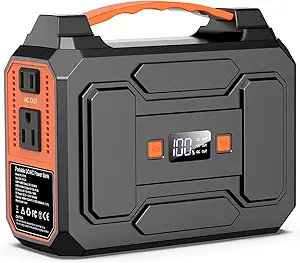 | Best Budget Backup | Battery capacity: 146Wh / 39,600mAh | Output wattage: 100W (200W peak) | Battery type: Lithium-ion | VIEW LATEST PRICE | See Our Full Breakdown |
| Jackery Explorer 300 Portable Power Station, 292Wh |  | Best for Weekend Camping | Capacity: 292Wh | Output: 300W rated; 600W peak surge | Battery chemistry: LiFePO4 (4,000+ cycles to 70%) | VIEW LATEST PRICE | See Our Full Breakdown |
| EnginStar Portable Power Station, 300W, 296Wh |  | Best for Sensitive Electronics | Capacity: 296Wh | AC output: 300W across 2 pure sine wave outlets (110V) | Battery: Lithium-ion, 1,000+ cycles | VIEW LATEST PRICE | See Our Full Breakdown |
| portable power banks for familie | Capacity | Ports |
|---|---|---|
| MARBERO Portable Power Station | 88Wh (24,000mAh) | — |
| Portable Power Bank with 100W | — | 4 (AC, USB-C PD, 12W and 18W USB) |
| GRECELL 500W Portable Power St | 519Wh (140,400mAh) | — |
| SOARAISE 48,000mAh Solar Power | — | 2x USB-A output, 1x USB-C input/output |
| Moihosso 50000mAh Portable Cha | — | 3 total, plus built-in USB-C and iOS cables |
| GOODaaa Portable Charger Set w | — | — |
| IAPOS 60,000mAh 22.5W Portable | 60,000mAh | 2 USB-A, 1 USB-C, plus integrated 3-connector cable |
| Anker SOLIX C300 Portable Powe | 288Wh | 3 AC, 1 car socket (120W), 3 USB-C (2×140W), 1 USB-A |
| DaranEner 192Wh Portable Power | 192Wh LiFePO4 | — |
| Nuynix 49,800mAh Solar Power B | 49,800mAh lithium polymer | 3 (USB-A and USB-C) |
| R101 Lite Portable Power Stati | — | 7 total, including 65W USB-C in/100W out |
| Anker SOLIX C200 DC Portable P | — | — |
| Apowking Portable Power Statio | — | — |
| Jackery Explorer 300 Portable | 292Wh | 100W USB-C PD, 2 USB-A, 120W car port |
| EnginStar Portable Power Stati | 296Wh | — |
More Details on Our Top Picks
MARBERO Portable Power Station, 88Wh, 120W Surge, 24,000mAh
For families who want to power more than just phones on a campsite, this MARBERO unit bridges the gap between a plain power bank and a full power station. Eight ports spread across AC, USB, USB-C PD, and car DC mean a tablet, two phones, and a small fan can all run at once. Compared with the SOARAISE solar power bank, it trades pocket portability for real appliance capability — the AC outlet handles the kind of small gear a bank like that simply can’t touch. The built-in LED light with SOS mode is a genuine camping convenience rather than a gimmick. The tradeoff is output ceiling: at 80W continuous, anything heat-producing is off the table, and unlike the GRECELL 500W, solar recharging requires buying a MARBERO panel separately. Families with bigger power needs should size up.
Pros:- Eight ports let the whole family charge simultaneously
- AC, USB, USB-C PD, and car DC outputs in one 3.2 lb unit
- Built-in LED light with SOS mode for emergencies
- Recharges via wall outlet, car, or optional solar panel
Cons:- 80W continuous output rules out most kitchen appliances
- Solar charging only works with separately purchased MARBERO panels
Best for: Car-camping families who need lights, phones, and one small appliance powered without hauling a big generator
Not ideal for: Families running anything over 80W — a blender, kettle, or larger cooler will shut it down
- Capacity:88Wh (24,000mAh)
- Output wattage:80W (120W surge)
- Output ports:8 (AC, USB-A, USB-C PD, car DC)
- Charging:AC outlet, car, or compatible solar panel
- Weight:3.2 lbs (1.04 kg)
- Light:Three-level LED with SOS mode
- Safety:BMS with short-circuit, overload, and auto-shutoff protection
Our verdict“A smart middle-ground pick for families who want outlet power at the campsite without a full-size power station.”
Portable Power Bank with 100W AC Outlet and 65W USB-C PD, 27,000mAh
This bank earns its spot by doing something most power banks won’t: packing a 100W AC outlet into a TSA-compliant 98Wh package. That means a parent can top up a laptop, camera battery, or breast pump from a backpack — no power station required. The 65W USB-C PD in both directions is the other headline: it recharges the bank itself in about 90 minutes, far faster than the Moihosso 50000mAh, which is faster to drain but far slower to refill. Compared with the MARBERO 88Wh station, you give up port count and camping features like the LED light, but you gain airline-friendly travel capability. The limitation is scale — one hungry device over 100W trips the outlet, and the capacity only covers roughly two laptop charges.
Pros:- 100W AC outlet powers laptops and small electronics anywhere
- 65W USB-C PD input recharges the bank in about 1.5 hours
- 98Wh rating stays within airline carry-on limits
- Overcharge, overvoltage, overcurrent, and short-circuit protection
Cons:- AC outlet capped at 100W — not for kettles, hair dryers, or similar loads
- 27,000mAh drains quickly when the AC outlet is in constant use
Best for: Traveling parents and remote-working caregivers who need laptop and camera power on flights and road trips
Not ideal for: Families who need to charge many devices at once — four ports fill up fast with kids’ gadgets
- Battery capacity:27,000mAh (98Wh)
- AC output:100W, 110V
- USB-C PD:65W input and output
- Ports:4 (AC, USB-C PD, 12W and 18W USB)
- Recharge time:About 1.5 hours via USB-C
- Certifications:FCC, CE, RoHS
Our verdict“The pick for families whose power problem is a dying laptop at 30,000 feet rather than a campsite full of devices.”
GRECELL 500W Portable Power Station, 519Wh
When the goal is keeping an entire household’s gear alive — phones, tablets, a CPAP machine, a mini cooler — this is the most capable option in this batch. The 519Wh capacity is roughly six times the MARBERO 88Wh, and the pure sine wave inverter makes it safe for sensitive electronics that cheaper modified-sine units can stress. Ten simultaneous devices is enough for a family of five with headroom, and the wireless charging pad on top handles a phone without touching a cable. The honest tradeoffs: it’s heavy enough that it lives in the car rather than a backpack, a wall recharge takes 6–7 hours, and the solar panel costs extra. Compared with the Anker SOLIX C300 further down this roundup, you’re getting far more runtime in exchange for far less portability.
Pros:- 500W pure sine wave inverter is safe for sensitive electronics like CPAP machines
- Up to 10 devices charging simultaneously, including wireless
- Recharges from wall outlet, car, or solar panel
- Temperature, overvoltage, overcurrent, and short-circuit protection
Cons:- Wall recharge takes 6–7 hours, so it needs planning ahead
- Solar panel sold separately
- Heavy and bulky compared with power banks in this roundup
Best for: Families preparing for outages or long off-grid trips who need to run multiple devices and one appliance at once
Not ideal for: Day-trippers and hikers — at this capacity it’s a base-camp unit, not something you carry to the soccer field
- Capacity:519Wh (140,400mAh)
- AC outlets:2 pure sine wave, 110V, 500W
- USB:3x USB-A QC3.0 (18W), 1x USB-C PD (60W)
- Other outputs:2x 12V/5A DC, 12V/10A car port, 10W wireless pad
- Max simultaneous devices:10
- Recharge time:6–7 hrs (wall), 7–8 hrs (car), 6–9 hrs (100W solar)
- Battery protection:Temperature, overvoltage, overcurrent, short-circuit
Our verdict“The family-power backbone pick if your priority is keeping everything running through an outage or a full weekend off-grid.”
SOARAISE 48,000mAh Solar Power Bank with Wireless Charging and 4 Built-In Cables
Anyone who has watched a child lose a charging cable mid-hike will appreciate this bank’s approach: four built-in cables plus a wireless pad means nobody in the family needs to bring anything. USB-C, Lightning, USB-A, and Micro connectors are physically attached, and up to seven devices can charge at once — more than any pure power bank here. The four folding solar panels give it a self-recharging trick the Moihosso 50000mAh lacks entirely. That said, expectations should stay modest: the manufacturer doesn’t publish solar charging speeds, and panel-based top-ups on a unit this size are slow in practice — real charging still comes from the wall. Wireless output is also standard-speed, so a tablet will do better plugged in. Compared with the 100W AC bank, there’s no outlet for laptops, but for phones-and-tablets families, the convenience factor is hard to beat.
Pros:- Four built-in cables cover every common device without extras
- Up to 7 devices charging at once, wired and wireless
- Four solar panels provide emergency top-ups off-grid
- 48,000mAh capacity handles several full phone recharges for the family
Cons:- Solar charging speed is unspecified and realistically slow
- Wireless charging claim is vague on device compatibility and speed
- No AC outlet for laptops or small appliances
Best for: Families with mixed phone brands and cable-losing kids who want grab-and-go charging at parks and campsites
Not ideal for: Laptop users — no AC outlet and modest USB-C speeds leave bigger devices stranded
- Battery capacity:48,000mAh lithium-polymer
- Built-in cables:USB-C, Phone, USB-A, Micro
- Ports:2x USB-A output, 1x USB-C input/output
- USB-C output:5V/3A
- Wireless charging:Yes
- Solar panels:4 built-in panels
- Max simultaneous devices:7
Our verdict“The zero-cables-to-remember option for phone-and-tablet families, as long as nobody needs laptop power.”
Moihosso 50000mAh Portable Charger with Built-In Cables
This is the simplest pitch in the batch: a huge reservoir of phone power with the cables already attached. At 50000mAh, it can recharge a typical smartphone roughly ten times — enough for two parents and two kids across a long weekend — and the built-in USB-C and iOS connectors eliminate the accessory pouch. Unlike the SOARAISE, there’s no solar panel or wireless pad, which helps keep the design slim and the price approachable. The 22.5W fast charging is respectable for phones but lags the 65W USB-C PD of the 100W AC bank, so tablets and laptops charge slowly here. The battery percentage display is genuinely useful for a unit this size, since guessing charge state on a big bank is a real annoyance. Just know it’s a brick: at 6.5 inches long, it belongs in a diaper bag, not a pocket.
Pros:- 50000mAh capacity covers roughly ten smartphone recharges
- Built-in USB-C and iOS cables plus a third USB-C port
- 22.5W fast charging for compatible phones
- Battery percentage display and emergency flashlight included
Cons:- Large and heavy for everyday pocket carry
- 22.5W output makes tablets and laptops charge slowly
- Fast charging only works with compatible devices
Best for: Budget-conscious families who need many phone recharges over a weekend and want cables built in
Not ideal for: Minimalist packers and laptop users — it’s large, and 22.5W is slow for anything beyond phones
- Battery capacity:50,000mAh lithium-ion
- Charging speed:22.5W fast charging
- Ports:3 total, plus built-in USB-C and iOS cables
- Voltage:5V / 3A
- Dimensions:6.5 x 3.5 x 1 inches
- Extras:Flashlight, battery percentage display
- Warranty:3-year replacement plan
Our verdict“A dependable capacity-per-dollar play for families whose charging needs are all phones, all weekend.”
GOODaaa Portable Charger Set with Three 10,000mAh Power Banks and Charging Dock
Most power banks in this roundup solve the problem of charging many devices from one brick — this set solves a different problem entirely: three kids, three devices, one peaceful car ride. Instead of a single shared pack like the IAPOS 60,000mAh, GOODaaa gives each family member a slim 10,000mAh bank with built-in USB-C and iOS cables, so nobody hunts for a cord. The included dock charges all three at once, which means no orphaned power banks drained flat in a drawer. The sticker sheets are a surprisingly smart touch for younger kids who like claiming their gear. The tradeoff is capacity per pack: 10,000mAh is roughly two phone charges, and the listing doesn’t publish wattage, so fast charging expectations should stay modest. Compared with the Moihosso 50,000mAh single-bank approach, this trades total capacity for household harmony.
Pros:- Three separate banks eliminate arguments over who gets the charger
- Dock recharges all three packs simultaneously so none sit dead
- Built-in USB-C and iOS cables mean no forgotten cords
- Slim 6.42 oz design fits kid-sized pockets and backpacks
Cons:- No published charging wattage, so speed is unpredictable
- Only ~2 phone charges per bank before it needs the dock
Best for: Families with multiple kids who each need their own charger for school bags, car rides, or trips
Not ideal for: Anyone needing to recharge tablets and laptops repeatedly — 10,000mAh per pack runs out quickly on power-hungry devices
- Capacity per bank:10,000mAh
- Quantity:3 power banks plus charging dock
- Cables:Built-in USB-C and iOS
- Weight per bank:6.42 oz
- Battery indicators:Four-color display, 25%–100%
- Safety:Overcharge and short-circuit protection, certified below 45°C
Our verdict“Buy this if your family fights over one power bank; skip it if you need serious capacity for laptops or long trips.”
IAPOS 60,000mAh 22.5W Portable Charger with 3-in-1 Cable
When the goal is one bag-friendly brick that keeps every phone alive for a weekend, the IAPOS makes a strong case. Its 60,000mAh capacity dwarfs the GOODaaa set’s combined 30,000mAh, and with five-device simultaneous charging plus integrated USB-C, iOS, and Micro-USB connectors, it covers a mixed-device household without extra cables. The digital percentage display is genuinely more useful than the four-bar indicators on cheaper banks — you actually know what’s left. Support for PD, QC, and SCP protocols means Android phones in particular charge quickly. The honest tradeoff is 15.5 oz of weight: it’s a backpack item, not a pocket one, and 22.5W tops out below what a laptop wants. If you need AC power for larger gear, the Anker SOLIX C300 is the better category; this pick wins on portability per milliamp-hour.
Pros:- 60,000mAh capacity supports multiple full phone charges over several days
- Charges up to five devices at once with built-in connector tips
- Digital display shows exact remaining percentage
- Supports PD, QC, SCP, FCP, and AFC fast-charging protocols
Cons:- 15.5 oz weight makes it too heavy for pocket carry
- 22.5W output won’t meaningfully charge most laptops
Best for: Families on road trips or camping weekends who need days of phone and tablet charging from one pack
Not ideal for: Laptop users or anyone wanting a lightweight everyday-carry bank — it’s heavy and tops out at 22.5W
- Capacity:60,000mAh
- Max output:22.5W
- Simultaneous devices:Up to 5
- Ports:2 USB-A, 1 USB-C, plus integrated 3-connector cable
- Protocols:PD, QC, SCP, FCP, AFC
- Weight:15.5 oz
- Display:Digital battery percentage
Our verdict“The strongest pick here for sheer phone-charging endurance on the go, as long as nobody expects laptop-level power.”
Anker SOLIX C300 Portable Power Station, 288Wh
This is the pick when reliability matters more than price. The C300’s LiFePO4 battery rated for 3,000 cycles will outlast standard lithium-polymer banks like the Nuynix solar charger many times over, and the five-year warranty signals Anker’s confidence in that longevity. With eight ports — including three AC outlets and a 140W USB-C — it can run a laptop, a camera charger, and several phones simultaneously, which is more than the DaranEner’s six-device, 60W USB-C ceiling. Recharging to 80% in 50 minutes via wall outlet means it turns around between outings quickly, and 25dB operation is quieter than a whisper for tent or hotel-room use. Drawbacks exist: the shoulder strap is sold separately, and it’s incompatible with several older Anker solar panels (PS30, PS200, PS400), which stings if you already own them.
Pros:- LiFePO4 battery rated for 3,000 charge cycles
- Eight ports including three AC outlets and 140W USB-C
- Recharges four ways: wall, solar, car, and USB-C
- Near-silent 25dB operation with a 5-year warranty
Cons:- Shoulder strap sold separately despite the 5.7-lb-plus form factor
- Not compatible with Anker PS30, PS200, and PS400 solar panels
Best for: Families who camp or face outages and want a durable, warranty-backed station for laptops, cameras, and phones
Not ideal for: Budget-conscious buyers or those wanting solar-ready gear out of the box — the strap and panel compatibility add cost
- Capacity:288Wh
- Output:300W (600W surge)
- Ports:3 AC, 1 car socket (120W), 3 USB-C (2×140W), 1 USB-A
- Recharge:To 80% in 50 minutes via wall outlet
- Battery:LiFePO4, 3,000 cycles
- Noise:25dB at 3.3 ft
- Warranty:5 years
Our verdict“The premium choice for families who want a power station that survives years of trips and outages, provided they accept the add-on costs.”
DaranEner 192Wh Portable Power Station with LiFePO4 Battery
Measured against the Anker SOLIX C300, the DaranEner gives up capacity and port count but delivers the same LiFePO4 chemistry with 3,500+ rated cycles — actually a higher cycle rating — at a friendlier position on the shelf. Its 300W pure sine wave output is clean enough for sensitive electronics, and the built-in MPPT solar controller means adding a panel later is plug-and-play. The SOS LED light is a real family-camping feature, not a gimmick: four brightness modes make it a tent lantern and emergency beacon in one. At 5.73 lbs it’s carryable, though still no pocket item. The tradeoffs are real — solar panels and car cables aren’t included, and the 60W USB-C port trails the Anker’s 140W, so laptop charging is slower. For families prioritizing long-term battery life over raw power, this is the smarter spend.
Pros:- LiFePO4 battery rated for 3,500+ cycles
- Pure sine wave 300W AC output safe for sensitive devices
- Built-in MPPT controller for easy solar expansion
- Four-mode LED light with SOS for camping emergencies
Cons:- Solar panels and car charging cables are not included
- 60W USB-C is slow for larger laptops compared with 140W rivals
Best for: Value-focused camping families who want long-lived LiFePO4 power and a built-in lantern without paying premium prices
Not ideal for: Households running appliances over 300W or fast-charging power-hungry laptops via USB-C
- Capacity:192Wh LiFePO4
- Cycle life:3,500+ cycles
- AC output:300W pure sine wave, 600W surge
- USB-C:60W PD
- Devices:Up to 6 simultaneously
- Solar input:Up to 60W with built-in MPPT
- Weight:5.73 lbs
Our verdict“The best-value route to durable, solar-ready family power — if you can supply your own panels and cables.”
Nuynix 49,800mAh Solar Power Bank with 15W USB-C Fast Charging
The Nuynix earns its spot as the go-bag option. Unlike the IAPOS 60,000mAh, which is bigger but delicate, this bank’s water- and dust-resistant housing plus LED flashlight make it a sensible fit for an emergency kit that lives in the car trunk. Its 49,800mAh capacity covers multiple phone recharges across a power outage, and supplemental solar input means it can trickle-recover charge when the grid is down for days — with the honest caveat that solar here is a backup, not a primary charging method. Compared with the DaranEner station, it lacks AC outlets entirely, but it also weighs far less and fits a glovebox. The 15W USB-C output is adequate for phones and slow for tablets, and its 12-month warranty is shorter than Anker’s five-year coverage. Treat it as insurance, not an everyday workhorse.
Pros:- Rugged water- and dust-resistant housing survives trunk and outdoor storage
- 49,800mAh capacity covers several full phone charges in an outage
- Supplemental solar input for grid-down recovery
- Built-in LED flashlight adds emergency utility
Cons:- Solar charging is supplemental only and far too slow as a primary method
- 15W maximum output is sluggish for tablets and useless for laptops
Best for: Families building car or home emergency kits who want a rugged, water-resistant backup with flashlight and solar trickle charging
Not ideal for: Everyday commuters wanting fast charging or AC outlets — 15W is phone-speed only
- Capacity:49,800mAh lithium polymer
- Max output:15W USB-C
- Ports:3 (USB-A and USB-C)
- Recharging:USB and supplemental solar
- Durability:Water- and dust-resistant housing
- Extras:LED flashlight, overcharge protection
- Warranty:12 months
Our verdict“A solid emergency-kit brick for families who value durability and self-reliance over charging speed.”
R101 Lite Portable Power Station, 89.6Wh, 100W
At just 2.5 lbs, the R101 Lite is the easiest power station in this lineup to toss into a backpack or diaper bag, and that portability is its whole reason for being here. Compared with the Jackery Explorer 300, you give up more than two-thirds of the capacity, but you also cut the weight by nearly 5 lbs — a trade families hiking to a campsite or moving between activities will feel immediately. The dual 100W AC outlets are generous for a unit this small, letting you run a baby monitor and a laptop simultaneously. The LiFePO4 chemistry with 12-layer monitoring means it should last through years of trips. The catch: solar panels cost extra, and the AC output shuts off below 9% battery, so it can die abruptly mid-use.
Pros:- Featherweight 2.5 lb build is the most portable station-style option in the roundup
- Dual 100W AC outlets are rare at this size and price class
- LiFePO4 battery with 12-layer safety monitoring for long-term reliability
- Rear LED light with adjustable brightness and SOS mode doubles as an emergency lantern
Cons:- Solar panel sold separately, adding cost if off-grid charging matters
- AC output cuts off when the battery drops below 9%, with no gradual wind-down
Best for: Families who prioritize packability — road trips, hotel stays, and keeping small devices alive on the move
Not ideal for: Households wanting emergency backup for longer outages — 89.6Wh won’t run much beyond phones, tablets, and small gadgets
- Battery capacity:89.6Wh
- Battery type:LiFePO4
- AC output:Dual 100W outlets; 200W peak
- Ports:7 total, including 65W USB-C in/100W out
- Dimensions:6.5 × 3.3 × 4.0 in
- Weight:2.5 lbs
- Recharging:AC, USB-C PD, solar, car socket
- Warranty:12 months
Our verdict“Buy this if your family’s biggest constraint is weight and you only need to top up small devices; skip it if you want real backup capacity.”
Anker SOLIX C200 DC Portable Power Station, 192Wh, 200W
The C200 DC stands out for high-speed USB charging, with a standout 140W two-way USB-C port that neither the Apowking nor the R101 Lite can match. For a family carrying two laptops, a Switch, tablets, and phones, this matters more than raw AC capacity — five USB ports means everyone plugs in at once without fighting over outlets. Its 192Wh LiFePO4 battery is rated for 3,000 cycles, beating the EnginStar’s 1,000-cycle lithium-ion chemistry by a wide margin if longevity is the priority. Note the “DC” in the name: the 200W rating covers the USB side, so this is fundamentally a charging hub rather than an appliance runner. The optional shoulder strap costs extra, and some Anker solar panels aren’t compatible — an annoying surprise for Anker ecosystem owners.
Pros:- 140W two-way USB-C port charges large laptops at nearly full speed
- Five USB ports let the whole family charge simultaneously
- LiFePO4 battery rated for 3,000 charge cycles
- Three recharge paths: USB-C, solar (up to 100W input), and car
Cons:- Shoulder strap and solar panels sold separately
- Not compatible with several Anker solar panel models, complicating ecosystem purchases
Best for: Families whose load is mostly USB devices — laptops, tablets, cameras, and handheld gaming — and who want fast simultaneous charging
Not ideal for: Anyone expecting to run small AC appliances; this unit is built around USB power, not outlet-heavy use
- Battery capacity:192Wh
- Output:200W
- Battery type:LiFePO4 (3,000 cycles)
- USB-C ports:3 (100W, 140W, 15W)
- USB-A ports:2 (12W each)
- Solar input:Up to 100W
- Recharge methods:USB-C, solar, car
- Warranty:3 years
Our verdict“This pick makes the most sense for families whose power needs are all USB — it out-charges every station here on the port side while giving up little in portability.”
Apowking Portable Power Station, 146Wh, 100W
The Apowking lands in the sweet spot between the tiny MARBERO 88Wh and the pricier Jackery Explorer 300: 146Wh of capacity at 3.3 lbs, with seven outputs including two AC outlets. That’s enough to keep a phone, a tablet, a camera battery, and a small fan running through a weekend trip. Unlike the Anker SOLIX C200, it includes the AC adapter and car charging cable in the box, so there’s nothing extra to buy before you use it. The tradeoffs are real: this is a lithium-ion battery rather than the LiFePO4 cells in the Anker or Jackery, so it won’t age as gracefully, and the USB-C port tops out at a modest 15–18W — fine for phones, slow for laptops. The built-in flashlight with strobe and SOS modes is a genuine plus for car-kit duty.
Pros:- Well-balanced 146Wh capacity at a manageable 3.3 lb weight
- Seven outputs, including two AC outlets, for simultaneous charging
- AC adapter and car cable are included, unlike pricier rivals
- Flashlight with strobe and SOS modes adds emergency utility
Cons:- Lithium-ion chemistry ages faster than the LiFePO4 batteries in competitors
- 100W AC ceiling rules out anything beyond small appliances
- Solar panel sold separately
Best for: Families building an emergency car kit or occasional campers who want solid capacity without paying for premium battery chemistry
Not ideal for: Laptop-toting families — the slow 15–18W USB-C port makes charging modern computers painfully slow
- Battery capacity:146Wh / 39,600mAh
- Output wattage:100W (200W peak)
- Battery type:Lithium-ion
- Output ports:7, including 2 AC outlets
- USB-C output:5V/3A, 9V/2A
- Weight:3.3 lbs
- Recharging:AC adapter, car, or 13–23V solar panel (not included)
- Warranty:12 months
Our verdict“A sensible middle-ground buy for families who want more capacity than a pocket power bank without the premium price of bigger-name stations.”
Jackery Explorer 300 Portable Power Station, 292Wh
If the R101 Lite is a day-trip battery, the Explorer 300 is built for the full weekend away from an outlet. Its 292Wh capacity is roughly double the Anker SOLIX C200, enough for multiple phone charges, a portable fan overnight, and camera batteries across two or three days. Six charging ports — including a 100W USB-C PD port — mean the whole family plugs in at once. The LiFePO4 battery rated for over 4,000 cycles is the longest-lived chemistry in this batch, which softens the higher buy-in over time. It’s also the heaviest single-purpose pick here at roughly 7.5 lbs, though the integrated handle makes it manageable between car and tent. Be aware the listed weight differs between the description and spec sheet — a small transparency issue — and solar panels are sold separately.
Pros:- 292Wh capacity comfortably covers a weekend of family device charging
- Six ports, including a 100W USB-C PD, handle simultaneous charging
- LiFePO4 battery rated for over 4,000 cycles — best-in-batch longevity
- Reaches 80% charge from a 100W solar panel in roughly 2.8 hours
Cons:- Heaviest dedicated station in this group at around 7.5 lbs
- Solar panel sold separately, and the listed weight is inconsistent between sources
Best for: Families who camp or travel for two to three days at a time and need dependable capacity for several devices
Not ideal for: Day-trippers and air travelers — at over 7 lbs, it’s far heavier than the R101 Lite or Anker C200 for short outings
- Capacity:292Wh
- Output:300W rated; 600W peak surge
- Battery chemistry:LiFePO4 (4,000+ cycles to 70%)
- AC outlets:2 (120V)
- Ports:100W USB-C PD, 2 USB-A, 120W car port
- Weight:Approximately 7.1–7.5 lbs
- Solar charging:80% in about 2.8 hours with 100W panel
- Wall charge time:4 hours
Our verdict“The Explorer 300 earns its place as the weekend-workhorse pick — buy it for multi-day trips where capacity and durability matter more than weight.”
EnginStar Portable Power Station, 300W, 296Wh
What separates the EnginStar from similarly sized rivals like the Jackery Explorer 300 is its two pure sine wave AC outlets, which deliver cleaner power that’s safer for sensitive gear — think CPAP machines, baby breathing monitors, or a breast pump. Modified-wave competitors can cause hum or gradual damage to those devices, so this detail genuinely changes who should buy it. The 296Wh capacity matches the Jackery almost exactly, but the lithium-ion battery is rated for just over 1,000 cycles versus Jackery’s 4,000-plus, and its 18W USB-C port is slow by the standards set by the Anker SOLIX C200‘s 140W port. On the plus side, it reaches 80% charge in about two hours — the fastest wall recharge in this group — and includes layered protection plus ETL certification, which is reassuring for a device that lives near kids.
Pros:- Pure sine wave AC outlets are safe for CPAP and other sensitive medical devices
- Fast recharge to 80% in about two hours
- 296Wh capacity matches larger rivals at a moderate 6.5 lb weight
- ETL certified with voltage, temperature, and overload protections
Cons:- 18W USB-C output is slow for modern laptops and tablets
- Lithium-ion battery rated for just over 1,000 cycles, well below LiFePO4 competitors
- Solar panel sold separately
Best for: Families who need to run medical devices, CPAP machines, or other sensitive electronics during outages or trips
Not ideal for: Buyers planning to keep the station in daily rotation for years — the 1,000-cycle battery won’t age as well as LiFePO4 alternatives
- Capacity:296Wh
- AC output:300W across 2 pure sine wave outlets (110V)
- Battery:Lithium-ion, 1,000+ cycles
- USB-C output:18W
- DC outputs:2 regulated, 12V/24V
- Weight:6.5 lbs
- Charging methods:AC outlet, car socket, 12–25V solar panel
- Certification:ETL
Our verdict“Choose the EnginStar when clean AC power for medical or sensitive devices is the priority; choose the Jackery 300 instead if battery longevity and port variety matter more.”
How We Picked
I evaluated each product through a family-specific lens rather than a generic specs checklist. The first filter was simultaneous charging capacity: a family of four typically needs at least four ports plus enough total output to feed phones, tablets, and a laptop at the same time. The second was usable capacity versus weight — a 50,000mAh bank that weighs as much as a bowling ball is useless if nobody will carry it, so I weighed real runtimes against what a parent can realistically pack. The third criterion was output type and surge handling, since only stations with AC outlets can cover laptops, baby monitors, small fans, or medical devices during an outage.
From there, I scored family-friendly conveniences — built-in cables, wireless charging pads, carrying handles, displays — and build quality indicators like battery chemistry and casing. I also discounted features that sound better than they perform, such as pocket-sized solar panels. The final ranking rewards products that solve the specific problems families face: device contention, lost cables, outage anxiety, and the need for one bag-friendly device that does it all.
Factors to Consider When Choosing Portable Power Banks For Families
Before choosing from the picks above, it helps to understand what actually separates a great family power bank from a disappointing one. These are the factors I weighed most heavily, and the mistakes I saw buyers make repeatedly.mAh Marketing Versus Real Capacity
The most common trap in this category is treating mAh as a direct measure of phone charges. A 50,000mAh bank does not deliver 50,000mAh to your phone — voltage conversion losses mean you realistically get 60–70% of that figure at the device. That is why I compared models on watt-hours (Wh) where possible, which is an honest measure of stored energy. A 24,000mAh bank at 3.7 volts stores roughly 88Wh, which is exactly how the MARBERO station is rated. When comparing, divide Wh by your phone’s battery Wh to estimate real charges: a 296Wh station like the EnginStar can refill a modern phone roughly fifteen-plus times, while a 10,000mAh bank manages about two. Buy capacity based on how many devices and days your family needs, not the biggest number on the box.
Power Bank Versus Power Station: Which Problem Are You Solving?
Families often buy the wrong category entirely. If your goal is keeping phones and tablets alive on road trips and at theme parks, a high-capacity USB power bank is lighter, cheaper, and simpler. If your goal is covering a power outage or running a laptop, CPAP, or small fan, you need a portable power station with an AC inverter. The inverter is what adds cost and weight — a 519Wh GRECELL can run a mini fridge, while a 60,000mAh IAPOS cannot, despite similar portability. A practical mistake I see often is buying a huge power bank expecting to run a breast pump or game console; USB-C at 100W covers most laptops, but anything with a standard plug requires an inverter. Match the category to the job before comparing within it.
Port Count, Output Splitting, and the Family Queue Problem
Port count matters less than total output. Many banks advertise four or five ports but only deliver full speed on one at a time, which creates a charging queue at bedtime in a hotel room. Look for the stated total wattage: a family of four each drawing 20W needs 80W of simultaneous output just for phones. This is where the GOODaaa three-pack takes a different approach — instead of splitting one bank, each person owns their own charger, eliminating the queue entirely. Also check for a pass-through charging capability if you plan to recharge the bank overnight while devices hang off it. Wireless pads, like those on the SOARAISE, are convenient but slow; treat them as a bonus topping-off option for one phone, never the primary method.
Weight, Size, and Who Actually Carries It
Be honest about who will carry the device. High-capacity banks over 40,000mAh routinely weigh two to three pounds, and power stations in the 300Wh class weigh seven to ten — fine for the car trunk, miserable in a backpack at an airport. Airlines also cap lithium batteries at 100Wh for carry-on without airline approval, which rules out flying with most of the larger banks and several stations on this list. For flights and day trips, smaller options like the Anker SOLIX C200 or a single GOODaaa bank are the practical ceiling. If your family camps or road-trips, weight matters less and the big stations earn their keep. Decide your primary use case first, because no single device excels at both.
Battery Chemistry and Longevity
Most buyers ignore chemistry until their bank dies after two years. Standard lithium-ion banks degrade noticeably after 300–500 full cycles, while LiFePO4 cells — used in the DaranEner and increasingly in premium stations — are rated for thousands of cycles and hold capacity far longer. For a family buying a device to live in an emergency kit for five-plus years, that longevity can justify a higher upfront cost. LiFePO4 also tolerates heat better, which matters if the device lives in a car during summer. The tradeoff is weight: LiFePO4 stores less energy per pound, so these models are heavier for the same capacity. If you replace gadgets every couple of years anyway, standard lithium-ion remains a reasonable choice.
Recharging Speed and Emergency Readiness
A giant battery that takes twelve hours to refill is a liability during rolling outages. Check the input rating: stations with 100W-plus AC or USB-C input, like the Anker SOLIX C300, recharge in a few hours, while bargain 50,000mAh banks with micro-USB or weak USB-C input can take most of a day. Solar input on stations is genuinely useful here — a 60–100W panel can keep a small station topped up during a multi-day outage — whereas the tiny panels glued onto power banks are nearly decorative. If outage coverage is your priority, also verify the station can recharge while powering devices, and keep it stored between 50–80% charge rather than empty, which extends battery life considerably.
Frequently Asked Questions
Is a 50,000mAh power bank better for a family than a small power station?
It depends entirely on what you need to power. A 50,000mAh bank like the IAPOS or Moihosso is excellent for USB devices — it can charge four phones several times over and costs less — but it has no AC outlet, so laptops with barrel chargers, baby monitors, fans, and anything with a wall plug are off the table. A small station such as the Apowking or R101 Lite stores similar energy but adds an inverter, giving you wall-style power at the cost of extra weight and price. For road trips and theme parks, the power bank wins. For camping, outages, or medical devices, the station is the only correct answer. Many families end up owning one of each, and that is a reasonable outcome rather than an indulgence.
Can I take these power banks on an airplane?
Airline rules cap lithium batteries at 100 watt-hours in carry-on baggage without airline approval, and most of the high-capacity options here exceed that. The 24,000mAh MARBERO sits right at the 88–100Wh line and is generally the largest bank that flies routinely, while the 27,000mAh AC-outlet bank and everything above it need airline permission or are prohibited. All power banks must go in carry-on, never checked luggage. Power stations like the Jackery Explorer 300 are effectively ground-only devices. If your family flies often, plan around a smaller bank per person — another argument for a multi-pack like the GOODaaa set — and leave the big station in the car for road trips.
Are solar power banks like the SOARAISE actually useful?
As a primary charging method, honestly, no. The small panels built into power banks typically generate 5 watts at best in direct sun, meaning a full solar recharge of a 48,000mAh bank would take several days of ideal conditions. Where they earn their place is as an emergency trickle source — if you are stranded or camping off-grid for days, solar can slowly offset phone usage so you never fully run dry. The SOARAISE and Nuynix still rank well on this list for other reasons: built-in cables, wireless charging, and multiple ports. If serious solar matters to your family, the better move is a dedicated station with a separate 60W-plus folding panel, not a bank with a panel glued to its back.
How much capacity does a family of four actually need?
A useful rule of thumb: estimate each phone at roughly 15–20Wh per full charge, a tablet at 25–30Wh, and a laptop at 50–70Wh. A full day of heavy family use — four phones topped up twice, two tablets once — lands around 150Wh, which explains why banks in the 20,000–30,000mAh range run out by dinner on busy days. For weekends away or outage coverage, 250–500Wh stations like the EnginStar or GRECELL cover phones plus extras like lights, a fan, or a laptop with room to spare. Buy about 30% more capacity than your estimate, because conversion losses and partial charges eat into real-world totals. Overbuying slightly is cheap insurance; underbuying means rationing battery on day one.
Is it worth paying more for a brand like Anker or Jackery?
You are mostly paying for three things: battery cell quality, safety engineering, and warranty support. Premium brands source better cells that hold capacity longer, and their battery management systems protect against overheating, overcharging, and short circuits more rigorously — a real consideration when a device lives in a family car or bedroom. The Anker SOLIX C300 and Jackery Explorer 300 also recharge faster than similarly sized budget stations, which matters during outages. That said, the gap has narrowed, and budget options like the DaranEner with LiFePO4 chemistry offer longevity the big brands charge a premium for. If the device is for occasional trips, budget picks are sensible; if it is your emergency lifeline, the brand premium buys peace of mind that is hard to price.
Conclusion
The right pick depends on what your family actually does with it. For best overall, the GRECELL 500W handles road trips, camping, and outage coverage with capacity to spare, making it the most versatile single purchase. The GOODaaa three-pack is my best value recommendation for everyday family life — separate banks per person eliminates the charging queue for less than one large station. For the best premium option, the Anker SOLIX C300 delivers fast recharging, trusted safety engineering, and enough output for laptops and small appliances.
Best for beginners goes to the SOARAISE 48,000mAh — built-in cables, wireless charging, and plug-and-play simplicity mean zero accessories to lose. For specific needs: the Jackery Explorer 300 suits reliability-first emergency kits, the DaranEner wins on long-term battery longevity thanks to LiFePO4 chemistry, and the MARBERO 88Wh is the pick that flies carry-on legal for vacation-bound families. Whatever you choose, match the device to your real routine — the best power bank is the one that is charged, packed, and ready when the family needs it.
Evergreen bestsellers Picks
bestsellers
As an affiliate, we earn on qualifying purchases.