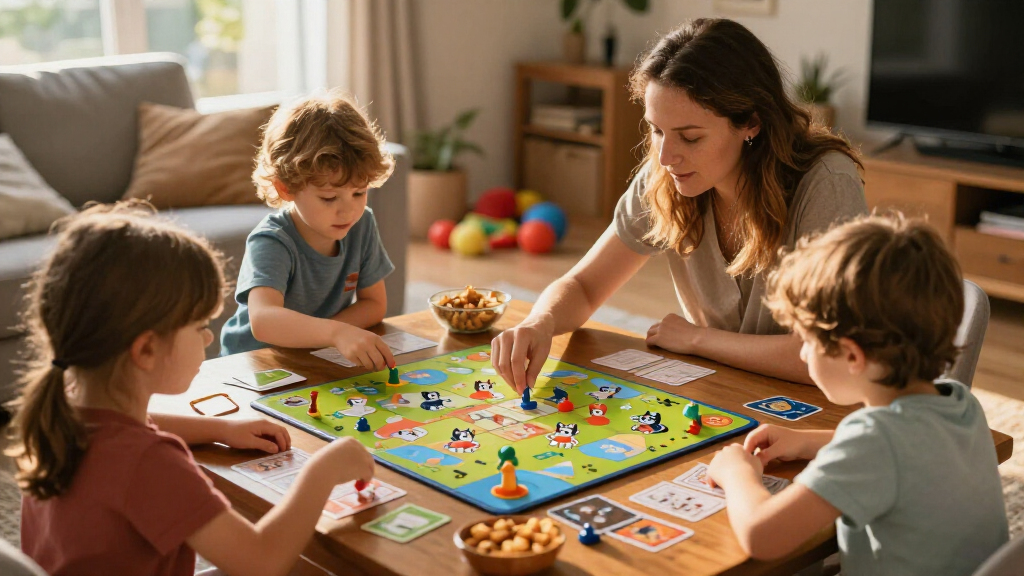

The best Bluey board games bring familiar characters into play without asking young fans to learn too many rules. My best overall pick is Bluey Cooperative Scavenger Hunt, which gives children a shared goal and includes mini-figures; Candy Land: Bluey Edition is a simpler choice for early board-game players, while Guess Who? Bluey Edition suits families who want a more interactive guessing game. The main tradeoff is between easy, luck-led play for younger children and games that ask for more turn-taking, deduction, or rules. Theme matters, too: some options adapt familiar game formats, while others lean more directly into Bluey-inspired play. Read on for how all eight compare and which one best fits your household.

Get baby and family essentials delivered free — and shop member deals
- Fast, free delivery on millions of items
- Access to Prime Big Deal Days deals on October 6–7
- Prime Video, Amazon Music and more included
Complete the kit


Key Takeaways
- Cooperative Scavenger Hunt stands out as the best overall fit for shared play, while several other picks focus on familiar competitive formats.
- Candy Land: Bluey Edition is the clearest entry point for beginners because its recognizable, straightforward style suits children still learning board-game routines.
- Guess Who? Bluey Edition offers a different kind of interaction: players ask questions and narrow down characters rather than relying only on moving around a board.
- Monopoly Junior Bluey Edition and Trouble: Bluey Edition draw on established game structures, which may help adults explain play but may feel less distinct to buyers seeking a Bluey-specific activity.
- The lineup spans very different kinds of fun—from Operation-style dexterity to a cooperative hunt—so age, attention span, and appetite for competition matter more than the Bluey theme alone.
| Operation Bluey Edition Board Game |  | Best for Solo Play | Brand: Hasbro Gaming | Players: 1 or more | Playing time: 10 minutes | VIEW LATEST PRICE | See Our Full Breakdown |
| Goliath Don’t Wake Dad! Bluey Board Game |  | Best for Quick, Simple Family Play | Brand: Goliath | Players: 2–6 | Recommended age: 4 years and up | VIEW LATEST PRICE | See Our Full Breakdown |
| Hasbro Gaming Candy Land Bluey Edition Board Game |  | Best for Preschoolers | Brand: Hasbro Gaming | Edition: Bluey Edition | Players: 2–6 | VIEW LATEST PRICE | See Our Full Breakdown |
| Bluey Cooperative Scavenger Hunt Board Game with 4 Mini-Figures |  | Best Cooperative Pick | Brand: Bluey | Players: 2–4 | Recommended age: 3 years and up | VIEW LATEST PRICE | See Our Full Breakdown |
| Hasbro Gaming Guess Who? Bluey Edition |  | Best for Two-Player Travel | Brand: Hasbro Gaming | Edition: Bluey Edition | Players: 2 | VIEW LATEST PRICE | See Our Full Breakdown |
| Hasbro Gaming Monopoly Junior Bluey Edition Board Game |  | Best for First-Time Property Games | Brand: Hasbro Gaming | Edition: Bluey Edition | Players: 2–4 | VIEW LATEST PRICE | See Our Full Breakdown |
| Hasbro Gaming Trouble: Bluey Edition Board Game |  | Best for Simple, Familiar Racing | Brand: Hasbro Gaming | Edition: Bluey Edition | Players: 2–4 | VIEW LATEST PRICE | See Our Full Breakdown |
| Bluey Rubbish Run Family Board Game |  | Best for Hands-On Play | Brand: Bluey | Recommended age: 4 years and up | Included components: 4 bin boards, 1 garbage truck, 36 rubbish tiles, and 1 rules sheet | VIEW LATEST PRICE | See Our Full Breakdown |
| Bluey board game | Brand | Included components | Players | Recommended age |
|---|---|---|---|---|
| Operation Bluey Edition Board | Hasbro Gaming | Gameboard, tweezers, 12 plastic ailments, 12 cards, and game rules | 1 or more | — |
| Goliath Don’t Wake Dad! Bluey | Goliath | 1 couch, 1 Dad, 1 die, 1 game board, 1 newspaper, 1 sticker sheet, 15 tokens, 6 bases, 6 characters, and instructions | 2–6 | 4 years and up |
| Hasbro Gaming Candy Land Bluey | Hasbro Gaming | 6 character movers, 6 plastic bases, 44 cards, 1 Magic Xylophone, gameboard, and instructions | 2–6 | 3 years and up |
| Bluey Cooperative Scavenger Hu | Bluey | 20 Find Cards, 10 Play Cards, 35 Toy Tokens, 1 Board, and 4 Character Pawns | 2–4 | 3 years and up |
| Hasbro Gaming Guess Who? Bluey | Hasbro Gaming | Game unit | 2 | 6 years and up |
| Hasbro Gaming Monopoly Junior | Hasbro Gaming | Gameboard, 4 Junior tokens, 20 Chattermax cards, 4 character cards, 48 sold signs, 90 banknotes, die, and game guide | 2–4 | 5 years and up |
| Hasbro Gaming Trouble: Bluey E | Hasbro Gaming | Gameboard, 16 character pegs, and instructions | 2–4 | 5 and up |
| Bluey Rubbish Run Family Board | Bluey | 4 bin boards, 1 garbage truck, 36 rubbish tiles, and 1 rules sheet | — | 4 years and up |
More Details on Our Top Picks
Operation Bluey Edition Board Game
Operation Bluey Edition is the clearest pick here for a child who wants to play alone as well as with family. Players remove 12 silly ailments from Bandit, with a buzzer adding a steady-hand challenge; its Hospital and Emergency modes offer more variation than the straightforward card-and-move play of Candy Land Bluey Edition. Music and character phrases give the familiar Operation task a Bluey flavor, while the handled case keeps the pieces together for travel. The tradeoff is that the buzzer can frustrate younger or less patient players, and the game needs three AA batteries that are not included. Choose it for hands-on concentration and flexible player counts, not for a quiet, battery-free game or a cooperative experience.
Pros:- Hospital and Emergency modes provide two ways to play.
- Supports solo play as well as group play.
- Bluey music and character phrases add themed audio.
- Handled case provides portable storage for the game pieces.
Cons:- Requires three AA batteries, which are not included.
- Careful tweezer work and the buzzer may frustrate players who prefer relaxed play.
Best for: Bluey fans aged six and up who want a game that can work for solo play or a family group and enjoy careful, hands-on challenges.
Not ideal for: Families seeking battery-free play, cooperative teamwork, or an easy activity for preschoolers who may find the buzzer stressful.
- Brand:Hasbro Gaming
- Players:1 or more
- Playing time:10 minutes
- Age range:6 years and up
- Game modes:Hospital and Emergency
- Included components:Gameboard, tweezers, 12 plastic ailments, 12 cards, and game rules
- Batteries:3 AA alkaline batteries required; not included
- Language:English
Our verdict“Choose Operation Bluey for an older Bluey fan who wants a portable, hands-on game with a solo option.”
Goliath Don’t Wake Dad! Bluey Board Game
Don’t Wake Dad! Bluey suits families who want a simple race rather than a game built around reading, questions, or dexterity. Players roll and move toward the kitchen for pavlova, with a surprise action that can send someone back to the start. That setback gives the game its suspense, though it also means outcomes rely heavily on luck. Compared with Bluey Cooperative Scavenger Hunt, this game puts players in a race against one another instead of asking them to work as a team. Its support for two to six players makes it a flexible choice for family groups, and it needs no batteries. The main tradeoff is limited strategic choice: a player sent back may have little control over the result, which can be frustrating for children who dislike setbacks.
Pros:- Simple roll-and-move rules suit younger players.
- Accommodates two to six players.
- Requires no batteries.
- The pavlova race and surprise action give the Bluey theme a playful hook.
Cons:- Roll-and-move play offers limited strategic choice.
- The surprise action can send a player back to the start, which may feel discouraging.
Best for: Families with children aged four and up who want an easy-to-explain, battery-free Bluey race for up to six players.
Not ideal for: Players who want cooperative goals, meaningful strategic decisions, or a game where a setback cannot send them back to the start.
- Brand:Goliath
- Players:2–6
- Recommended age:4 years and up
- Batteries:Not required
- Dimensions:10.5 × 10.5 × 0.1 inches
- Included components:1 couch, 1 Dad, 1 die, 1 game board, 1 newspaper, 1 sticker sheet, 15 tokens, 6 bases, 6 characters, and instructions
- Language:English
Our verdict“Pick Don’t Wake Dad! Bluey for a larger family group that values simple, battery-free play over strategy.”
Hasbro Gaming Candy Land Bluey Edition Board Game
Candy Land Bluey Edition is the strongest fit for preschoolers who are ready to follow a simple path but do not yet read. Players draw cards and race Bluey and her family toward home, while Dance Mode cards and Magic Xylophone spaces turn movement into an occasional group activity. Compared with Don’t Wake Dad! Bluey, it adds more themed prompts beyond rolling and moving, but its listed play time is longer at about 30 minutes. The six character movers also make it easy for children to choose a favorite. This is a better introduction to board-game routines than Operation Bluey, which asks for steadier hands and is aimed at older children. Its limits are clear: it needs at least two players, and card-driven movement leaves little room for strategy.
Pros:- No reading is required to follow the card-based movement.
- Dance Mode and Magic Xylophone spaces add playful activities.
- Six Bluey character movers let players pick a favorite.
- Supports two to six players.
Cons:- Requires at least two players.
- Card-driven movement offers little strategic control.
- The estimated 30-minute play time may be long for some preschoolers.
Best for: Preschool families looking for a no-reading Bluey game with simple turns and occasional movement activities.
Not ideal for: Children who want solo play, older players seeking strategic decisions, or families looking for a shorter game.
- Brand:Hasbro Gaming
- Edition:Bluey Edition
- Players:2–6
- Recommended age:3 years and up
- Estimated playing time:30 minutes
- Language:English
- Included components:6 character movers, 6 plastic bases, 44 cards, 1 Magic Xylophone, gameboard, and instructions
- Model number:G1014
Our verdict“Choose Candy Land Bluey for preschoolers who want an accessible, no-reading game with more themed activities than a basic race.”
Bluey Cooperative Scavenger Hunt Board Game with 4 Mini-Figures
Bluey Cooperative Scavenger Hunt stands apart from the competitive races in Candy Land Bluey Edition and Don’t Wake Dad! Bluey: players work together to find and collect 12 toy tokens. That shared goal can suit siblings who do better when a game does not declare one of them the loser. The simple family-play premise and four character pawns keep the Bluey theme close to the action, while the Find and Play cards and toy tokens provide the pieces for the hunt. It is designed for two to four players, so it cannot cover a larger group as Don’t Wake Dad! can, and it does not offer solo play. The supplied product information does not list a playing time, so I would not choose it when a specific short session length is the priority.
Pros:- Cooperative objective encourages players to work together.
- Includes four Bluey character pawns.
- Find Cards, Play Cards, and toy tokens support the scavenger-hunt theme.
- Designed for family play with simple rules.
Cons:- Requires two to four players and does not support solo play.
- Cannot accommodate as many players as Don’t Wake Dad! Bluey.
- No playing-time estimate is provided in the supplied product details.
Best for: Families with two to four young Bluey fans who prefer a shared goal and teamwork over racing to win.
Not ideal for: Solo players, groups larger than four, or buyers who want a listed play time or a competitive race.
- Brand:Bluey
- Players:2–4
- Recommended age:3 years and up
- Included components:20 Find Cards, 10 Play Cards, 35 Toy Tokens, 1 Board, and 4 Character Pawns
- Language:English
- Edition:Standard Edition
- Manufacturer:Moose Toys
- Model number:17144
Our verdict“Choose Cooperative Scavenger Hunt for a small family that wants teamwork instead of a winner-takes-all race.”
Hasbro Gaming Guess Who? Bluey Edition
Guess Who? Bluey Edition is the most focused two-player choice in this group: ask yes-or-no questions to identify a secret character or favorite object. That question-and-answer format gives players more decision-making than the card movement in Candy Land Bluey Edition, but it is less suitable for a family group because it is designed for exactly two. The fold-up cases connect for storage and travel, giving it a practical advantage over games with a larger spread of pieces, such as Bluey Cooperative Scavenger Hunt. Its 15-minute play time also fits a short head-to-head session. The tradeoff is a narrower audience: it needs another player, and children must be ready to ask useful questions and rule out possibilities. The supplied components list names only the game unit, so buyers should not assume extra pieces beyond that.
Pros:- Yes-or-no questions give players more decision-making than simple card movement.
- Features Bluey characters and favorite objects.
- Fold-up cases connect for storage and travel.
- A listed 15-minute play time suits short sessions.
Cons:- Designed for exactly two players.
- Players need to understand how questions narrow down the choices.
- The listed included components name only the game unit.
Best for: Two Bluey fans aged six and up who want a portable, short question-and-answer game for travel or one-on-one play.
Not ideal for: Families needing a game for three or more players, solo play, or preschoolers who are not ready to use yes-or-no questions.
- Brand:Hasbro Gaming
- Edition:Bluey Edition
- Players:2
- Recommended age:6 years and up
- Play time:15 minutes
- Material:Plastic
- Included components:Game unit
- Model number:G3609
Our verdict“Pick Guess Who? Bluey for two older children or an adult and child who want a compact, question-based game.”
Hasbro Gaming Monopoly Junior Bluey Edition Board Game
Simplified Monopoly Junior play gives this Bluey edition a different feel from the lineup’s straight-ahead racing games: children move around town, buy familiar locations, and collect dollarbucks. The rules are designed for ages 5 and up, so it can introduce basic buying and money handling without the complexity of standard Monopoly. Compared with Trouble: Bluey Edition, which centers on luck and getting pegs home, this offers more choices about where to spend. That extra involvement comes with more pieces to manage, including banknotes, cards, and sold signs. Its 2–4 player limit also makes it a less flexible pick for larger family groups, while the roughly 30-minute playtime may feel long for children who prefer a quick round.
Pros:- Bluey characters and familiar locations give the board a strong tie to the show.
- Junior rules make buying locations and handling game money more approachable for young players.
- Supports two to four players, making it suitable for a small family group.
- Includes character cards and Chattermax cards alongside the board and tokens.
Cons:- Play is limited to four players.
- Banknotes, cards, and sold signs create more pieces to organize than a simple racing game.
- The approximately 30-minute playtime may be a stretch for children looking for a quick game.
Best for: Families with children ages 5 and up who want a first property-trading game with recognizable Bluey locations and simple money play.
Not ideal for: Larger groups or families seeking a very short, low-component game; play is limited to four, and the banknotes and location markers add setup and handling.
- Brand:Hasbro Gaming
- Edition:Bluey Edition
- Players:2–4
- Recommended age:5 years and up
- Estimated playing time:30 minutes
- Language:English
- Included components:Gameboard, 4 Junior tokens, 20 Chattermax cards, 4 character cards, 48 sold signs, 90 banknotes, die, and game guide
- Model number:F5687
Our verdict“Choose this for young Bluey fans ready for a first, simplified property game, but pick Trouble if you want less money handling and more direct racing.”
Hasbro Gaming Trouble: Bluey Edition Board Game
Pop-O-Matic dice rolling is the main appeal here: players move Bluey, Bingo, Chilli, and Bandit pegs toward the Finish Zone, with simple rules that are quick to explain. That makes Trouble a more direct option than Monopoly Junior Bluey Edition, which adds buying locations and managing money. The tradeoff is that turns rely heavily on die rolls, so children get little say in how the race unfolds and a lead can change through luck. Its 16 character pegs support a full set of four for each player, but the game still tops out at four participants. Compared with a more involved activity such as Rubbish Run, this is easier to set up and carry, but its familiar race format offers less variety from round to round.
Pros:- Classic Pop-O-Matic roller makes the central action easy for young players to understand.
- Simple rules and quick setup suit casual family play.
- Bluey character pegs make the race recognizable to fans of the show.
- Portable format works for family game nights and travel.
Cons:- Movement depends on die rolls, leaving limited room for player decisions.
- The 2–4 player limit excludes larger groups.
- The familiar race format may feel repetitive for children seeking more varied play.
Best for: Families with children ages 5 and up who want an easy-to-teach Bluey game with a compact board and a familiar racing objective.
Not ideal for: Players who want meaningful strategy or dislike luck-driven outcomes; die rolls largely determine movement, and groups larger than four cannot join.
- Brand:Hasbro Gaming
- Edition:Bluey Edition
- Players:2–4
- Recommended age:5 and up
- Playing time:30 minutes
- Included components:Gameboard, 16 character pegs, and instructions
- Language:English
- Main mechanic:Pop-O-Matic die roller and race to the Finish Zone
Our verdict“Pick Trouble for a portable, low-fuss Bluey race, but choose Monopoly Junior for more decisions or Rubbish Run for a different kind of interaction.”
Bluey Rubbish Run Family Board Game
Sorting tiles and operating the truck give Rubbish Run a hands-on hook that separates it from the lineup’s familiar board races. Players put rubbish tiles into bins, then use the truck’s spinning barrel and dump lever; a surprise spill can send rubbish back into play. Compared with Trouble: Bluey Edition, which mainly turns on dice-driven movement, this asks players to handle pieces and follow a simple sorting task. The same spill mechanic is also its main drawback: progress can be undone by chance, which may frustrate children who want a steady path to winning. The game is listed for ages 4 and up, making it accessible to younger Bluey fans, though managing multiple tiles and bins takes more table attention than a basic race.
Pros:- The truck’s spinning barrel and dump lever make turns physically interactive.
- Sorting rubbish into bins gives play a distinct task beyond moving along a track.
- Simple rules make it approachable for children ages 4 and up.
- Surprise spills add unpredictable moments for family play.
Cons:- Random spills can send rubbish back into play and undo progress.
- Players must manage 36 tiles and four bin boards, adding handling and table space.
- The surprise mechanic may frustrate children who prefer predictable progress.
Best for: Families with children ages 4 and up who enjoy manipulating game pieces and want a Bluey activity built around sorting and a playful truck.
Not ideal for: Children who get frustrated when progress is reversed, or families looking for a very compact game with few pieces to manage.
- Brand:Bluey
- Recommended age:4 years and up
- Included components:4 bin boards, 1 garbage truck, 36 rubbish tiles, and 1 rules sheet
- Material:Paper, ABS, polypropylene, polyoxymethylene, and metal
- Recommended use:Indoor
- Unit count:1
- Main mechanic:Draw and sort rubbish tiles; operate the truck’s spinning barrel and dump lever
- Win condition:First player to get rid of all their rubbish
Our verdict“Choose Rubbish Run for younger players who enjoy hands-on sorting and silly surprises, but opt for Trouble if you want a simpler race with fewer loose pieces.”

How We Picked
I compared these games by how well their play style fits Bluey-loving families, how approachable the rules appear for younger players, and what kind of interaction each one encourages. I also looked at the practical differences between cooperative play, simple movement, deduction, dexterity, and familiar family-game formats. Those distinctions affect whether a game can bring a preschooler into a shared activity or better suits a child ready to follow more structured turns.
The ranking gives priority to a clear fit for family play, accessible gameplay, and a distinct reason to choose the game over another option in this lineup. That puts Cooperative Scavenger Hunt first for its shared objective and character pieces, with Candy Land and Guess Who? close behind for their clear but different kinds of play. Games based on longer-established formats can still be good matches, but their appeal depends more on whether a family already likes that style. I treat product names and themes as signals of format, not proof of age suitability; check the current box for age guidance and component details before buying.
| Bluey board game | Brand | Edition |
|---|---|---|
| Operation Bluey Edition Board | Hasbro Gaming | — |
| Goliath Don’t Wake Dad! Bluey | Goliath | — |
| Hasbro Gaming Candy Land Bluey | Hasbro Gaming | Bluey Edition |
| Bluey Cooperative Scavenger Hu | Bluey | Standard Edition |
| Hasbro Gaming Guess Who? Bluey | Hasbro Gaming | Bluey Edition |
| Hasbro Gaming Monopoly Junior | Hasbro Gaming | Bluey Edition |
| Hasbro Gaming Trouble: Bluey E | Hasbro Gaming | Bluey Edition |
| Bluey Rubbish Run Family Board | Bluey | — |
Factors to Consider When Choosing Best Bluey Board Games
Choosing among Bluey games is less about finding one universal winner and more about matching the play experience to the people around the table. I’d start with the youngest player’s attention span, then think about whether your family prefers cooperation, head-to-head turns, or a familiar game format.
Match the Rules to Your Youngest Player
A child’s ability to follow turns can matter more than their familiarity with Bluey characters. Look for a game whose directions an adult can explain in a few simple steps, especially if a younger sibling will join. Familiar formats such as Candy Land can make the first play easier to introduce, while guessing or dexterity games ask players to understand a different kind of action. Avoid buying solely by the age printed in a listing; check the package guidance and consider how your child handles waiting and rule reminders. If adults expect to play alongside children, an accessible game can still hold attention when each person has a clear role.
Choose Cooperation or Competition on Purpose
Games can feel very different even when they share the same characters. Cooperative play gives children a shared goal and can soften the sting of losing, while competitive formats may suit siblings who enjoy taking turns and comparing outcomes. Neither style is automatically better: a child who gets frustrated when a round goes badly may enjoy working toward a common result. Families with mixed ages can sometimes favor games where an adult can help younger players without taking over. Before buying, decide whether your game night needs everyone pulling together or a friendly contest.
Think About Attention Span and Pace
A game that takes too long to explain or finish may be a poor match for a child who prefers short activities. Consider how much waiting happens between turns, whether players stay involved when another person is acting, and whether the main action repeats. Dexterity and guessing formats can keep attention focused on a specific task, while board-path games may rely more on patience and turn-taking. Product listings do not always make play duration easy to compare, so check the box or publisher information when timing matters. A shorter, repeatable session may get more use than a game with a bigger feature list.
Look Past the Character Art to the Actual Play
Bluey artwork can make a game feel familiar, but the mechanics determine whether it suits your household. Some picks adapt recognizable games, while others put more emphasis on a themed activity or character interaction. If your child already owns a standard version of a game, ask whether the Bluey edition changes the play in a way they will notice or mainly adds themed presentation. For a child drawn to specific characters, included figures or character boards may be a stronger draw than a familiar logo on the box. Check component lists rather than assuming that every edition includes toys or extra pieces.
Decide How Much Adult Help Is Welcome
Some children can manage a simple turn independently; others will need an adult to read prompts, track rules, or help handle pieces. That support can be part of the fun, but it changes whether a game works for a quick activity while a caregiver is busy. When shopping for a gift, ask the recipient’s family whether they want a game adults can join or one children can learn with limited help. Look at the setup and component details for clues about how much hands-on involvement play may require. A game that fits the family’s preferred level of participation is more likely to reach the table.
Check the Box for Age, Components, and Practical Fit
Listings can leave out details that matter at home, including the recommended age, player count, small pieces, and storage needs. Confirm those details on the current packaging, particularly if the game will be shared with toddlers or packed for travel. Mini-figures and other small components may appeal to a Bluey fan but need a safe storage spot and age-appropriate supervision. Also check whether the game needs a flat, roomy surface or can fit on a small table. These practical checks can prevent a themed game from becoming inconvenient for the space and players you have.
Frequently Asked Questions
Which Bluey board game is the best choice for a child who is new to board games?
I’d start by checking the child’s age and comfort with taking turns, then favor a game with a simple, repeatable action. Candy Land: Bluey Edition is a strong candidate for beginners because the familiar format is easier to introduce than deduction or longer rule-based play. A cooperative option may also help if winning and losing cause frustration. An adult may still need to explain turns and keep the game moving. Check the current box guidance before choosing, especially for a very young player.
Which option is better for siblings who do not enjoy competing?
Bluey Cooperative Scavenger Hunt is the clearest match in this lineup for families seeking a shared objective rather than a head-to-head contest. Cooperative play lets siblings work toward the same outcome, which can make the session feel less focused on who won. It still helps to check the rules and age guidance to see whether both children can take part comfortably. If they enjoy competition but need a gentler format, an adult can also team up with a younger child in some games. Confirm the game’s actual rules before relying on that approach.
Are Bluey editions good choices if my family already owns the classic games?
They can be, but the strongest reason to buy one may be the character theme rather than a different core format. Guess Who?, Trouble, and Monopoly Junior use recognizable game structures, so compare the Bluey edition with the version you already have before adding another box. A child who is especially attached to the characters may enjoy the themed boards or pieces enough to make it feel fresh. If your goal is a noticeably different activity, compare those options with the cooperative hunt, Rubbish Run, or Operation Bluey. Check the included components and rules to see what actually differs.
What should I check before buying a Bluey game for a toddler or preschooler?
Check the recommended age, small-piece warnings, player count, and whether the rules rely on reading or sustained turn-taking. The Bluey name alone does not indicate that every game is suitable for toddlers. Consider whether an adult will need to supervise closely or guide most turns, particularly when a box includes mini-figures or other small components. A simple game may still be frustrating if the child is not ready to wait between turns. When in doubt, follow the package guidance and choose a format the child can enjoy with an adult’s help.
Which Bluey board game is most likely to keep adults involved too?
That depends on what adults enjoy: Guess Who? Bluey Edition gives players questions and deductions to work through, while Operation Bluey Edition centers play on a dexterity challenge. Families who already enjoy familiar formats may prefer Monopoly Junior or Trouble. For adults who mainly want to help a young child join in, the cooperative scavenger hunt may offer a more shared experience. Check the rules and intended age range rather than assuming a game will feel engaging to every adult. A good match is one that suits both the child’s skills and the grown-ups’ preferred style of play.
Conclusion
For the broadest family fit, I’d choose Bluey Cooperative Scavenger Hunt as the best overall pick: its shared-goal format and included mini-figures give it a distinct place in this lineup. For best value in play style, Candy Land: Bluey Edition is the sensible starting point for beginners who need a straightforward, familiar format; check current listings for the contents and edition details rather than assuming extras. The strongest premium-style choice for families wanting more character interaction is also the scavenger hunt, while Guess Who? Bluey Edition is my pick for children who enjoy asking questions and narrowing down choices. For dexterity-focused play, look to Operation Bluey Edition; for families who want a familiar competitive game, compare Trouble and Monopoly Junior. Choose according to the youngest player’s readiness and the kind of table experience your household wants, not the theme alone.
Halloween Picks
halloween
As an affiliate, we earn on qualifying purchases.