
For families seeking baby probiotic drops with vitamin D, I’d start with Culturelle Baby Probiotic Drops + Vitamin D as the best overall pick for its clearly combined probiotic-and-vitamin-D format. BioGaia’s Colic & Gas Relief version stands out for parents focused on digestive comfort, while Mommy’s Bliss offers a flavorless option with a stated 400 IU of vitamin D per serving. The main tradeoffs are age range, strain and dose details, serving count, and whether your baby already gets vitamin D elsewhere. Formulas that sound similar may differ in intended use, so check the label rather than choosing by brand alone. Read on for the full comparison and guidance on matching a product to your baby’s needs.

Turn the school run and nap time into listening time
- Thousands of audiobooks, podcasts and originals
- Listen on your phone, tablet or Echo — also offline
- Cancel anytime
Complete the kit


Key Takeaways
- Culturelle Baby Probiotic Drops + Vitamin D is my best overall choice because it combines both nutrients in one infant-oriented product; confirm the current label for dose and directions.
- BioGaia’s Colic & Gas Relief drops are the lineup’s clearest fit for parents seeking a product positioned around colic and gas, while the Immune Active version serves a different stated purpose.
- Mommy’s Bliss lists 400 IU of vitamin D and a flavorless format, making it a useful comparison point for families checking the daily vitamin D amount.
- Lovebug’s two listings are not interchangeable by name alone; compare their current labels, serving directions, and product details before choosing between them.
- Several entries repeat the same or closely related BioGaia and Mommy’s Bliss products, so the 12 listings offer fewer distinct formula choices than the count suggests.
| Biostime Baby Vitamin D & Colic Probiotic Drops for Newborns to 3 Years Old, 32 Servings |  | Best for Extended Age Range | Age range: 0–3 years | Serving size: 1 drop | Servings: 32 | VIEW ON AMAZON | See Our Full Breakdown |
| LOVEBUG USDA Organic Probiotic for Infants & Babies 0-12 Months, Liquid Drops, 20ml |  | Best Organic Probiotic-Only Pick | Age range: 0–12 months | Volume: 20 ml | Probiotic count: 5 billion CFU | VIEW ON AMAZON | See Our Full Breakdown |
| Culturelle Baby Probiotic Drops + Vitamin D, Immune & Digestive Support for Infants |  | Best for a Named Probiotic Strain | Age range: 0–12 months | Volume: 9 ml | Probiotic ingredient: Lactobacillus rhamnosus GG | VIEW ON AMAZON | See Our Full Breakdown |
| Dr. Kids Baby and Kids Probiotic Vitamin D Drops, Unflavored, 0.5 fl oz |  | Best for a Specified Vitamin D and CFU Amount | Volume: 0.5 fl oz | Vitamin D3 per serving: 400 IU | Probiotic count per serving: 1.5 billion CFU | VIEW ON AMAZON | See Our Full Breakdown |
| Lovebug Baby Probiotic Drops – Organic for Infants 0-12 Months |  | Best Multi-Strain Organic Option | Age range: 0–12 months | Volume: 10 ml | Form: Tasteless liquid drops | VIEW ON AMAZON | See Our Full Breakdown |
| Ddrops Baby Probiotic with Vitamin D, 60 Drops – Supports Immune & Digestive Health for Newborns |  | Best for a Simple Daily Dose | Quantity: 60 drops | Probiotic amount: 500 million CFU | Vitamin D: 400 IU | VIEW ON AMAZON | See Our Full Breakdown |
| Mommy’s Bliss Baby Probiotics + Vitamin D Drops, Supports Digestive & Immune Health, 400IU Vitamin D, Flavorless, 0.34 Fl Oz (30 Servings) | 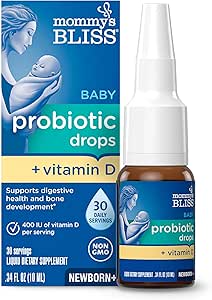 | Best for Flavor-Sensitive Babies | Volume: 0.34 fl oz | Servings: 30 | Vitamin D: 400 IU | VIEW ON AMAZON | See Our Full Breakdown |
| BioGaia Immune Active Baby Probiotic Drops + Vitamin D |  | Best for Allergen-Avoidant Households | Suitable for: Babies and toddlers from the first day of life | Supplement ingredients: Probiotics and vitamin D3 | Free from: Dairy, soy, gluten, sugar, artificial colors, and artificial flavors | VIEW ON AMAZON | See Our Full Breakdown |
| BioGaia Baby Probiotic Drops with Vitamin D – Colic & Gas Relief, 50 Servings |  | Best for Colic and Gas Concerns | Servings: 50 | Form: Drops | Probiotic: Lactobacillus reuteri | VIEW ON AMAZON | See Our Full Breakdown |
| BioGaia Immune Active Baby Probiotic Drops + Vitamin D |  | Best for Science-Positioned Routine Support | Suitable for: Babies and toddlers from the first day of life | Probiotic source description: Probiotics naturally found in breast milk | Vitamin: Vitamin D3 | VIEW ON AMAZON | See Our Full Breakdown |
| BioGaia Baby Probiotic Drops + Vitamin D – Colic & Gas Relief, 50 Servings |  | Best for Colic-Focused Support | Servings: 50 | Suitable for: Newborns and older infants | Use focus: Colic, gas, and digestive discomfort support | VIEW ON AMAZON | See Our Full Breakdown |
| Mommy’s Bliss Baby Probiotic Drops with Vitamin D, 400 IU, Supports Digestive Health & Immune Function, Flavorless, 0.34 fl oz (30 servings), Pack of 2 |  | Best for Clearly Specified Vitamin D | Vitamin D: 400 IU per serving | Probiotic strain: Lactobacillus rhamnosus GG | Form: Liquid drops | VIEW ON AMAZON | See Our Full Breakdown |
| baby probiotic drops vitamin d | Free from | Form | Suitable for |
|---|---|---|---|
| Biostime Baby Vitamin D & Coli | Allergens, gluten, and preservatives; non-GMO | Liquid drops | — |
| LOVEBUG USDA Organic Probiotic | Allergens, sugar, and artificial additives | — | — |
| Culturelle Baby Probiotic Drop | GMO ingredients, gluten, dairy, sugar, and peanuts | Drops | — |
| Dr. Kids Baby and Kids Probiot | Dairy, sugar, artificial colors, artificial flavors, and gluten | Unflavored drops | — |
| Lovebug Baby Probiotic Drops | Artificial ingredients and allergens, according to supplied product data | Tasteless liquid drops | — |
| Ddrops Baby Probiotic with Vit | — | — | Newborns, 0 months+ |
| Mommy’s Bliss Baby Probiotics | — | Flavorless liquid drops | Newborns+ |
| BioGaia Immune Active Baby Pro | Dairy, soy, gluten, sugar, artificial colors, and artificial flavors | — | Babies and toddlers from the first day of life |
| BioGaia Baby Probiotic Drops w | Dairy, soy, gluten, sugar, artificial colors, and artificial flavors | Drops | Newborns |
| BioGaia Immune Active Baby Pro | Dairy, soy, gluten, sugar, artificial colors, and artificial flavors | — | Babies and toddlers from the first day of life |
| BioGaia Baby Probiotic Drops + | Allergens, dairy, soy, gluten, sugar, artificial colors, and artificial flavors | — | Newborns and older infants |
| Mommy’s Bliss Baby Probiotic D | — | Liquid drops | Newborns |
More Details on Our Top Picks
Biostime Baby Vitamin D & Colic Probiotic Drops for Newborns to 3 Years Old, 32 Servings
Biostime is the clearest fit for families who want probiotic and vitamin D in one product beyond the first birthday. Its stated age range runs from birth to 3 years, while Culturelle Baby Probiotic Drops + Vitamin D and the Lovebug infant formulas are limited to babies up to 12 months. That wider range can simplify a household routine as a child grows, and the one-drop serving can be mixed with milk or food. The product data also lists 32 servings and an allergen-free, gluten-free, non-GMO, preservative-free formula. The tradeoff is that the bottle offers a finite serving count, and the flavorless drops may not suit every baby’s preferences. The description says it supports colic and gas, but parents should not treat supplement claims as a substitute for medical advice.
Pros:- Labeled for ages 0–3 years, extending beyond the infant-only options in this group
- Combines probiotic support and vitamin D in one liquid product
- One-drop serving can be mixed with breast milk, formula, or food
- Listed as allergen-free, gluten-free, non-GMO, and preservative-free
Cons:- The 32-serving count means the bottle is not a long-term supply
- Flavorless drops may be harder for some babies to accept
- The supplied data does not identify probiotic strains or CFU count
Best for: Caregivers seeking a combined probiotic and vitamin D drop labeled for use from newborn age through 3 years.
Not ideal for: Families who specifically want an organic-certified product or a probiotic-only formula; the supplied product details do not list organic certification and this combines vitamin D with probiotics.
- Age range:0–3 years
- Serving size:1 drop
- Servings:32
- Form:Liquid drops
- Vitamin D:100% daily value per serving, as listed in product data
- Made in:France
- Free from:Allergens, gluten, and preservatives; non-GMO
Our verdict“Choose Biostime if you want a combined probiotic and vitamin D product labeled through age 3, rather than an infant-only option.”
LOVEBUG USDA Organic Probiotic for Infants & Babies 0-12 Months, Liquid Drops, 20ml
LOVEBUG’s 20 ml formula is the organic-focused choice for families who want a probiotic without added vitamin D. It lists six clinically studied strains and 5 billion CFU, with USDA Organic, vegan, sugar-free, and allergen-free attributes. That makes it a different kind of pick from Culturelle Baby Probiotic Drops + Vitamin D: LOVEBUG offers more listed strains and a larger stated volume, while Culturelle combines its probiotic with vitamin D. That distinction matters for caregivers keeping vitamin D separate or following a clinician’s plan for individual supplements. Its main limitation is the 0–12-month age range, and it is not a one-product answer to a roundup focused on combined probiotic and vitamin D drops. Liquid administration may also take some trial and error.
Pros:- USDA Organic certification is explicitly listed
- Lists six clinically studied strains and 5 billion CFU
- Sugar-free, vegan, and allergen-free
- 20 ml volume is larger than the listed 9 ml Culturelle option
Cons:- Does not list vitamin D, so it does not provide the combined support sought in this roundup
- Labeled only for infants up to 12 months
- Liquid drops may be difficult to administer to some babies
Best for: Caregivers of babies under 12 months who prioritize USDA Organic certification and want a probiotic-only formula with multiple listed strains.
Not ideal for: Parents seeking one product that supplies both probiotics and vitamin D, or a formula labeled for toddlers beyond 12 months.
- Age range:0–12 months
- Volume:20 ml
- Probiotic count:5 billion CFU
- Probiotic strains:6 clinically studied strains
- Certification:USDA Organic
- Other listed attributes:Non-GMO and vegan
- Free from:Allergens, sugar, and artificial additives
Our verdict“Pick LOVEBUG if organic probiotic-only drops suit your plan and you will provide vitamin D separately as advised.”
Culturelle Baby Probiotic Drops + Vitamin D, Immune & Digestive Support for Infants
Culturelle stands out for naming Lactobacillus rhamnosus GG and pairing it with vitamin D in a simple infant formula. For caregivers who want to know which probiotic strain is listed, that specificity sets it apart from Biostime, whose supplied details do not name a strain or CFU count. Culturelle is intended for ages 0–12 months and lists a daily amount of vitamin D; it is also free from GMO ingredients, gluten, dairy, sugar, and peanuts. The compact 9 ml bottle is the key tradeoff: it has less stated volume than LOVEBUG’s 20 ml probiotic-only drops, and the product must be used within 60 days of opening. It also requires daily use and does not cover toddlers beyond the first year.
Pros:- Combines probiotic and vitamin D in one product
- Names Lactobacillus rhamnosus GG
- Lists the recommended daily amount of vitamin D
- Free from GMO ingredients, gluten, dairy, sugar, and peanuts
Cons:- 9 ml volume is smaller than the listed LOVEBUG 20 ml bottle
- Must be used within 60 days after opening
- Labeled only for infants aged 0–12 months
Best for: Caregivers of infants under 12 months who want a combined probiotic and vitamin D product with a named probiotic strain.
Not ideal for: Families wanting an organic-certified formula, a larger bottle, or one labeled for use beyond the first birthday.
- Age range:0–12 months
- Volume:9 ml
- Probiotic ingredient:Lactobacillus rhamnosus GG
- Vitamin D:Included; product data describes the amount as the recommended daily amount
- Free from:GMO ingredients, gluten, dairy, sugar, and peanuts
- Form:Drops
- Use after opening:Within 60 days
Our verdict“Choose Culturelle if a named probiotic strain and combined vitamin D matter more to you than bottle size or an extended age range.”
Dr. Kids Baby and Kids Probiotic Vitamin D Drops, Unflavored, 0.5 fl oz
Dr. Kids is the most explicit option here about both vitamin D and probiotic quantity per serving: the supplied details list 400 IU of vitamin D3 and 1.5 billion CFU. That makes the label easier to compare with a clinician’s guidance than Culturelle, whose data names the vitamin but not an IU amount. The product is also listed as free from dairy, sugar, artificial colors, flavors, and gluten. Its 0.5 fl oz bottle is small, so caregivers looking for a larger supply may prefer LOVEBUG’s 20 ml probiotic drops, though LOVEBUG does not list vitamin D. Dr. Kids is unflavored and its supplied data does not specify an age range, so parents should check the product label and ask a pediatric clinician before use.
Pros:- Lists 400 IU of vitamin D3 per serving
- Lists 1.5 billion CFU per serving
- Free from dairy, sugar, artificial colors, flavors, and gluten
- Combines probiotics and vitamin D in one drop formula
Cons:- Small 0.5 fl oz bottle may require more frequent replacement
- Unflavored format may not suit caregivers seeking a flavored option
- Supplied product data does not state an age range or probiotic strains
Best for: Caregivers who want the product data to state both vitamin D3 IU and probiotic CFU per serving.
Not ideal for: Families who need a clearly stated age range in the supplied product information or want a larger bottle and more listed formulation details.
- Volume:0.5 fl oz
- Vitamin D3 per serving:400 IU
- Probiotic count per serving:1.5 billion CFU
- Form:Unflavored drops
- Shelf life:2 years from manufacturing date
- Free from:Dairy, sugar, artificial colors, artificial flavors, and gluten
Our verdict“Choose Dr. Kids if clearly stated vitamin D3 and CFU amounts are your priority, after confirming age suitability on the label.”
Lovebug Baby Probiotic Drops – Organic for Infants 0-12 Months
This Lovebug version is best distinguished by its six named probiotic strains and organic positioning. The list includes Lactobacillus reuteri, rhamnosus GG, plantarum, and acidophilus, plus Bifidobacterium infantis and B. lactis. Compared with the 20 ml LOVEBUG formula in this lineup, this bottle is 10 ml and the supplied details name the strains rather than giving a CFU count. It is also a probiotic-only product, unlike Culturelle and Biostime, which pair probiotics with vitamin D. That makes it a less direct match for buyers seeking a combined baby probiotic drops vitamin D product, but a potential fit for families following separate guidance for vitamin D. The infant-only age range and smaller bottle are meaningful limits.
Pros:- Lists six probiotic strains by name
- Described as USDA Certified Organic, non-GMO, and vegan
- Tasteless format may be easier to mix into an infant’s routine
- Free from artificial ingredients and allergens, according to the supplied data
Cons:- Does not list vitamin D
- 10 ml bottle is smaller than the other LOVEBUG option’s 20 ml volume
- No CFU amount is provided in the supplied specifications
Best for: Caregivers of babies under 12 months who want an organic-positioned probiotic with six named strains and plan vitamin D separately.
Not ideal for: Parents seeking a combined probiotic and vitamin D drop, a stated CFU amount, or a larger bottle.
- Age range:0–12 months
- Volume:10 ml
- Form:Tasteless liquid drops
- Probiotic strains:Lactobacillus reuteri, L. rhamnosus GG, L. plantarum, L. acidophilus, Bifidobacterium infantis, and B. lactis
- Certification and attributes:USDA Certified Organic, non-GMO, and vegan
- Free from:Artificial ingredients and allergens, according to supplied product data
Our verdict“Choose this Lovebug formula if a named multi-strain probiotic is your focus and vitamin D will be handled separately.”
Ddrops Baby Probiotic with Vitamin D, 60 Drops – Supports Immune & Digestive Health for Newborns
One drop daily pairs 500 million CFU of probiotics with 400 IU of vitamin D3, making this a straightforward choice for caregivers who want both in a single routine. Its 60-drop quantity is longer-lasting than the 30-serving Mommy’s Bliss option, while the listed probiotic amount gives shoppers more detail than several BioGaia listings in this lineup. The tradeoff is that 500 million CFU is a relatively modest stated dose, and the product data does not identify the bacterial strain, so buyers seeking strain-specific information may prefer a more clearly characterized option. It is listed for newborns and is non-GMO with no artificial preservatives. Daily administration is part of the routine, and caregivers should check with their pediatrician about vitamin D needs and supplement use.
Pros:- Combines 500 million CFU of probiotics with 400 IU of vitamin D3 per daily drop
- 60 drops provide more listed doses than Mommy’s Bliss’s 30 servings
- Suitable from birth
- Non-GMO and free from artificial preservatives
Cons:- The stated probiotic amount is relatively modest
- The product details do not name the probiotic strain
- Requires daily administration
Best for: Caregivers seeking a one-drop newborn routine with a stated probiotic count, vitamin D3, and a 60-drop supply.
Not ideal for: Buyers who want named probiotic strains or a higher stated CFU amount, since those details are not provided here.
- Quantity:60 drops
- Probiotic amount:500 million CFU
- Vitamin D:400 IU
- Serving routine:One drop daily
- Suitable for:Newborns, 0 months+
- GMO status:Non-GMO
- Artificial preservatives:None
Our verdict“Choose Ddrops if a one-drop routine and clearly stated vitamin D and CFU amounts matter more than strain detail or a higher probiotic count.”
Mommy’s Bliss Baby Probiotics + Vitamin D Drops, Supports Digestive & Immune Health, 400IU Vitamin D, Flavorless, 0.34 Fl Oz (30 Servings)
Flavorless liquid is the clearest reason to choose this Mommy’s Bliss formula: it may suit families who want to give drops without adding a noticeable taste. The product combines probiotics with 400 IU of vitamin D and is described as suitable for newborns, covering the main needs in this roundup. Compared with Ddrops, it has a smaller listed supply—30 servings rather than 60 drops—and the available product details do not state its CFU count or probiotic strain. That makes it harder to compare probiotic strength on paper. The description also flags heat sensitivity during delivery and gives limited storage information, so caregivers may need to check the package guidance and plan for suitable handling. It is a practical basic option, but not the most transparent listing for dose specifics.
Pros:- Flavorless liquid may be easier to give to taste-sensitive babies
- Includes 400 IU of vitamin D
- Described as suitable for newborns
- Combines probiotics and vitamin D in one supplement
Cons:- Listed as 30 servings, fewer than Ddrops’ 60-drop quantity
- Product details do not specify CFU count or probiotic strain
- Heat sensitivity and limited storage guidance call for careful handling
Best for: Caregivers of newborns who prioritize a flavorless liquid and want probiotic drops combined with 400 IU of vitamin D.
Not ideal for: Buyers who need a longer listed supply, a stated CFU count, or detailed storage and strain information.
- Volume:0.34 fl oz
- Servings:30
- Vitamin D:400 IU
- Form:Flavorless liquid drops
- Suitable for:Newborns+
- Supplement type:Probiotics and vitamin D
Our verdict“Pick Mommy’s Bliss when flavorless dosing is the priority, but choose Ddrops if a longer listed supply and stated CFU amount matter more.”
BioGaia Immune Active Baby Probiotic Drops + Vitamin D
Allergen exclusions are this BioGaia option’s main point of difference: its product details list no dairy, soy, gluten, sugar, artificial colors, or artificial flavors. It is described for babies and toddlers from the first day of life, giving it a broader age range than newborn-only choices such as the Mommy’s Bliss listing. The formula pairs probiotics with vitamin D3 and is positioned for digestive, immune, and bone support. Compared with BioGaia’s Colic & Gas Relief drops in this lineup, this listing puts more emphasis on broad immune support and allergen exclusions than on a specific 50-serving count or named digestive complaints. The tradeoff is limited dosing and strain information, and its description says the probiotics are naturally found in breast milk, which may not suit shoppers looking for multiple identified strains. Daily use is required.
Pros:- Listed for babies and toddlers from the first day of life
- Free from dairy, soy, gluten, sugar, artificial colors, and artificial flavors
- Combines probiotics with vitamin D3
- Described as supporting digestive, immune, and bone health
Cons:- No serving count or probiotic quantity is provided
- The product details do not identify specific strains
- Requires daily administration
Best for: Families seeking a newborn-to-toddler probiotic and vitamin D formula that excludes several common food allergens and added flavors.
Not ideal for: Shoppers who need a stated serving count, probiotic quantity, or named strains to compare formulas closely.
- Suitable for:Babies and toddlers from the first day of life
- Supplement ingredients:Probiotics and vitamin D3
- Free from:Dairy, soy, gluten, sugar, artificial colors, and artificial flavors
- Digestive support:Listed
- Immune support:Listed
- Bone development support:Listed
- Administration:Daily
Our verdict“Choose this BioGaia listing for its broad allergen exclusions and birth-to-toddler suitability, not for detailed dose comparisons.”
BioGaia Baby Probiotic Drops with Vitamin D – Colic & Gas Relief, 50 Servings
Among these options, this BioGaia formula is the most directly aimed at caregivers focused on colic, gas, spit-ups, or occasional constipation. Its listing identifies Lactobacillus reuteri and vitamin D, giving more strain detail than the BioGaia Immune Active listings here, while its 50 servings exceed Mommy’s Bliss’s 30. It is described for newborns across breast-, bottle-, and mixed-feeding routines, which makes its intended audience clear. The tradeoff is that the product data does not state the probiotic CFU amount or vitamin D quantity, so it is harder to compare dose strength with Ddrops, which lists both. Digestive response can vary between infants, and these drops are not a substitute for medical advice about persistent symptoms. Its allergen exclusions are useful, but the specific symptom focus may be unnecessary for families seeking a basic daily formula.
Pros:- Specifically positioned for colic, gas, spit-ups, and occasional constipation
- Names Lactobacillus reuteri as the probiotic
- 50 servings, more than Mommy’s Bliss’s listed 30 servings
- Listed as suitable for breast-fed, bottle-fed, and mixed-fed newborns
Cons:- Product details do not state CFU count or vitamin D quantity
- Digestive benefits may vary between infants
- Symptom-focused positioning may be more than families seeking a basic daily supplement need
Best for: Caregivers of newborns concerned about gas or colic who want a named probiotic strain and a formula listed for different feeding methods.
Not ideal for: Families looking for a basic vitamin D and probiotic supplement with clearly stated CFU and vitamin D amounts.
- Servings:50
- Form:Drops
- Probiotic:Lactobacillus reuteri
- Vitamin:Vitamin D
- Suitable for:Newborns
- Feeding methods:Breast-fed, bottle-fed, or mixed-fed
- Free from:Dairy, soy, gluten, sugar, artificial colors, and artificial flavors
Our verdict“Choose these BioGaia drops for a newborn-focused formula with a named strain and colic-and-gas positioning, while recognizing that dose amounts are not listed.”
BioGaia Immune Active Baby Probiotic Drops + Vitamin D
This BioGaia Immune Active listing is best suited to shoppers who value a formula described as clinically tested and scientifically validated for digestive and immune support. It includes probiotics described as naturally found in breast milk along with vitamin D3, and is listed for babies and toddlers from the first day of life. Like the other Immune Active BioGaia entry in this roundup, it excludes dairy, soy, gluten, sugar, artificial colors, and artificial flavors; unlike the Colic & Gas Relief product, its description centers on broader routine support rather than naming colic or gas as the main focus. The drawback is sparse dosing information: no serving count, CFU amount, or specific strain is supplied here. Ddrops offers a clearer stated daily dose and CFU count, so it is easier to compare if dose transparency is the priority.
Pros:- Listed for babies and toddlers from the first day of life
- Includes probiotics and vitamin D3
- Free from dairy, soy, gluten, sugar, artificial colors, and artificial flavors
- Described as clinically tested and scientifically validated
Cons:- No CFU amount or serving count is provided
- The product details do not identify specific probiotic strains
- Specific dosage instructions are not provided
Best for: Caregivers seeking a birth-onward probiotic and vitamin D formula with allergen exclusions and a science-positioned description.
Not ideal for: Buyers who want exact CFU, named strain, serving-count, or dose instructions before comparing products.
- Suitable for:Babies and toddlers from the first day of life
- Probiotic source description:Probiotics naturally found in breast milk
- Vitamin:Vitamin D3
- Free from:Dairy, soy, gluten, sugar, artificial colors, and artificial flavors
- Testing description:Clinically tested
- Validation description:Scientifically validated
- Support focus:Digestive health, immune function, and regularity
Our verdict“Choose this BioGaia option for broad, science-positioned support and allergen exclusions, but prefer Ddrops if you need clearer dose details.”
BioGaia Baby Probiotic Drops + Vitamin D – Colic & Gas Relief, 50 Servings
BioGaia Baby Probiotic Drops + Vitamin D earns this role for families prioritizing digestive discomfort support: the description specifically names colic and gas relief, and the drops are suitable from the newborn stage across feeding types. Its 50 servings offer more servings per bottle than the 30-serving Mommy’s Bliss option listed here, which may suit households seeking a longer supply. The formula is described as using a probiotic naturally found in breast milk and excludes several common ingredients, including dairy, soy, gluten, and sugar. The tradeoff is that the provided description does not state the vitamin D amount or dosage directions, so caregivers who need those details at a glance may prefer Mommy’s Bliss, which specifies 400 IU per serving. The product also notes that consistent use may be needed.
Pros:- Specifically positioned to support relief from colic, gas, and digestive discomfort
- Suitable for newborns and older infants and described as safe for all feeding types
- Provides 50 servings, compared with 30 servings per bottle for the listed Mommy’s Bliss option
- Described as free from allergens, dairy, soy, gluten, sugar, artificial colors, and artificial flavors
Cons:- The provided product details do not specify vitamin D per serving
- Dosage instructions are not stated in the description
- May require consistent use for best results
Best for: Caregivers of newborns or older infants seeking probiotic drops specifically positioned for colic and gas support, with a longer 50-serving supply.
Not ideal for: Caregivers who need a clearly stated vitamin D amount or dosage instructions in the product details, or who want a stated probiotic strain.
- Servings:50
- Suitable for:Newborns and older infants
- Use focus:Colic, gas, and digestive discomfort support
- Feeding types:Described as safe for all feeding types
- Probiotic description:Probiotic naturally found in breast milk
- Free from:Allergens, dairy, soy, gluten, sugar, artificial colors, and artificial flavors
Our verdict“Choose BioGaia if colic and gas support and a 50-serving supply matter more to you than having the vitamin D amount and dosage stated in the product details.”
Mommy’s Bliss Baby Probiotic Drops with Vitamin D, 400 IU, Supports Digestive Health & Immune Function, Flavorless, 0.34 fl oz (30 servings), Pack of 2
Mommy’s Bliss Baby Probiotic Drops with Vitamin D stands out for caregivers who want the vitamin D amount spelled out: each serving provides 400 IU, alongside Lactobacillus rhamnosus GG. That makes its stated formulation easier to compare with options such as BioGaia Baby Probiotic Drops + Vitamin D, whose provided details emphasize colic and gas but do not state the vitamin D amount. The flavorless liquid and newborn suitability may also appeal to families looking for a simple drop format, while the two-bottle pack provides 30 servings per bottle. Its stated focus includes digestive health, immune function, and bone development. The main drawback is heat and sunlight sensitivity, which can affect storage and delivery; it also has fewer servings per bottle than BioGaia’s 50-serving option.
Pros:- Specifies 400 IU of vitamin D per serving
- Names Lactobacillus rhamnosus GG as the probiotic strain
- Flavorless liquid drops are described as safe for newborns
- Two-bottle pack provides 60 servings total when each bottle contains 30 servings
Cons:- Heat or sunlight exposure may melt or damage the product
- At 30 servings per bottle, each bottle provides fewer servings than BioGaia’s 50-serving option
- The supplied details do not state whether the formula is free from specific allergens
Best for: Caregivers who want a flavorless newborn-appropriate probiotic drop with a stated 400 IU of vitamin D per serving and a named probiotic strain.
Not ideal for: Families who need a longer supply from each bottle or may have difficulty protecting the product from heat and sunlight.
- Vitamin D:400 IU per serving
- Probiotic strain:Lactobacillus rhamnosus GG
- Form:Liquid drops
- Bottle size:0.34 fl oz
- Servings per bottle:30
- Pack quantity:2 bottles
- Flavor:Flavorless
- Suitable for:Newborns
Our verdict“Pick Mommy’s Bliss if a stated 400 IU vitamin D serving and named probiotic strain matter more than maximizing servings per bottle or avoiding heat-sensitive storage.”

How We Picked
I compared the listed products on the factors that most affect a family’s choice: whether probiotic and vitamin D are combined, the stated age range, serving format and count, flavor information, and the product’s stated purpose. I gave extra weight to listings that provide a clear use case, such as colic-and-gas positioning, and to labels that state a vitamin D amount. These details help distinguish an all-purpose combination drop from a product selected for a narrower need.
The order favors clear fit and useful label information, not an assumption that one formula works for every baby. Culturelle ranks first as a straightforward combined option; BioGaia’s distinct product versions follow because their stated purposes help parents narrow the field. Mommy’s Bliss rates well for its stated vitamin D amount and flavorless format, while products with less detail in the supplied listing rank lower. Duplicate listings are treated as near-identical choices rather than separate innovations, and I recommend checking package labels because formulations and directions can change.
| baby probiotic drops vitamin d | Form | Suitable for |
|---|---|---|
| Biostime Baby Vitamin D & Coli | Liquid drops | — |
| LOVEBUG USDA Organic Probiotic | — | — |
| Culturelle Baby Probiotic Drop | Drops | — |
| Dr. Kids Baby and Kids Probiot | Unflavored drops | — |
| Lovebug Baby Probiotic Drops | Tasteless liquid drops | — |
| Ddrops Baby Probiotic with Vit | — | Newborns, 0 months+ |
| Mommy’s Bliss Baby Probiotics | Flavorless liquid drops | Newborns+ |
| BioGaia Immune Active Baby Pro | — | Babies and toddlers from the first day of life |
| BioGaia Baby Probiotic Drops w | Drops | Newborns |
| BioGaia Immune Active Baby Pro | — | Babies and toddlers from the first day of life |
| BioGaia Baby Probiotic Drops + | — | Newborns and older infants |
| Mommy’s Bliss Baby Probiotic D | Liquid drops | Newborns |
Factors to Consider When Choosing Baby Probiotic Drops Vitamin D
Before choosing drops, I’d match the product to your baby’s age, existing vitamin D routine, and the reason you want a probiotic. A combination product can simplify the routine, but only if its directions and nutrient amounts fit advice from your child’s clinician.
Check the Vitamin D Amount Against the Whole Routine
Start by adding up vitamin D from all sources, including drops, formula, and any other supplement your baby takes. A product’s stated amount per serving is more useful than a general claim that it contains vitamin D. Do not assume that a combined product replaces a separate supplement without checking with your pediatric clinician. A common mistake is giving both products because the combination drop is treated as “just a probiotic.” If the amount or directions are unclear, ask a clinician or pharmacist to help interpret the label. This step can matter more than choosing between two familiar brands.
Match the Age Range and Directions to Your Baby
Age guidance varies across this lineup, and a label written for infants may not cover every child through toddlerhood. Confirm that your baby falls within the product’s stated age range and follow its serving directions exactly. Do not infer that two products from one brand have identical instructions; the Immune Active and Colic & Gas Relief listings have different stated positioning. If your baby was born prematurely or has a medical condition, ask a clinician before starting a supplement. The right match is the one whose label and professional guidance fit your child, not simply the one with the broadest age claim.
Look at the Probiotic Details, Not Just the Word “Probiotic”
Probiotic products can differ by strain, amount, and intended use, so the broad category name does not tell you that formulas are equivalent. Check the package for strain identification and serving information, then ask your clinician whether those details suit your reason for using it. A product marketed around digestive comfort is not automatically a treatment for persistent symptoms. Avoid switching between products as though their ingredients and evidence are interchangeable. If the listing does not provide enough information to compare strains or amounts, use the full product label or contact the manufacturer before buying.
Choose a Format That Fits Your Feeding Routine
Liquid drops can be easier to include in a daily routine than formats that require mixing or swallowing, but serving directions still vary. Check whether the manufacturer directs you to place drops on a spoon, into a bottle, or another way; do not assume every product can be added to warm milk. Flavorless labeling may appeal to families concerned about taste, though it does not guarantee that every baby will accept the dose. Think about who will give the drops and when, especially if caregivers share feeding duties. A clear, repeatable routine is more useful than a feature that sounds convenient but does not fit your household.
Compare Servings and Package Size Without Chasing a Bigger Count
Serving counts vary across the listings, and a larger number does not automatically mean a better fit. Compare the directed daily amount, bottle size, and how long the product is intended to remain in use after opening. A multi-pack, such as the Mommy’s Bliss pack of two, may suit families who already know they want that formula, but it is a less flexible first purchase. Check storage instructions and any guidance on use after opening before buying several bottles. The practical choice is the package you can use correctly within its stated handling period.
Use Product Claims as a Starting Point, Not a Diagnosis
Terms such as immune support, colic relief, and digestive support describe product positioning; they do not establish that a supplement will resolve an individual baby’s symptoms. Persistent crying, feeding difficulty, vomiting, blood in stool, or other concerning changes call for medical advice rather than trial-and-error product changes. If you are considering a probiotic for a specific concern, ask your child’s clinician whether it is appropriate and what outcome to monitor. This is especially useful when a product has a narrower stated purpose than a general combination drop. Choosing by a clear need is helpful, but safety and clinical guidance come first.
Frequently Asked Questions
Can I give a probiotic-plus-vitamin-D drop along with a separate vitamin D supplement?
Possibly, but first compare the amount of vitamin D in each product and review your baby’s full routine with a pediatric clinician. The Mommy’s Bliss listings state 400 IU per serving, while the amount should be checked on the current label for any product you choose. Formula and other supplements may also contribute vitamin D. Avoid doubling up because one product is thought of as a probiotic rather than a vitamin supplement. Follow professional advice and the package directions for your child.
Are BioGaia Immune Active and BioGaia Colic & Gas Relief the same product?
The listings present them as different versions with different stated purposes, so I would not treat them as interchangeable. Compare the full package labels for probiotic strain, amount, vitamin D content, age guidance, and directions. The product name alone does not establish that the ingredients or intended use match. If you are choosing one for a specific symptom, ask your clinician whether that product is suitable. Also check that the item being purchased matches the exact version you meant to select.
Which details should I check when two listings from the same brand look nearly identical?
Compare the exact product name, package size, number of servings, ingredient panel, and directions rather than relying on the brand name or listing title. This matters here because Lovebug, BioGaia, and Mommy’s Bliss each appear in more than one listing or package format. A pack of two may contain the same formula as a single bottle, but confirm that on the packaging. Check whether the vitamin D amount and probiotic details match before treating the products as duplicates. If a listing omits those details, consult the manufacturer’s label information.
Should I choose drops marketed for colic if my baby is fussy?
Fussiness has many possible causes, and a colic-related product claim does not identify the cause or promise relief. If crying is persistent, severe, or accompanied by feeding problems or other symptoms, contact your baby’s clinician before trying a supplement. If a clinician supports trying a probiotic, compare the product’s strain, age directions, and vitamin D amount with your baby’s needs. Keep the rest of the routine stable so you can report any changes accurately. Do not use drops in place of medical assessment when symptoms concern you.
Is a flavorless or organic label enough to decide which drops to buy?
No. Those features may matter to your preferences, but they do not tell you whether the dose, age range, probiotic details, or vitamin D amount fits your baby. Flavorless labeling, as shown on the Mommy’s Bliss listings, may suit families who prefer a product without an added flavor. Lovebug’s organic positioning may appeal to shoppers who prioritize that attribute, but it does not replace checking the complete ingredient and directions panels. Choose based on the full label and your clinician’s guidance, then weigh preference features among products that otherwise fit.
Conclusion
Best overall: I’d begin with Culturelle Baby Probiotic Drops + Vitamin D for a straightforward combined-format choice. Best for specific digestive needs: BioGaia Colic & Gas Relief is the most directly positioned option for parents discussing colic or gas with a clinician; BioGaia Immune Active is a separate choice with a different stated purpose. Best for beginners: Mommy’s Bliss is a clear starting point for families who value a flavorless format and a stated 400 IU of vitamin D, provided that amount fits the baby’s total routine. Best value-style package choice: compare the serving directions and package size of the standard Mommy’s Bliss listing with its two-pack, rather than assuming a larger pack is right for a first try. Best for organic-label priorities: compare the two Lovebug listings by their current labels before choosing. For any baby, I’d put age fit, vitamin D totals, and clinician guidance ahead of brand claims.