If you’re shopping for the best kids’ bikes with gears, the decision usually comes down to three things: how smoothly the drivetrain shifts, how confidently your child can stop, and how much bike you get for your money. The Glerc 20/24 Inch 7-Speed stands out as the best overall pick because it balances a forgiving 7-speed setup with dual brakes and a size range that grows with your child. For parents willing to invest more, the woom GO 4 offers lighter, more refined performance for riders aged 6–8, while the Retrospec Dart is the strongest value play for neighborhood and light trail riding. Budget shoppers will find capable options under the CYBIC and WEIZE names, though heavier frames and cheaper components are the tradeoff. The core tension in this category is weight and quality versus price — premium bikes are easier for small riders to handle, while budget bikes pack in features like disc brakes and suspension at the cost of heft. Keep reading for the full breakdown of each model and who it suits best.

Turn the school run and nap time into listening time
- Thousands of audiobooks, podcasts and originals
- Listen on your phone, tablet or Echo — also offline
- Cancel anytime
Complete the kit


Key Takeaways
- The Glerc 20/24 Inch 7-Speed earns the top spot because it’s the only pick that combines a manageable weight, dual brake types, and two frame sizes — making it the safest all-around bet for mixed-terrain riding.
- The woom GO 4 is the clear premium choice: its purpose-built kids’ geometry and lighter frame make gears genuinely usable for 6–8 year olds, something the heavier budget mountain bikes can’t claim.
- Disc brakes appear on the cheapest bikes here (CYBIC and the 7/21-speed generic model), but mechanical discs at this price need more hand strength and adjustment than the quality rim brakes on the woom and Retrospec.
- The 21-speed option is the only bike in the lineup with more than 7 gears, and that extra complexity is a drawback for younger riders — most kids this age shift better with a single, simple derailleur.
- Across all seven bikes, wheel size was the single biggest fit factor: 20-inch models suit roughly ages 6–9, while 24-inch options (Glerc, WEIZE, and the 21-speed) extend usable life for taller kids.
| Glerc 20/24 Inch Kids Bike, 7-Speed Children’s Bicycle with Dual Brakes and Kickstand |  | Best for Everyday Versatility | Wheel size: 20 inch; 24 inch also available | Recommended age: 6–15 years | Recommended height: 45–55 inches | VIEW LATEST PRICE | See Our Full Breakdown |
| CYBIC 20-Inch Kids Mountain Bike, 7-Speed, Disc Brakes, Suspension Fork |  | Best for Beginner Trail Riding | Bike type: Kids’ mountain bike | Wheel size: 20 inches | Gearing: 7 speeds | VIEW LATEST PRICE | See Our Full Breakdown |
| Glerc Kids Mountain Bike, 20-Inch |  | Best for Gear Range | Wheel size: 20 inches | Frame: High-carbon steel | Gearing: 21-speed | VIEW LATEST PRICE | See Our Full Breakdown |
| WEIZE Kids Mountain Bike, 20/24 Inch Youth Bicycle for Boys and Girls |  | Best for Two Size Choices | Wheel sizes: 20 inch and 24 inch | Recommended rider height: 20-inch: 48–55 in; 24-inch: 52–66 in | Gearing: 20-inch: 6-speed; 24-inch: 18-speed | VIEW LATEST PRICE | See Our Full Breakdown |
| woom GO 4 Kids Bike, 20 Inch 7-Speed, Ages 6-8 |  | Best Lightweight Pick | Wheel size: 20 inches | Gearing: 7 speeds | Recommended age: 6–8 years | VIEW LATEST PRICE | See Our Full Breakdown |
| Retrospec Dart 7-Speed Kids Hybrid Bike |  | Best Hybrid for Mixed Surfaces | Gears: 7-speed | Wheel sizes: 20 and 24 inches | Brakes: V-brakes with adjustable-reach levers | VIEW LATEST PRICE | See Our Full Breakdown |
| 20-inch/24-inch Kids Mountain Bike, 7/21-Speed Boys Girls Teenage Bicycle |  | Best Step-Up Gearing for Taller Kids | Sizes: 20-inch and 24-inch | Drivetrain: 7-speed on 20-inch model; 21-speed on 24-inch model | Brakes: Front and rear disc brakes | VIEW LATEST PRICE | See Our Full Breakdown |
| kids’ bikes with gear | Brakes | Frame | Gearing | Suspension |
|---|---|---|---|---|
| Glerc 20/24 Inch Kids Bike | Front and rear V-brakes | High-tensile steel | 7-speed derailleur | — |
| CYBIC 20-Inch Kids Mountain Bi | Front and rear cable-actuated disc brakes | High-carbon steel | 7 speeds | Front suspension fork |
| Glerc Kids Mountain Bike | Disc brakes | High-carbon steel | 21-speed | Front suspension fork |
| WEIZE Kids Mountain Bike | Front and rear V-brakes | High-carbon steel (alloy steel) | 20-inch: 6-speed; 24-inch: 18-speed | Dual suspension: front fork and rear shock |
| woom GO 4 Kids Bike | Mini V-brakes | Aluminum | 7 speeds | — |
| Retrospec Dart 7-Speed Kids Hy | V-brakes with adjustable-reach levers | — | — | Shock-absorbing |
| 20-inch/24-inch Kids Mountain | Front and rear disc brakes | — | — | Front suspension fork |
More Details on Our Top Picks
Glerc 20/24 Inch Kids Bike, 7-Speed Children’s Bicycle with Dual Brakes and Kickstand
The Glerc 7-speed is a practical pick for families who want a geared bike for neighborhood streets, paths, and occasional hills. Its steel frame is built for regular use, while the front and rear V-brakes offer a familiar setup for young riders learning to manage speed. Compared with the more trail-focused CYBIC 20-Inch Kids Mountain Bike, this Glerc keeps the setup simpler, without a suspension fork or disc brakes. That can suit everyday riding, though it gives up some bump absorption and braking hardware for rougher routes. At 28 lbs, it may also feel heavy to smaller riders, and the height and inseam guidance calls for a careful fit check. It arrives 85% assembled with tools and a kickstand, reducing setup work.
Pros:- Seven-speed derailleur gives riders gearing options for hills and varied routes.
- High-tensile steel frame is suited to frequent everyday use.
- Front and rear V-brakes provide straightforward braking control.
- 85% pre-assembled and includes tools and a kickstand.
Cons:- At 28 lbs, it may be difficult for smaller children to maneuver or lift.
- No suspension, so rough paths can feel less comfortable than on the CYBIC or WEIZE mountain bikes.
- Sizing depends on both height and inseam, so age alone is not enough to select a fit.
Best for: Families seeking a durable geared bike for a child 45–55 inches tall who rides mostly on streets and paved paths.
Not ideal for: Smaller or younger riders who may struggle with a 28 lb bike, or children who regularly ride rough trails and need suspension.
- Wheel size:20 inch; 24 inch also available
- Recommended age:6–15 years
- Recommended height:45–55 inches
- Recommended inseam:21–25 inches
- Frame:High-tensile steel
- Gearing:7-speed derailleur
- Brakes:Front and rear V-brakes
- Weight:28 lbs
Our verdict“Choose the Glerc for everyday riding and seven useful gears if your child fits its sizing guidance and can handle its steel-frame weight.”
CYBIC 20-Inch Kids Mountain Bike, 7-Speed, Disc Brakes, Suspension Fork
The CYBIC 20-inch mountain bike pairs seven gears with a front suspension fork and cable-actuated disc brakes, giving new riders a more trail-oriented setup than the simpler Glerc 7-Speed Kids Bike. The suspension can soften bumps on paths and light trails, while the twist shifter keeps gear changes accessible for children learning to ride with gears. Its 20 × 2.125-inch tires suit mixed surfaces, but the steel frame may be heavier than an aluminum option such as the woom GO 4. The recommended range of 4’1″–4’9″ also makes fit a fairly specific window; families should check the child’s height as well as age. At 85% pre-assembled and CPSC compliant, it offers a clear starting point for gentle off-road rides, though it is not a light bike for carrying or tight handling.
Pros:- Seven speeds support flat routes and gentle climbs.
- Front suspension fork helps smooth bumps on paths and light trails.
- Front and rear cable-actuated disc brakes provide distinct hand-braking control.
- 85% pre-assembled and listed as CPSC compliant.
Cons:- High-carbon steel frame may be heavy for a young rider to maneuver.
- The recommended height range may limit how long the bike fits as a child grows.
- Front suspension and disc brakes add a trail-oriented setup that may be unnecessary for pavement-only riding.
Best for: A first-time geared-bike rider 4’1″–4’9″ tall who will ride neighborhood streets, park paths, and gentle trails.
Not ideal for: Children outside the stated height range or riders who need a lightweight bike for frequent lifting and carrying.
- Bike type:Kids’ mountain bike
- Wheel size:20 inches
- Gearing:7 speeds
- Brakes:Front and rear cable-actuated disc brakes
- Suspension:Front suspension fork
- Frame:High-carbon steel
- Tire size:20 × 2.125 inches
- Recommended rider height:4’1″–4’9″ (125–145 cm)
- Assembly:85% pre-assembled
Our verdict“Pick the CYBIC for a height-matched beginner who wants suspension and disc brakes for gentle trails, and favor the lighter woom GO 4 for easier handling on smoother routes.”
Glerc Kids Mountain Bike, 20-Inch
With a 21-speed drivetrain, this Glerc offers the broadest stated gear selection among the five bikes in this batch. That gives a confident young rider more ways to adapt cadence across changing terrain than the seven-speed woom GO 4 or CYBIC. A front suspension fork and disc brakes also point toward varied routes, but the bike weighs 30 lbs, a substantial load for a 20-inch children’s bike. The extra gears make the most sense for a rider who will use them on hills and mixed surfaces; for mostly paved rides, the lighter woom GO 4 is likely easier to handle, while the CYBIC has a simpler seven-speed learning curve. The fit guidance is specific to riders 45–55 inches tall with a 21–25-inch inseam.
Pros:- 21-speed drivetrain offers a wide choice of gears for varied terrain.
- Front suspension fork can reduce vibration over bumps.
- Disc brakes provide responsive braking control.
- High-carbon steel frame is designed for sturdy everyday riding.
Cons:- At 30 lbs, it is the heaviest stated bike in this group and may be difficult for children to handle.
- The 21-speed setup may be more complex than needed for casual neighborhood rides.
- The specified height and inseam range limits fit to a narrower set of riders.
Best for: Confident young riders 45–55 inches tall who expect to use a wide gear range on varied terrain.
Not ideal for: Smaller children or pavement-focused riders who would benefit more from a lighter, simpler seven-speed bike.
- Wheel size:20 inches
- Frame:High-carbon steel
- Gearing:21-speed
- Brakes:Disc brakes
- Suspension:Front suspension fork
- Recommended age:6–12 years
- Recommended height:45–55 inches
- Recommended inseam:21–25 inches
- Weight:30 lbs
Our verdict“Choose this Glerc if a strong, height-matched rider will make use of 21 gears; for easier handling and simpler shifting, the woom GO 4 is a better fit.”
WEIZE Kids Mountain Bike, 20/24 Inch Youth Bicycle for Boys and Girls
The WEIZE gives families two wheel-size and gearing combinations: a 20-inch bike with six speeds and a 24-inch version with 18. That makes it more adaptable to different rider sizes than the single-size CYBIC, though the height ranges overlap and still call for a careful fit check. Both versions use dual suspension and front and rear V-brakes, a combination aimed at comfort on neighborhood routes, parks, and light trails. The twist shifter keeps gear changes familiar, but the 20-inch model’s six gears offer fewer choices than the seven-speed Glerc or woom GO 4. Its steel frame may also weigh more than the woom’s aluminum frame, and the product data flags plastic wheels and assembly as potential drawbacks. This is a size-flexible choice, with more trail hardware than many paved-route riders need.
Pros:- Two wheel sizes offer a choice for different rider heights.
- The 24-inch version has 18 speeds for riders who want a wider gear range.
- Dual suspension can add comfort on uneven paths and light trails.
- Front and rear V-brakes offer familiar hand-braking control.
Cons:- High-carbon steel frame may be heavier than the aluminum woom GO 4.
- The 20-inch version has six speeds, fewer than the seven-speed Glerc and CYBIC.
- Plastic wheels may be less durable, and assembly is required.
Best for: Families choosing between a 20-inch and 24-inch geared bike for children whose height fits one of the listed size ranges.
Not ideal for: Riders prioritizing low weight or a simple pavement setup, or families who want more than six speeds in the 20-inch size.
- Wheel sizes:20 inch and 24 inch
- Recommended rider height:20-inch: 48–55 in; 24-inch: 52–66 in
- Gearing:20-inch: 6-speed; 24-inch: 18-speed
- Frame:High-carbon steel (alloy steel)
- Suspension:Dual suspension: front fork and rear shock
- Brakes:Front and rear V-brakes
- Tires:2.125-inch knobby
- Shifter:Twist grip
- Warranty:1 year
Our verdict“Pick the WEIZE if its two size-and-gear combinations match your child’s fit and routes, but choose the woom GO 4 for a lighter 20-inch bike.”
woom GO 4 Kids Bike, 20 Inch 7-Speed, Ages 6-8
At a stated 17.2 lbs without pedals or kickstand, the woom GO 4 is far lighter than the steel-framed Glerc 20-inch bike at 28 lbs or the 30 lb Glerc mountain bike. That difference can make starting, steering, and managing the bike easier for a young rider. Its seven-speed twist shifter includes a child-friendly gear indicator, and mini V-brakes use kid-sized levers intended for smaller hands. The tradeoff is a rigid fork, so rough trails will feel bumpier than on the CYBIC or WEIZE with suspension. This 20-inch bike suits ages 6–8 and a stated height of 45–51 inches, with an adjustable saddle. The listed weight excludes pedals and kickstand, so the complete bike weighs more than 17.2 lbs.
Pros:- Aluminum frame keeps the stated weight to 17.2 lbs before pedals and kickstand.
- Seven speeds include a gear indicator to help children learn shifting.
- Kid-sized brake levers and mini V-brakes suit smaller hands.
- Adjustable saddle supports fit changes as a child grows.
Cons:- Rigid suspension offers less comfort on rough trails than the CYBIC or WEIZE.
- The stated weight excludes pedals and kickstand, so actual complete-bike weight is higher.
- Recommended height of 45–51 inches gives a narrower fit range than some 20-inch alternatives.
Best for: Ages 6–8 riders 45–51 inches tall who need a lighter geared bike for paved roads, urban routes, and smoother trails.
Not ideal for: Children riding rough or bumpy trails who would benefit from a suspension fork, or riders who need a broader size range.
- Wheel size:20 inches
- Gearing:7 speeds
- Recommended age:6–8 years
- Recommended height:45–51 inches
- Frame:Aluminum
- Weight:17.2 lbs without pedals or kickstand
- Brakes:Mini V-brakes
- Saddle height range:22.4–28.7 inches
- Recommended inseam:22.1–27.9 inches
Our verdict“Choose the woom GO 4 for a younger rider who will benefit from a light frame and easy-to-read shifting on smoother routes.”
Retrospec Dart 7-Speed Kids Hybrid Bike
I’d place the Retrospec Dart 7-Speed Kids Hybrid Bike where the ride is not purely pavement or purely trail. Its shock-absorbing suspension and grooved tires give it a broader range than the simpler woom GO 4, which feels more focused on easy, flat riding. The adjustable seat and handlebar positioning matter because a child can keep a comfortable reach as confidence grows, while kid-sized V-brake levers help smaller hands stop with more control. Compared with a mountain-styled option like the CYBIC 20-Inch Kids Mountain Bike, this one reads more like a do-everyday hybrid than a dirt-first bike. My hesitation is sizing: the listing offers 20- and 24-inch wheels without clear rider-height guidance, so I’d measure carefully before choosing.
Pros:- Adjustable seat and handlebar positioning help the bike fit a growing rider.
- 7-speed gearing gives young riders help on mild hills and varied paths.
- Shock-absorbing suspension takes the edge off bumps and uneven surfaces.
- Kid-sized V-brake levers with adjustable reach support smaller hands.
Cons:- The listing does not clearly match wheel size to rider height, so sizing takes extra care.
- It is less trail-specific than mountain-styled bikes such as the CYBIC 20-Inch Kids Mountain Bike.
- Suspension and all-terrain tires may feel less nimble on smooth pavement than a simpler bike like the woom GO 4.
Best for: Families whose child rides pavement, park paths, and hardpack and needs an adjustable geared bike.
Not ideal for: Buyers who want a precise height-to-wheel-size chart from the listing or a dedicated trail bike.
- Gears:7-speed
- Wheel sizes:20 and 24 inches
- Brakes:V-brakes with adjustable-reach levers
- Tires:All-terrain tires with deep grooves
- Suspension:Shock-absorbing
- Fit:Adjustable seat height and handlebar positioning
- Age range:6–11 years
Our verdict“I’d choose this for a growing rider who needs one comfortable hybrid for pavement, paths, and mild bumps.”
20-inch/24-inch Kids Mountain Bike, 7/21-Speed Boys Girls Teenage Bicycle
I’d put this 20-inch/24-inch Kids Mountain Bike in the spot for riders who are ready for more gears and stronger stopping power. The 24-inch version’s 21-speed drivetrain gives it a wider range than the Retrospec Dart, which stays at seven speeds, and that helps on hills or longer rides. Front and rear disc brakes offer more confident control in wet or gritty conditions than basic V-brakes, while the quick-release seat makes growth spurts easier to manage. Against the WEIZE Kids Mountain Bike, this one feels more spec-heavy, but the magnesium mag wheels are a tradeoff: they look tidy and may resist dents, yet they can limit spoke-level repairs or customization. I’d also treat it as a light-trail bike, not a rugged downhill machine.
Pros:- The 24-inch model offers 21 speeds, giving taller young riders more help on hills.
- Front and rear disc brakes provide stronger stopping power than basic rim brakes.
- A front suspension fork helps smooth out gravel paths and bumpy neighborhood roads.
- Quick-release seat adjustment and 85% pre-assembly make setup and growth adjustments easier.
Cons:- Mag wheels can limit spoke repairs and customization compared with traditional spoked wheels.
- It is built for light trails, not rugged mountain biking.
- The jump from 7 speeds on the 20-inch model to 21 speeds on the 24-inch model makes size choice more important.
Best for: Taller kids or hill-riding families who want disc brakes and a 21-speed step-up for light trails.
Not ideal for: Riders needing serious trail durability or wheels that are easy to service at the spoke level.
- Sizes:20-inch and 24-inch
- Drivetrain:7-speed on 20-inch model; 21-speed on 24-inch model
- Brakes:Front and rear disc brakes
- Suspension:Front suspension fork
- Wheels:Lightweight magnesium alloy mag wheels
- Seat:Quick-release adjustable
- Rider Height Range:20-inch: 48–62 inches; 24-inch: 4 ft 8 in to 5 ft 8 in
- Assembly:85% pre-assembled, about 20 minutes setup
- Warranty:1-year limited
Our verdict“I’d reserve this for taller or hill-riding kids who want disc brakes and 21 speeds, as long as they only need light-trail capability.”
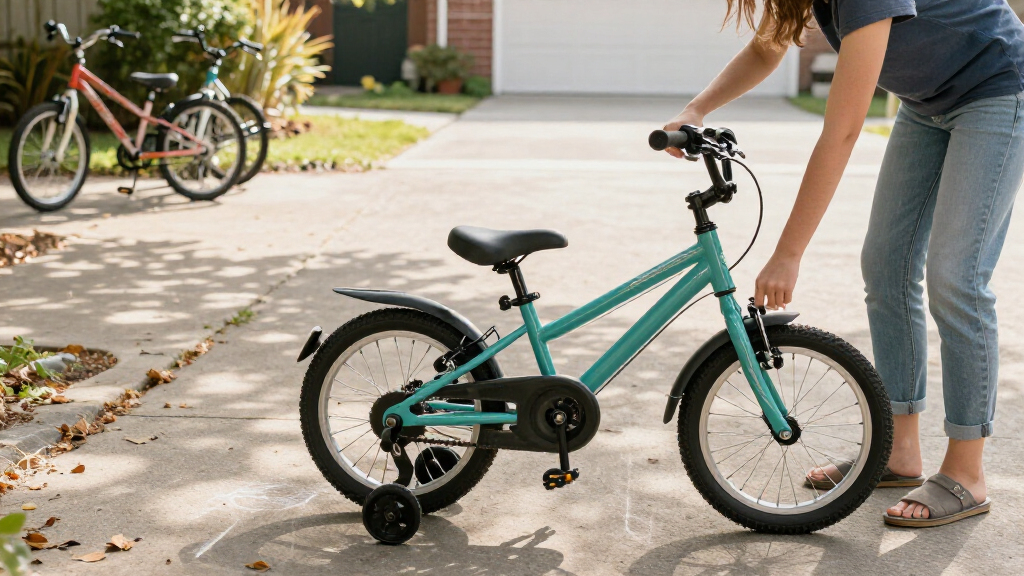
How We Picked
I evaluated each bike against four criteria that matter most once gears enter the picture. First, drivetrain usability: a 7-speed twist or trigger shifter is the sweet spot for elementary-age riders, so I favored bikes with smooth, low-effort shifting over raw gear count. Second, braking confidence — gears let kids ride faster and descend hills, so the brake system had to match the bike’s intended speed and terrain. Third, weight and fit: a geared bike that’s too heavy undermines the whole point, so I weighed frame material, wheel size, and stated age ranges carefully. Fourth, value and longevity, including adjustable seatposts, dual size options, and how well components will survive a couple of riding seasons.
The ranking logic follows a simple hierarchy: bikes that make gears easy and safe for their target age group placed highest, feature-stuffed budget bikes placed in the middle, and bikes whose complexity or weight works against young riders landed lower. The woom GO 4 ranks near the top despite its higher cost because it’s purpose-built for small hands and legs, while the 21-speed model ranks last for most families even though it has the most gears — extra drivetrain complexity is a liability, not a benefit, for the riders these bikes are made for.
| kids’ bikes with gear | Frame | Brakes | Suspension |
|---|---|---|---|
| Glerc 20/24 Inch Kids Bike | High-tensile steel | Front and rear V-brakes | — |
| CYBIC 20-Inch Kids Mountain Bi | High-carbon steel | Front and rear cable-actuated disc brakes | Front suspension fork |
| Glerc Kids Mountain Bike | High-carbon steel | Disc brakes | Front suspension fork |
| WEIZE Kids Mountain Bike | High-carbon steel (alloy steel) | Front and rear V-brakes | Dual suspension: front fork and rear shock |
| woom GO 4 Kids Bike | Aluminum | Mini V-brakes | — |
| Retrospec Dart 7-Speed Kids Hy | — | V-brakes with adjustable-reach levers | Shock-absorbing |
| 20-inch/24-inch Kids Mountain | — | Front and rear disc brakes | Front suspension fork |
Factors to Consider When Choosing Best Kids’ Bikes With Gears
Gears change the math on a kids’ bike. A single-speed bike is forgiving of sloppy maintenance and imprecise riding; a geared bike rewards the right match between rider skill, terrain, and component quality. Before picking from the list above, work through these factors.Gear Count: Why Less Is Usually More
The most common mistake parents make is assuming more gears equals a better bike. For most kids moving up from a single-speed, 7 speeds is the ideal entry point — one shifter, one derailleur, and a gear range wide enough for hills without overwhelming the rider. A 21-speed setup with dual shifters requires coordinated front and rear shifting, which many 7–10 year olds simply won’t manage, and mis-shifted front derailleurs are one of the most common reasons kids abandon geared bikes in frustration. Extra gears also mean more cables, more adjustment points, and more things to go out of tune after a season of hard riding. Choose 21 speeds only if your child already understands shifting or regularly rides steep, varied trails. For everyone else, a well-tuned 7-speed like the ones on the Glerc or woom will feel faster and more reliable than a cheap 21-speed ever will.
Weight Matters More Than Features
Adults underestimate how heavy a bike feels relative to a 55-pound child. A 35-pound geared mountain bike can be nearly two-thirds of a young rider’s body weight, making it hard to start, steer, and control on anything but flat pavement. This is where the price gap between budget and premium bikes becomes real: heavier steel frames, suspension forks, and disc brake hardware all add pounds that a small rider has to muscle around. The woom GO 4 commands its premium largely because its frame and components are scaled down for kids rather than borrowed from adult designs. If your budget points toward a feature-rich budget bike, that’s a legitimate choice — just know your child is carrying extra weight up every hill, and consider whether the suspension fork they’ll never compress is worth it. When in doubt, a lighter bike with fewer features beats a heavy bike with all of them.
Brakes Must Match Speed and Hand Strength
Gears let kids ride faster, which means the brake conversation changes the moment you leave single-speed territory. The key spec most listings hide is lever reach and required hand force — small hands need short-reach levers and brakes that engage without a full-power squeeze. Quality rim brakes on a well-built bike (like the woom’s) often stop better for kids than cheap mechanical disc brakes, because the discs at entry-level prices tend to need frequent adjustment and more grip strength. Dual brake setups, where a child can choose between a hand lever and a coaster or second lever, are a smart confidence builder for kids coming off coaster-brake bikes. Test the brakes after assembly and again after a month of riding; cables stretch, and a poorly adjusted brake is the single biggest safety risk on a new geared bike.
Wheel Size and Fit: Buy for Now, Not Later
Resist the urge to size up so the bike ‘lasts longer.’ An oversized frame forces your child to stretch for the bars and stand on tiptoes at stops, which kills the confidence that gears are supposed to build. As a rule of thumb, 20-inch wheels fit riders roughly 6–9 years old (inseams around 19–23 inches), while 24-inch wheels suit ages 8–12. Two of the picks here — the Glerc and WEIZE — come in both sizes, which reduces the guesswork if your child is between ranges. When measuring, inseam matters more than age: a tall 7-year-old may need 24 inches, and a small 9-year-old may still fit 20. The right size lets your child plant both feet nearly flat while seated, with a slight bend in the arms at the handlebars.
Assembly and Maintenance Reality Check
Nearly every bike on this list ships partially assembled, and the gears are where assembly errors show up first. A derailleur that’s a quarter-turn out of adjustment will skip, clunk, or refuse to shift under load — and many ‘this bike’s gears are broken’ complaints trace back to setup, not defects. Budget one local bike shop tune-up (or an hour with YouTube and a screwdriver) after assembly, and plan on a cable re-tune after the first 30–60 days as cables settle. Factor this into your total cost: a cheap bike that needs professional assembly and frequent adjustments can narrow the gap with a pricier bike that arrives better tuned. Also check whether replacement parts like shifters and brake pads are standard sizes — proprietary components on some budget brands can turn a $15 fix into a parts hunt.
Terrain: Match the Bike to Where Your Child Actually Rides
Suspension forks and aggressive mountain-bike styling sell bikes, but they’re the right tool for a narrow slice of riders. If your child rides school runs, bike paths, and neighborhood streets, a hybrid like the Retrospec Dart with smoother tires will roll faster and easier than any knobby-tired mountain bike. If you have genuine trails, gravel, or steep hills nearby, then a mountain-bike layout with a suspension fork (CYBIC, WEIZE) earns its keep. Knobby tires on pavement are slow and noisy; slick tires on dirt are slippery. Some parents solve this by buying a second tire set, but it’s cheaper to match the bike to the dominant terrain from the start. Be honest about the riding your family actually does, not the riding the marketing photos suggest.
Frequently Asked Questions
At what age should a kid move to a geared bike?
Most children are ready for gears between ages 6 and 8, once they can ride confidently without training wheels and have the hand strength to work a brake lever. The real readiness signals are physical rather than age-based: your child should be able to coast, look ahead while riding, and understand basic cause-and-effect (pedaling harder makes you go faster). Gears reward riders who’ve already hit the limits of a single-speed — kids who struggle on hills or spin out on downhills. Starting gears too early usually results in a shifter that never gets touched. If your child is on the border, a simple 7-speed with a twist shifter, like the Glerc or woom GO 4, is the gentlest entry point.
Twist shifters or trigger shifters — which is better for kids?
Twist shifters (like on a motorcycle throttle) are generally easier for beginners because kids can shift without repositioning their hands, and the motion is intuitive. Trigger shifters are more precise and become the better choice as riders advance, since they allow shifting while gripping the bar hard on bumpy terrain. The tradeoff: cheap twist shifters can be stiff and rotate the grip unexpectedly when kids lean on the bars, while cheap trigger shifters can need long thumb throws that small hands struggle with. Quality matters more than type — a well-made version of either works fine. If your child is coming from a balance bike or single-speed, start with twist; upgrade thinking can come at the next bike size.
Are disc brakes on kids’ bikes worth it, or just a marketing feature?
At kids’-bike prices, disc brakes are a mixed bag. Mechanical discs on budget bikes like the CYBIC add stopping power in wet conditions and look impressive, but they also add weight, require more hand force than many kids can comfortably apply, and drift out of adjustment faster than decent rim brakes. Well-designed rim brakes on a premium bike like the woom GO 4 typically stop a light child just as effectively with less maintenance. Discs make sense if your family rides muddy trails or steep descents regularly. For pavement and light paths, they’re mostly a feature-list checkbox. Prioritize brake quality and lever reach over brake type.
Should I buy a 20-inch or 24-inch geared bike for a 7 or 8 year old?
Measure inseam, not age — a child with a 22–24 inch inseam is ready for 24-inch wheels, while anything under about 20 inches calls for 20-inch. Kids at 7–8 sit right on the boundary, which is why the dual-size options in this roundup (Glerc and WEIZE) are practical. If your child is currently comfortable and confident, a 20-inch with room to grow in the seatpost gives them a year or two of easy handling. If they’re tall for their age or growing fast, the 24-inch avoids buying two bikes in three years, at the cost of a slightly less nimble machine right now. A bike that’s slightly small builds confidence; a bike that’s slightly big destroys it.
How much maintenance does a kids’ geared bike actually need?
Plan on three touchpoints in the first year: a post-assembly check, a cable re-tune after 30–60 days as new cables stretch, and a seasonal service before storage. Between those, the routine is light — monthly tire pressure checks, an occasional chain lube, and a quick look at whether the chain skips or the brakes rub. Skipping the 30-day tune-up is the most common and most avoidable mistake, because a skipping chain in month two is what convinces many kids that ‘gears don’t work.’ Budget around the cost of one professional tune-up when you buy, or learn the two adjustment screws on the derailleur yourself — it’s a five-minute skill that keeps the bike shifting well indefinitely. Compared with a single-speed, expect roughly an extra hour of maintenance per year.
Conclusion
The right pick depends on your rider, your terrain, and your budget. For best overall, the Glerc 20/24 Inch 7-Speed delivers the most balanced package — usable gears, dual brakes, and two size options that fit a wide range of kids. For best premium, the woom GO 4 is in a different league on weight and refinement, and it makes the most sense for 6–8 year olds who’ll notice the difference every ride. The Retrospec Dart takes best value for paved neighborhoods and bike paths, while the WEIZE 20/24 is the value pick if light trails are in the mix. For beginners new to gears, the Glerc’s simple 7-speed twist setup is the gentlest introduction; skip the 21-speed model unless your child already shifts with confidence. Families facing genuine hills and dirt should look at the CYBIC with its suspension fork and disc brakes, and the second Glerc 20-inch mountain bike is a solid middleweight for all-around riding. Whatever you choose, budget for that first tune-up — a well-adjusted drivetrain is what turns a geared bike from a frustration into the machine that finally gets your kid up the big hill.
Fall Picks
fall essentials
As an affiliate, we earn on qualifying purchases.