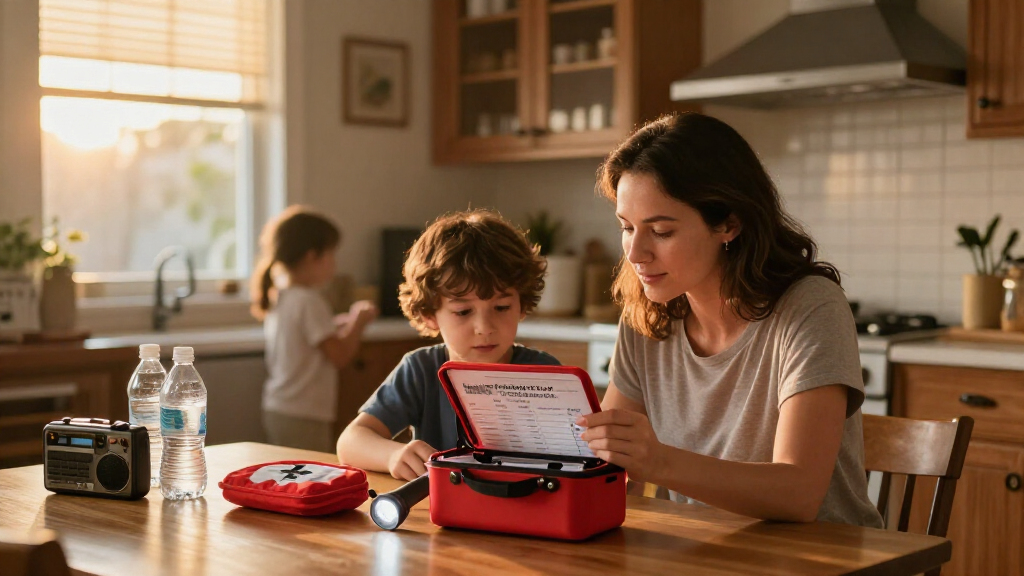
This checklist is for families who want to organize a few practical emergency supplies before they need them. It covers water, first aid, communication, backup power, food, and important documents, with a pick for each category. Start with your household’s needs, including how many people you’re preparing for and what you already have.

Give the gift of listening to the whole family
- Choose a 1-, 3-, 6- or 12-month membership
- They pick the audiobooks they love
- Easy to send by email
The sections follow the kinds of needs a family may want to plan for: basic supplies, ways to stay informed and connected, and protection for essential paperwork. Each pick is presented in the context of its checklist slot, so you can consider what belongs in your plan. Use the categories as a planning guide, not as a substitute for checking product details.
Before buying, confirm dimensions, included components, compatibility, and any care or storage directions with the seller or manufacturer. Think about where each item will be stored and who in the household may need to use it. Keep the checklist accessible, and revisit it when your household or its needs change.
Emergency Water Storage
Water storage is a foundational checklist slot because it gives the household a dedicated supply to plan around. The 55-Gallon Stackable Emergency Water Storage Tank is the pick for this category. Before choosing a tank, consider how much space you can devote to storage, how you will access the container, and whether its shape and dimensions suit the place you have in mind. Storage space and access matter as much as capacity when an item needs to fit into a real home.
A common mistake is assuming that a large container will be easy to move or use simply because it is stackable. Check the product’s instructions for stacking, filling, cleaning, and maintenance, and confirm what accessories or components are included. Also plan how the household will get water from the tank; do not assume a dispensing method is included. Verify the handling details before settling on a location, especially if the tank will be stored somewhere difficult to reach.
Match the storage plan to the number of people in your household and the space available, then check the manufacturer’s guidance for appropriate use. Choose a practical location where the tank can be inspected and accessed as intended.
What to look for:
- Confirm the tank’s dimensions and how much room it needs.
- Check the manufacturer’s stacking and placement instructions.
- Review directions for filling, cleaning, and maintenance.
- Confirm whether a dispensing method or accessories are included.
- Choose a storage location that remains accessible.
55-Gallon Stackable Emergency Water Storage Tank

This 55-gallon tank is made from rotationally molded polyethylene for long-term potable water storage. Its stackable design saves space, while the 5-inch twist lid and built-in brass spigot make filling, cleaning, and dispensing easier.
Pros:
- Large capacity for emergency water storage
- Stackable design saves floor space
- Includes a twist lid for filling and cleaning
- Built-in brass spigot simplifies dispensing
Cons:
- Large and heavy when filled
Best for: Households planning a designated water storage space.
Not ideal for: Homes without room for a large container.
Bottom line: Check the tank’s dimensions and handling instructions before choosing where it will live.
Family First Aid Kit
A first aid kit has a clear place in a family checklist because supplies are most useful when they are organized and easy to locate. The Scherber Fully-Stocked First Responder Bag | EMT/EMS Trauma & Bleeding is the pick for this slot. Its name signals a focus on trauma and bleeding supplies, so consider whether that emphasis matches your household’s preparedness plans and the people who may need to use the kit. Think about likely users as well as the contents.
One common mistake is treating a “fully-stocked” label as proof that a kit contains everything your family needs. Review the complete contents list, check whether items are suitable for the intended users, and note any training or instructions that may be needed. Confirm the bag’s dimensions and organization so you can store it where household members can reach it. Read the contents list carefully instead of relying on the product title alone.
Before adding the bag to your plan, compare its contents with supplies your household already keeps and check the manufacturer’s directions for storage and replenishment. Consider whether family members can identify the bag and understand where it is kept. Plan for regular review so missing or used items do not go unnoticed.
What to look for:
- Review the full contents list before buying.
- Check bag dimensions and how its compartments are arranged.
- Confirm storage and replenishment guidance.
- Consider who in the household may need to locate and use it.
- Compare the listed contents with supplies you already have.
Scherber Fully-Stocked First Responder Bag | EMT/EMS Trauma & Bleeding Medical K

This comprehensive first responder bag is designed for emergency medical professionals and enthusiasts, containing over 250 supplies including tourniquets, chest seals, bandages, and more. Made from durable, water-resistant polyester with organized compartments, it offers quick access and portability for on-the-go situations.
Pros:
- Includes over 250 essential first aid supplies for emergencies
- Durable and water-resistant construction with organized compartments
- Comfortable, ergonomic shoulder strap and top handle for portability
- Designed for professional EMT/EMS use and training
Cons:
- Large size may be cumbersome for casual use
- Heavy when fully stocked, may be tiring to carry over long distances
Best for: Households seeking a bag centered on trauma and bleeding supplies.
Not ideal for: Families who need a different set of contents or a smaller storage footprint.
Bottom line: Check the contents and intended use against your family’s needs before adding the bag.
Battery Powered Radio
Communication equipment belongs on a family checklist because households may want a way to stay in touch when their usual routines change. The listed pick is the Midland GXT67 PRO 5W GMRS Two-Way Radio, 4-Pack. Since this is a two-way radio set, consider whether its intended role is communication among household members and whether those users will be able to operate it. Shared instructions help everyone understand how the household plans to use the radios.
A common buying mistake is assuming that a radio is ready to use in every location or with every other device. Check the manufacturer’s specifications, operating instructions, power requirements, and any applicable licensing requirements for GMRS use. Confirm what comes in the four-pack and whether charging or other accessories are included. Verify requirements and compatibility before relying on the radios as part of a plan.
Think through who will carry each radio, how the set will be stored, and how household members will learn the controls. Check the instructions for charging or battery care and any recommended checks before use. Practice the setup together so the radios are familiar to the people expected to use them.
What to look for:
- Review GMRS operating and licensing requirements.
- Confirm the package contents and included accessories.
- Check the radios’ power and charging instructions.
- Make sure intended users can learn the controls.
- Plan where the set will be stored and how it will be maintained.
Midland GXT67 PRO 5W GMRS Two-Way Radio, 4-Pack

The Midland GXT67 PRO is a rugged, IP67-rated GMRS radio with 99 channels, repeater capability, and NOAA weather alerts for outdoor activities and work. It includes rechargeable batteries and a multi-unit charging dock, supports AA backup batteries, and offers VOX hands-free operation and an SOS siren.
Pros:
- IP67 waterproof and dustproof rating
- Supports repeater networks to extend coverage
- Rechargeable batteries with AA backup option
- Includes NOAA weather alerts, VOX, and SOS siren
Cons:
- FCC license required
- Listed maximum talking range is 2 miles
Best for: Households planning shared two-way radios for family members.
Not ideal for: People who need a different radio type or cannot meet GMRS requirements.
Bottom line: Check operating requirements, package contents, and user instructions before choosing this set.
Portable Power Bank
Backup power is a useful checklist category because families may want a dedicated source for compatible devices. The pick is the Jackery Explorer 300 Portable Power Station, 292Wh. Before deciding whether it suits your household, list the devices you hope to power and check their requirements against the station’s specifications. Start with your devices rather than assuming a capacity figure answers every compatibility question.
A common mistake is expecting a portable power station to run any appliance or to provide the same output for every device. Review the product’s ports, output limits, charging methods, and manufacturer guidance. Check the dimensions and weight for the storage location and for anyone who may need to carry it. Confirm what charging accessories are included and how the manufacturer recommends storing and maintaining the unit. Match requirements to specifications before planning around a particular device.
Decide where the station will be kept and how your household will keep it ready for use. Follow the maker’s instructions for charging and storage, and make sure intended users know which ports are appropriate for the devices in your plan. Keep the setup understandable so family members can identify what it can support.
What to look for:
- Compare device requirements with the station’s listed outputs and ports.
- Check charging methods and included accessories.
- Review dimensions and weight for storage and handling.
- Follow the manufacturer’s charging and storage instructions.
- Confirm that intended users know how to connect planned devices.
Jackery Explorer 300 Portable Power Station, 292Wh

This 7.5 lb portable power station has a 292Wh capacity and a 300W rated output, with two AC outlets, USB-C PD, USB-A, and a car port for charging devices. It supports solar charging and uses a LiFePO4 battery rated for over 4,000 charge cycles to 70% capacity.
Pros:
- Lightweight 7.5 lb design with an integrated carry handle
- Six ports support charging multiple devices
- LiFePO4 battery rated for over 4,000 charge cycles
- Can be recharged with compatible solar panels
Cons:
- Solar panel is not included
- 300W rated output limits the range of devices it can power
Best for: Households planning backup power for compatible devices.
Not ideal for: People whose planned devices exceed its listed capabilities.
Bottom line: Check device requirements, ports, and storage guidance before building a power plan around it.
Emergency Food Supplies
Emergency food belongs on the checklist because households can plan ahead for food that is stored specifically for preparedness. The pick is Emergency Food Supply Bars, Chocolate Flavor, 6,840 Calories. Consider the household members who might eat the bars, their preferences, and whether the product’s listed information fits your plan. Account for everyone who may rely on the supply when deciding what to store.
A common mistake is assuming that the calorie figure alone tells you how many people the package will serve or for how long. Check the package directions, serving information, ingredients, allergen details, and storage instructions. Confirm the product’s dimensions and how you will keep it with the rest of your supplies. Read the label and storage guidance before treating the package as a complete food plan.
Consider whether the flavor and listed ingredients are suitable for your household, including any dietary needs you need to accommodate. Plan how you will check stored food and follow the manufacturer’s directions for use and storage. If you’re building a broader food supply, use the bars as one item to assess alongside the rest of your household’s plan. Review suitability for each family member before setting the supply aside.
What to look for:
- Check serving information and package directions.
- Review ingredients and allergen details.
- Follow storage and use instructions on the product.
- Consider household preferences and dietary needs.
- Confirm package dimensions and where it will be stored.
Emergency Food Supply Bars, Chocolate Flavor, 6,840 Calories

This emergency food supply includes 12 individually wrapped 120 g bars with 6,840 calories total, intended to provide food for one person for up to five days. The chocolate-flavored bars are ready to eat, require no cooking, and have a stated 20-year shelf life when stored in a cool, dry place.
Pros:
- Individually wrapped bars are compact and easy to carry.
- Ready to eat without cooking.
- Stated 20-year shelf life when stored in a cool, dry place.
- Can be paired with water, yogurt, or milk.
Cons:
- Dry, crisp texture may be better suited to eating with a drink or accompaniment.
- The stated five-day supply is based on the listed total calories and intended for one person.
Best for: Households considering emergency food bars for their supply.
Not ideal for: Families whose dietary needs or preferences do not fit the listed product.
Bottom line: Review the label, serving information, and storage directions before adding the bars to your plan.
Document Storage Binder
Important paperwork is easy to overlook in an emergency checklist, so a designated storage container can help the household plan where documents belong. The pick is the Fireproof Document Box with Aluminum Frame – Ultra Hard Box. Before choosing it, consider which documents you want to store and where the box will fit. A clear storage plan makes it easier for family members to know where important paperwork is kept.
A common mistake is assuming a product description answers every question about protection. Check the manufacturer’s specifications, instructions, and any stated limitations, including how the box should be used and stored. Review its exterior dimensions and interior capacity so you can tell whether your papers and folders will fit. Confirm how it closes and whether any accessories are included. Check the interior space against the actual documents you plan to keep.
Decide which papers belong in the box and who in the household should know its location. Follow the maker’s guidance for care and use, and consider keeping an organized inventory so documents can be located quickly. Make the contents easy to identify without relying on memory alone.
What to look for:
- Check exterior dimensions and interior capacity.
- Review the manufacturer’s protection claims and stated limitations.
- Confirm closure details and included accessories.
- Make sure planned papers and folders fit comfortably.
- Choose a storage location and tell relevant household members where it is.
Fireproof Document Box with Aluminum Frame – Ultra Hard Box

This UL94 VTM‑0 certified fireproof box features multi‑layer silicone‑coated fiberglass insulation and a reinforced aluminum frame that resists up to 110 lb of pressure. It includes dual TSA combination locks, a one‑button quick‑open feature, water‑resistant coating, and ample organization pockets for documents and a 14" laptop.
Pros:
- UL94 VTM‑0 fire protection keeps documents safe from heat and flame.
- Reinforced aluminum frame withstands up to 110 lb of pressure without deformation.
- Dual TSA combination locks with a quick‑open button provide secure yet convenient access.
- Water‑resistant coating and sturdy handle make it portable for travel or emergencies.
Cons:
- At 3.47 kg, the box is relatively heavy for frequent transport.
- Only available in black, limiting color options.
Best for: Households organizing important documents in one designated container.
Not ideal for: People whose documents exceed the box’s interior capacity.
Bottom line: Check the dimensions, capacity, and manufacturer’s guidance before storing important paperwork.
If you’re building your checklist gradually, begin with the categories your household most needs to address, such as water, first aid, or food. Then plan communication, backup power, and document storage around the space you have and the devices or paperwork you need to accommodate. Let household needs guide the order, and check product details before each purchase.
Keep the supplies organized, make sure family members know where they are, and review the plan as your household changes. Even a simple checklist can help you notice what is missing and make thoughtful choices over time. Take it one step at a time and build a plan that works for your family.