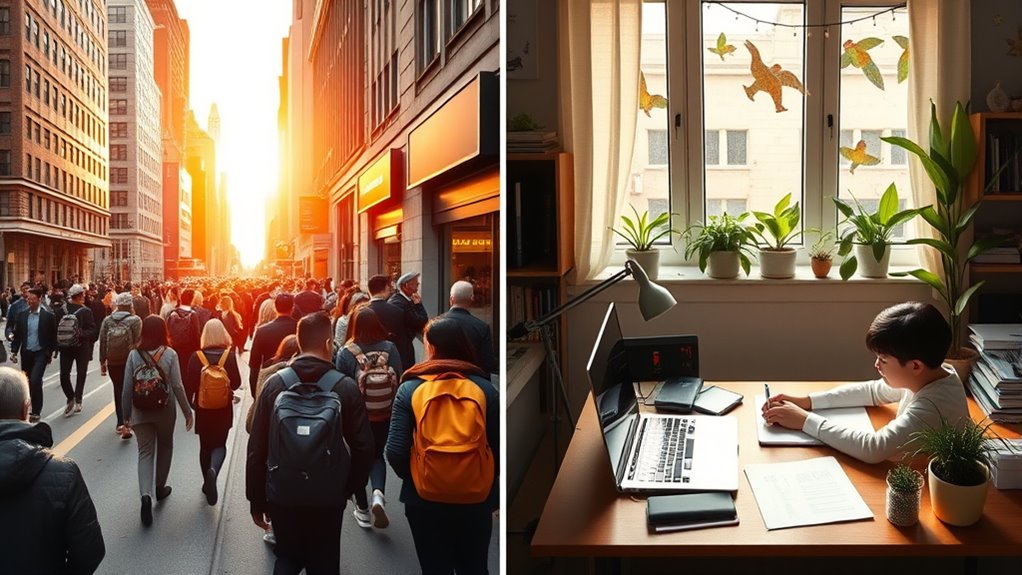
Choosing remote work over commuting usually frees up more time for your family, reduces daily stress, and improves your overall well-being. Without long drives, you gain flexibility to participate in family activities, foster closer bonds, and enjoy spontaneous moments. Plus, a quieter workspace can boost your focus and productivity. If you want to discover how balancing these options can best serve your family life and personal happiness, there’s more to explore ahead.
Key Takeaways
- Remote work reduces commuting time, increasing opportunities for family interactions and spontaneous moments.
- Commuting can cause fatigue, limiting energy for family activities after work hours.
- Flexible remote schedules allow better work-life balance and personal time management.
- In-office work may lead to social isolation and less family presence during the day.
- Choosing between options depends on individual preferences, family needs, and work environment considerations.

Deciding between commuting and remote work is a choice many people face as workplaces adapt to new norms. This decision directly impacts your work-life balance and how you manage your time with family. When you commute daily, you spend hours on the road, which eats into your personal time and can leave you feeling exhausted. This fatigue often affects your ability to connect with loved ones, participate in family activities, or even get enough rest. Conversely, working remotely allows you to reclaim those hours, bringing more balance to your day. You can start your workday more flexibly, fit in errands or family moments, and wind down without the stress of traffic or long commutes. As a result, your overall work-life balance improves, giving you a sense of control and satisfaction outside of work hours.
From a productivity perspective, remote work can be a game-changer. Without the distractions of office chatter or interruptions, you can often focus better and complete tasks more efficiently. Many people find that their productivity metrics improve when working from home, especially when they establish clear routines and boundaries. This doesn’t mean that remote work is without challenges—distractions at home can sometimes affect focus—but the ability to customize your environment often outweighs these issues. Plus, you can often track your productivity metrics more accurately because you’re monitoring your own output and setting personal goals. With fewer breaks and less downtime, you might find yourself completing projects faster, leaving more time for family or personal pursuits. Additionally, high-quality home office setups, such as ergonomic furniture and proper lighting, can further enhance your productivity and comfort during remote work.
However, it’s important to remember that remote work isn’t a one-size-fits-all solution. Some people thrive in a home environment, while others struggle with isolation or difficulty separating work from personal life. Maintaining a healthy work-life balance requires discipline—setting specific work hours, creating a dedicated workspace, and sticking to a routine. When you do this, you can more easily measure your productivity metrics, assess your progress, and adjust your habits as needed. The shift to remote work can also foster stronger family connections, as you’re more available for spontaneous moments and daily interactions. Ultimately, whether you choose to commute or work remotely, understanding how each option impacts your personal life and work efficiency helps you make an informed decision that aligns with your priorities and family needs.
Frequently Asked Questions
How Does Remote Work Affect Children’s Education Routines?
Remote work can positively influence your children’s education routines by allowing you to be more present during their school days. You can better supervise homework and help them stay organized, creating a consistent environment. Additionally, with flexible schedules, you can participate in school activities and address any learning challenges promptly. This active involvement fosters a supportive atmosphere that encourages your children’s academic growth and helps establish stable school routines.
What Are the Mental Health Implications of Daily Commuting?
Daily commuting can increase your stress levels and reduce sleep quality, leading to mental health challenges. You might feel overwhelmed by traffic or crowded transit, making it harder to unwind. Over time, these stressors can cause anxiety or depression. To protect your mental health, consider ways to minimize commute stress, like flexible schedules or remote work options, and prioritize restful sleep to boost your resilience.
How Does Flexible Remote Work Impact Partner Relationships?
Flexible remote work can markedly improve your partner relationships by enhancing work-life balance and fostering open partner communication. When you’re not tied to long commutes, you have more quality time together, reducing stress and strengthening your bond. This flexibility allows you to be more present, support each other better, and adapt schedules to mutual needs. Overall, it creates a healthier, more connected partnership, positively impacting your family life.
Are There Long-Term Financial Benefits to Remote Working?
Yes, remote work can offer long-term financial benefits. You save on commuting costs, such as gas, public transportation, and vehicle maintenance, which adds up over time. Additionally, working from home can reduce expenses related to work attire and meals. These cost savings contribute to greater financial security, allowing you to save more, invest, or pay off debt, ultimately improving your long-term financial stability.
How Does Commuting Influence Work-Life Boundaries?
Commuting can blur work-life boundaries, making it harder for you to switch off from work. The daily commute often introduces stress that follows you home, leading to boundary blurring. This stress can spill over into your personal time, making it tough to relax or focus on family. To maintain healthy boundaries, consider setting specific work hours and creating a clear separation between work and leisure, especially if you commute regularly.
Conclusion
So, whether you’re stuck in traffic for hours or enjoying endless coffee breaks at home, remember this: your choice between commuting and remote work could literally make or break your entire family life! Imagine a world where every minute wasted in traffic is a minute lost with your loved ones, or where working from home transforms your family into a harmonious paradise. Make the right choice—because your family’s happiness depends on it!