To create a home office that supports both productivity and parenting, focus on ergonomic furniture and smart storage to stay organized and comfortable. position your desk near natural light, and set boundaries with a dedicated space and clear work hours to minimize distractions. Incorporate design elements that balance work needs with family life, like small seating areas or noise reduction strategies. Keep exploring how thoughtful setup can boost your efficiency and family harmony.
Key Takeaways
- Designate a dedicated, quiet workspace with soundproofing or privacy features to minimize distractions for both work and parenting.
- Incorporate ergonomic furniture and smart storage solutions to keep the space comfortable, organized, and accessible.
- Position the home office near natural light and away from high-traffic areas to boost focus and reduce interruptions.
- Set clear work hours and boundaries, using signs or organizational tools to help children understand when you’re unavailable.
- Create flexible zones with seating or activity areas for supervising children while maintaining productivity.
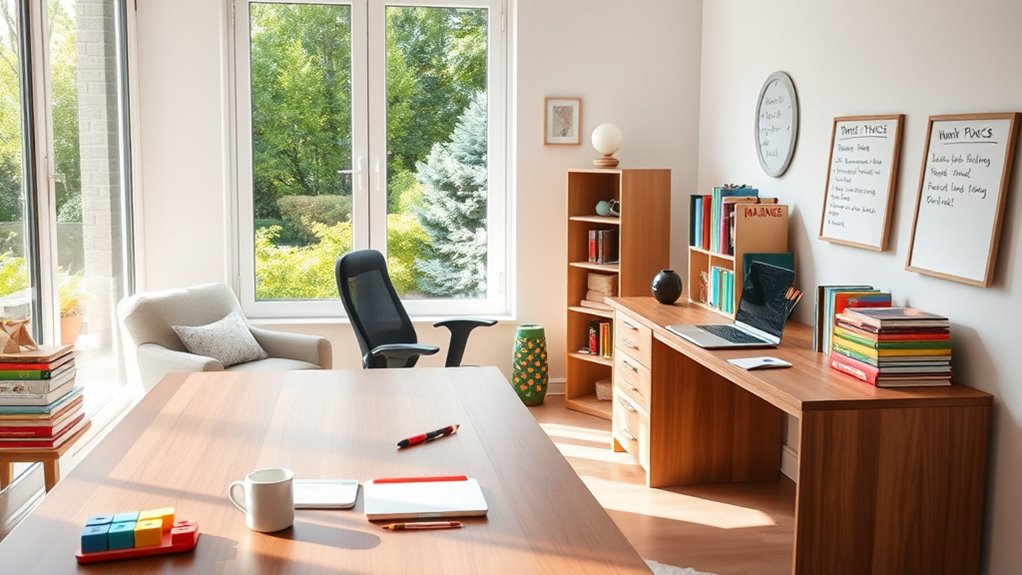
Are you ready to transform a corner of your home into a productive workspace? Creating a home office that supports both your work needs and parenting responsibilities requires careful planning. Start by selecting ergonomic furniture that promotes good posture and comfort. An adjustable chair with proper lumbar support and a desk at the right height will help you stay focused and reduce fatigue during long work sessions. Ergonomic furniture isn’t just about comfort; it’s about preventing strain and injury, so investing in quality pieces pays off in the long run. Once your furniture is set, focus on implementing smart storage solutions to keep your workspace organized and clutter-free. Consider shelves, filing cabinets, or storage bins that can hold supplies, documents, and personal items, so everything has its place. When your workspace is tidy, you’ll find it easier to concentrate and switch between tasks efficiently.
Create an ergonomic, organized home office with smart storage for enhanced focus and comfort.
Next, think about the layout of your home office. Position your desk near natural light if possible—this boosts mood and energy levels—while keeping it away from high-traffic areas to minimize distractions. Incorporate a small, comfortable seating area where you can take quick breaks or supervise your kids when needed. This setup allows you to keep an eye on your children without disrupting your workflow. Also, consider adding organizational tools like cable management systems to keep cords out of sight and prevent accidents. Use drawer dividers and desktop organizers to keep supplies within reach but out of your way. Having a designated space for everything simplifies your routine and reduces stress when juggling work and parenting. Additionally, adopting vertical storage solutions can maximize your space and keep essentials easily accessible while maintaining a clean environment.
Creating boundaries is essential, especially when your home blurs the lines between work and family life. Choose a dedicated corner or room for your home office, and set clear rules about work hours. This helps you stay focused during work time and fully disconnect afterward. For added privacy and noise control, consider installing a door or using soundproofing materials, so your work remains undisturbed and your children understand when you’re unavailable. Personalize your space with inspiring decor, but avoid clutter that can distract you. Use organizational tools, like wall-mounted boards or digital planners, to keep track of tasks and appointments, ensuring nothing slips through the cracks.
In the end, creating a home office that supports both productivity and parenting is about balancing comfort, organization, and boundaries. Ergonomic furniture and smart storage solutions form the foundation, making your workspace functional and inviting. With thoughtful layout and clear boundaries, you’ll be able to focus on your work while remaining present for your family. This balance not only boosts your efficiency but also makes working from home a more enjoyable and sustainable experience.
Frequently Asked Questions
How Can I Balance Work and Childcare in a Shared Home Office?
To balance work and childcare in a shared home office, you should manage your time effectively by setting clear boundaries and scheduling dedicated work periods. Communicate these boundaries to your family so they understand when you’re unavailable. Use visual cues like a sign or a closed door to signal focus time, and take regular breaks to attend to your child’s needs. This approach helps you stay productive while staying connected with your family.
What Are the Best Ergonomic Solutions for Small Home Office Spaces?
To optimize your small home office, prioritize ergonomic seating that supports your posture during long work sessions. Pair this with an adjustable desk to easily switch between sitting and standing, reducing strain. Keep your workspace clutter-free and position your monitor at eye level. These solutions guarantee comfort and efficiency, helping you stay productive while managing your responsibilities effectively in a compact space.
How Do I Minimize Distractions From Children During Work Hours?
To minimize distractions from children, organize toys with dedicated storage to keep clutter out of sight, reducing temptation and noise. Use noise reduction techniques like soft furnishings, noise-canceling headphones, or a white noise machine to block out sounds. Set clear boundaries and schedule breaks for playtime, ensuring your kids feel attended to while maintaining focus during work hours. Consistent routines help everyone stay on track and minimize interruptions.
What Safety Measures Should I Consider in a Family-Friendly Home Office?
You should prioritize childproofing essentials like outlet covers, cabinet locks, and corner protectors to keep your family safe. Additionally, follow fire safety tips by installing smoke detectors, keeping a fire extinguisher nearby, and avoiding clutter that could block escape routes. Regularly check for hazards and guarantee cords are tucked away. These steps help create a secure environment, so you can work confidently while protecting your loved ones.
How Can I Incorporate Flexible Furniture for Both Work and Play?
Think of your space as a chameleon, changing to fit your needs. You can incorporate multi-functional furniture like fold-away desks and storage ottomans to create adaptable workspaces. These pieces allow you to switch seamlessly between work and play, making your home office flexible and inviting. Invest in versatile furniture that adapts to your daily rhythm, so your environment supports both productivity and family fun without feeling cluttered or rigid.
Conclusion
Creating a home office that supports both productivity and parenting is achievable with thoughtful planning. Remember, a well-designed space can boost your efficiency by up to 25%, according to recent studies. Prioritize comfort, organization, and designated zones to minimize distractions. With intentional setup, you’ll find balancing work and family becomes smoother, giving you more time for what matters most. A dedicated, functional workspace isn’t just a luxury—it’s a game-changer for your daily life.