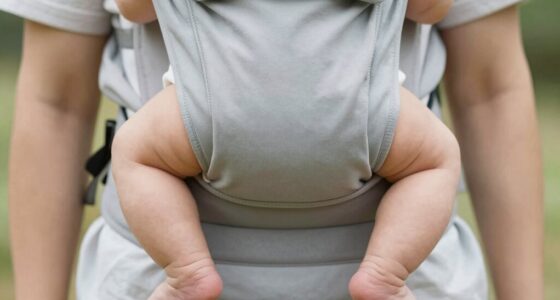
If you’re experiencing back pain from babywearing, start by checking if your carrier supports proper alignment—make sure your baby rides high on your chest and the weight is evenly distributed. Adjust the straps to fit snugly without being too tight and choose positions that support the hips and reduce pulling forward. Incorporate core exercises to strengthen your muscles, and switch sides often. To learn more tips on how to reduce back strain, explore these helpful strategies further.
Key Takeaways
- Check that the carrier is properly positioned with the baby high on your chest and evenly supported.
- Adjust straps to ensure a snug fit that promotes good posture and weight distribution.
- Use ergonomic positions like a spread-squat stance for your baby’s hips to reduce strain.
- Maintain an upright, relaxed posture and switch sides frequently to prevent muscle fatigue.
- Incorporate core strengthening exercises and stretches to support your back during and after carrying.

JOYNCLEON Ergonomic Baby Carrier with Adjustable Strap,4-in-1 Newborn to Toddler Carrier,Breathable Mesh Baby Carrier for Summer,Compact for Travel & Outdoor Adventures,Ideal for Infants 0-3 Years
【Crossed Shoulder Straps Design】X-shaped back design can distribute baby's weight evenly, providing extra comfort for both you and…
As an affiliate, we earn on qualifying purchases.
As an affiliate, we earn on qualifying purchases.
How Can I Check If My Babywearing Technique Is Causing Back Pain?
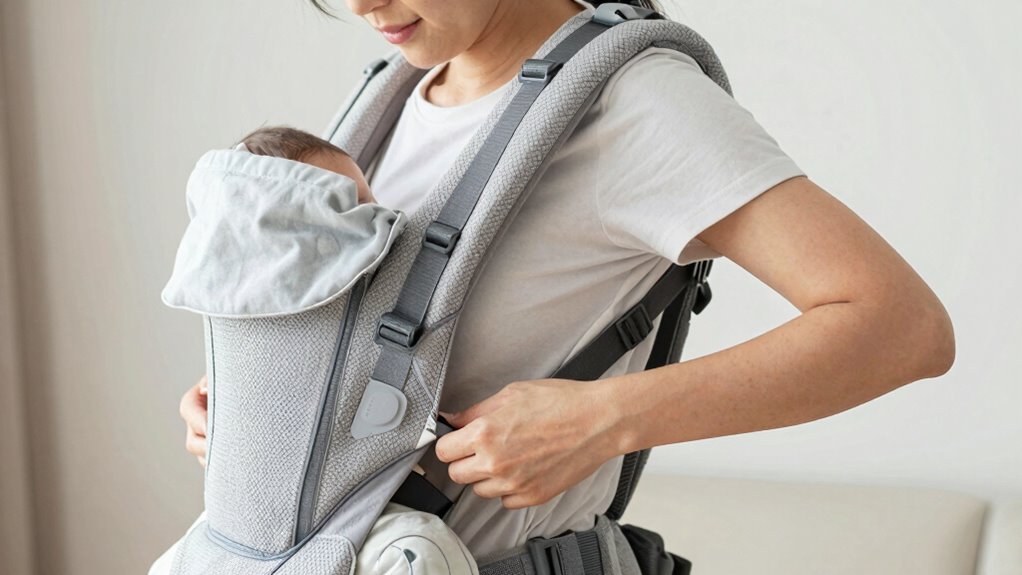
To determine if your babywearing technique is causing back pain, start by paying close attention to how your body feels during and after carrying your baby. Notice any aches, soreness, or discomfort in your back, shoulders, or hips. Use ergonomic tips to assess whether your carrier supports proper alignment; your baby should sit high on your chest, with their weight evenly distributed. Make sure the carrier is secure and positioned correctly, as incorrect placement can strain your back and compromise carrier safety. Check that your posture remains upright and relaxed, avoiding slouching or leaning forward. Additionally, understanding the importance of proper carrier weight distribution can help prevent back strain. Proper positioning and supportive carrier features are also crucial for comfort and safety. Ensuring that your technique supports ergonomic principles can make a significant difference in reducing discomfort. Incorporating adjustments such as proper carrier adjustment and ensuring the carrier fits well can further enhance comfort and reduce back pain. Being aware of ergonomic carrying posture can also help you maintain better alignment and avoid unnecessary strain. If you experience persistent pain or discomfort, it may indicate your technique needs adjustment to improve support and ensure safe, comfortable babywearing.

Momcozy Hip Seat Baby Carrier – Adjustable Waistband with Original 3D Belly Protector, Ergonomic Carrier with Various Pockets for Newborns & Toddlers up to 45lbs (Black, Medium)
Innovative 3D Abdominal and Lumbar Support: The original 3D abdominal support and widened waist belt feature an EVA…
As an affiliate, we earn on qualifying purchases.
As an affiliate, we earn on qualifying purchases.
How Do I Adjust My Baby Carrier For Better Support And Comfort?
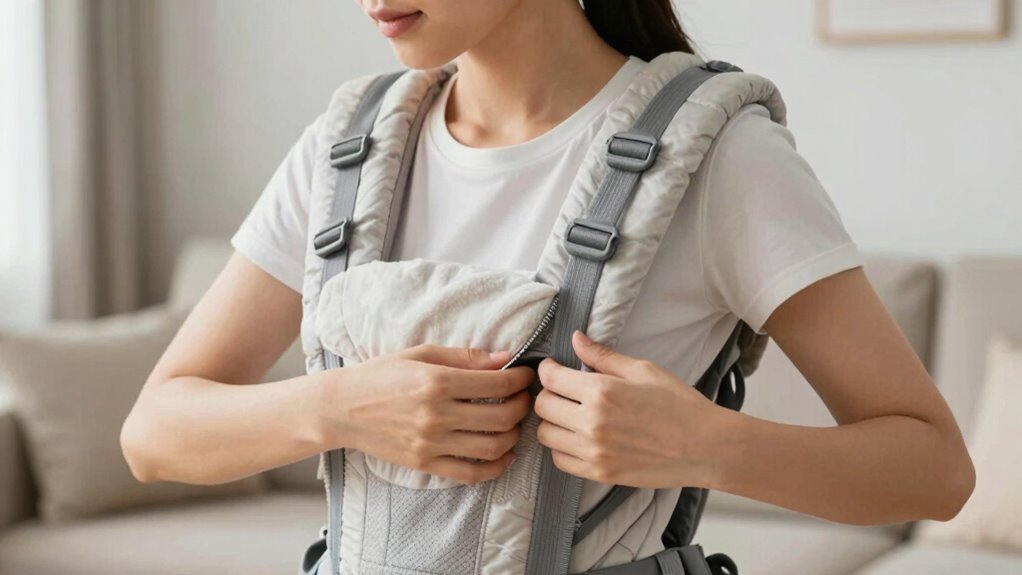
Adjusting your baby carrier for better support and comfort starts with ensuring the straps are snug but not too tight, allowing your baby to sit close to your chest without restricting your movement. Proper carrier ergonomics are essential for both you and your baby’s comfort. Different baby carrier types, like wraps, soft-structured carriers, or slings, require specific adjustments. Here’s a quick guide:
| Carrier Type | Strap Adjustment | Support Focus |
|---|---|---|
| Wraps | Tighten evenly across back | Even weight distribution |
| Soft-structured | Adjust shoulder and waist straps | Lumbar support |
| Mei Tai | Secure straps to fit snugly | Hip and back support |
| Slings | Tighten fabric for close fit | Close contact comfort |
| Backpack Carriers | Adjust straps for height | Full back support |
Follow these tips to improve comfort and reduce back strain.

Ava & Oliver Essential Baby Carrier – Ergonomic, Hip-Healthy Soft Structured Carrier for Infants & Toddlers (7–35lbs) – Front and Back Carry, Breathable Fabric, Stylish & Lightweight (Denim)
HANDS-FREE COMFORT: Our baby carrier is the perfect choice for travel and busy lifestyles. It ensures comfort and…
As an affiliate, we earn on qualifying purchases.
As an affiliate, we earn on qualifying purchases.
Which Baby Positions Are Best To Reduce Back Strain?
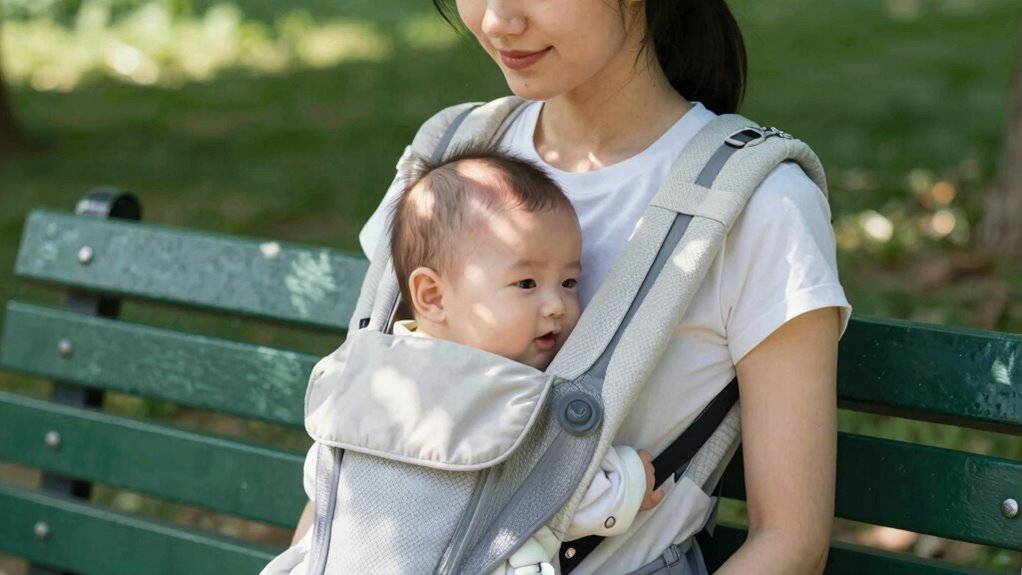
Choosing the right baby positions can considerably reduce back strain during babywearing. To promote proper hip alignment, position your baby so their hips are supported in a spread-squat stance, with knees higher than the hips. This helps prevent hip dysplasia and keeps your baby’s weight balanced across your hips and shoulders. The front carry, with your baby centered on your chest, distributes carrier weight evenly and maintains good posture. When using a back carry, ensure your baby is high on your back to reduce strain on your lower back. Avoid positions that cause your baby’s weight to pull forward or downward, which can increase back discomfort. Proper positioning ensures carrier weight is balanced and reduces unnecessary pressure on your back muscles. Additionally, adjusting the carrier to fit snugly can help maintain proper ergonomic support, and ensuring correct carrying techniques can also minimize long-term back issues. Paying attention to carrier fit can make a significant difference in reducing back pain during extended wear. Being mindful of proper alignment throughout your babywearing sessions further helps prevent strain and discomfort.

Cushy Tushy Seat Cushion | Premium Foldable Sit Bone Cushion for Pressure Relief, Hip, Hamstrings & Sciatica Comfort | Butt Pillow | Ergonomic Ischial Tuberosity Support for Home, Office & Driving
OFFICE & CAR SEAT CUSHION – Ergonomic office chair cushion and car seat cushion made from premium memory…
As an affiliate, we earn on qualifying purchases.
As an affiliate, we earn on qualifying purchases.
How Can I Carry My Baby Throughout The Day Without Back Discomfort?
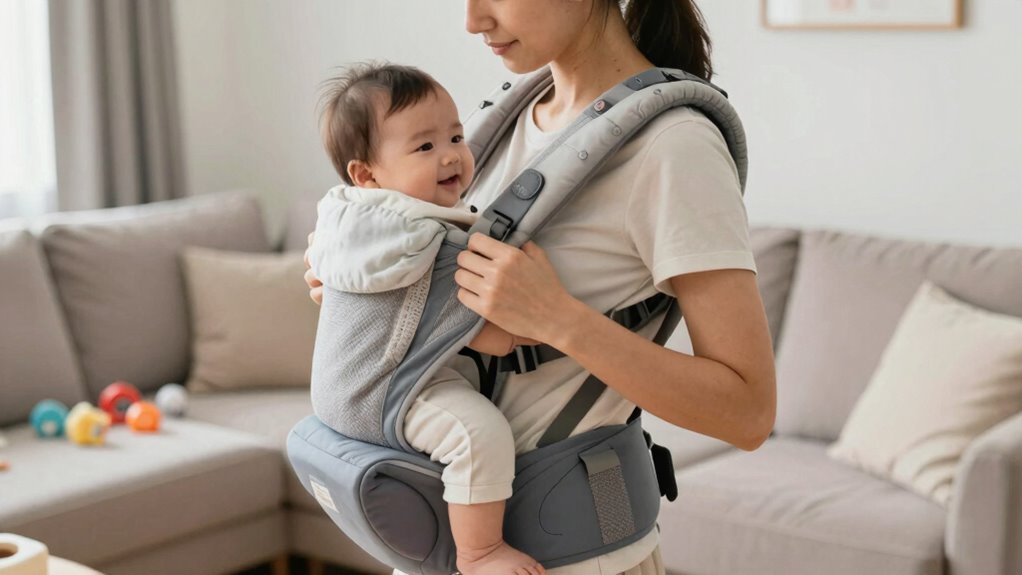
Carrying your baby throughout the day without back discomfort requires mindful techniques and regular adjustments. Start by using ergonomic cushions to support your lower back and evenly distribute weight. These cushions help maintain proper posture and reduce strain. Additionally, make certain your babywearing belts fit well; they should provide secure support without digging into your skin or causing imbalance. Switch sides frequently to prevent muscle fatigue and avoid prolonged periods in the same position. Adjust your carrier’s position to keep your baby close to your center of gravity, reducing strain on your back. Taking short breaks to stretch can also alleviate tension. Being mindful of your posture and practicing proper lifting techniques can further prevent back pain. Incorporating ergonomic support into your daily routine can significantly enhance comfort and reduce strain. Paying attention to body mechanics during lifting and carrying can make a substantial difference. Additionally, selecting properly fitted carriers can improve weight distribution and overall comfort. Using anti-fatigue mats underneath your standing area can help reduce lower limb and back fatigue during longer periods of babywearing. By combining ergonomic cushions with well-fitted babywearing belts and mindful positioning, you can carry your baby comfortably throughout the day.
What Back Exercises Can Help Prevent Babywearing-Related Back Pain?

Strengthening your back muscles through targeted exercises can substantially reduce the risk of pain caused by babywearing. Focus on core strengthening routines like planks, bridges, and bird dogs to build stability and support your spine. Incorporate posture correction exercises such as shoulder blade squeezes and chest stretches to maintain proper alignment throughout the day. These exercises improve muscle balance, helping you hold your baby comfortably without straining your back. Proper muscle support is essential for preventing strain and injury during prolonged babywearing sessions. Consistently practicing core strengthening and posture correction can enhance your muscular support, reducing the likelihood of back pain during prolonged babywearing. Additionally, integrating scent tech devices or apps can help monitor your progress and ensure proper form during these exercises. Using ergonomic baby carriers designed for proper weight distribution can further minimize back strain. Paying attention to ergonomic principles during your daily activities can also make a significant difference in back health. Make these exercises part of your daily routine for longer-term relief and prevention. Remember, a strong, well-aligned back allows you to carry your little one more comfortably and minimizes discomfort.
Frequently Asked Questions
What Are Signs I Need to See a Healthcare Professional About My Back Pain?
If your back pain persists despite trying posture correction, it’s time to see a healthcare professional. Seek a chiropractic consultation if you experience severe pain, numbness, or weakness in your legs, or if the pain worsens over time. Don’t ignore symptoms that interfere with your daily activities or if pain lasts more than a few days. Prompt professional care can help prevent long-term issues and improve your comfort.
Are There Specific Baby Carriers Better for Back Health?
You should choose a carrier with a good carrier comparison that prioritizes ergonomic design. Look for carriers that evenly distribute your baby’s weight, support your back, and promote proper alignment. Ergonomic features like padded straps, a wide seat, and adjustable straps help reduce strain. Avoid carriers that cause you to lean forward or hold awkward positions. By selecting a well-designed, ergonomic carrier, you can minimize back pain and enjoy babywearing comfortably.
How Long Should I Babywear to Avoid Back Issues?
You should limit your babywearing duration to about 1-2 hours at a time to prevent back pain. Take frequent breaks and switch sides to avoid strain. Listening to your body is key—if you feel discomfort, adjust your carrier or position. Prioritize proper ergonomics and make certain your baby is positioned correctly. Incorporating these tips helps with back pain prevention and makes babywearing safer and more comfortable.
Can Certain Clothing or Supports Reduce Back Strain During Babywearing?
Yes, certain clothing choices and supportive accessories can reduce back strain during babywearing. Opt for wide, padded shoulder straps and a supportive waistband to distribute weight evenly. Wear breathable, well-fitting clothing that allows for flexibility and comfort. Supportive accessories like padded carriers, waist belts, or back braces can provide extra stability. These adjustments help minimize back discomfort, making babywearing more comfortable and safe for both you and your baby.
Are There Ergonomic Tips for Breastfeeding While Babywearing?
When breastfeeding while babywearing, focus on posture correction by keeping your back straight and shoulders relaxed. Use ergonomic carrier types that support your baby close to your chest and distribute weight evenly. Adjust the carrier straps for a snug fit, which helps reduce strain. Switching between different carrier styles can also alleviate discomfort. Remember, maintaining proper posture and choosing supportive carriers make breastfeeding easier and more comfortable during babywearing.
Conclusion
Did you know that improper babywearing can lead to back pain in up to 70% of caregivers? By checking your technique, adjusting your carrier, choosing the right positions, and incorporating back exercises, you can substantially reduce discomfort. Remember, small tweaks make a big difference for your comfort and your baby’s safety. Take the time to get it right—your back will thank you, and you’ll enjoy those precious moments together even more.