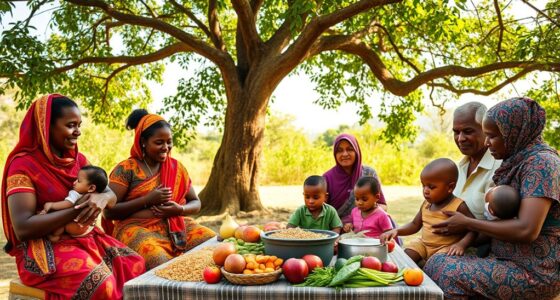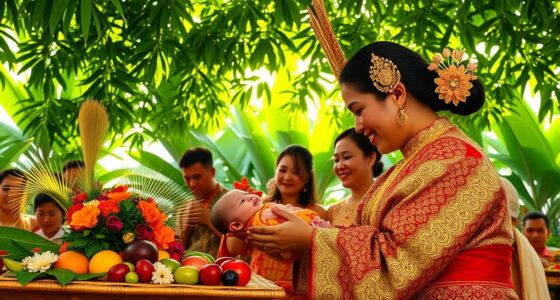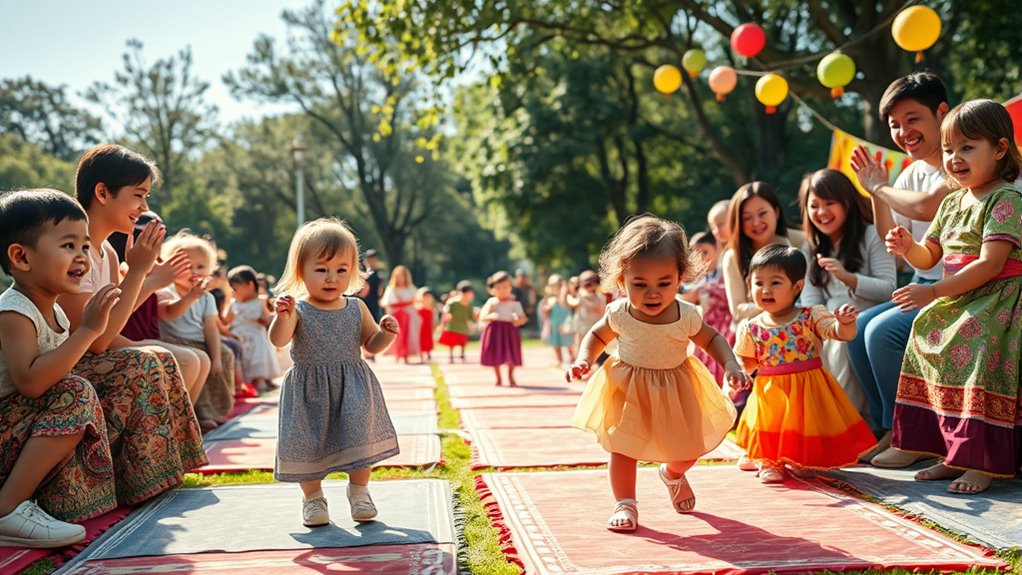

Celebrating a child’s first steps and words is a meaningful tradition that varies across cultures, highlighting growth and independence. Many families incorporate rituals like special ceremonies, songs, or rituals involving community and family members to mark these milestones. Expectations around gender roles often influence how these celebrations are conducted, emphasizing qualities valued for boys and girls. Exploring these customs reveals how different societies honor development and foster a sense of belonging—if you continue, you’ll discover even more inspiring cultural practices.
Key Takeaways
- Many cultures hold special ceremonies or rituals to mark a child’s first steps, emphasizing growth and independence.
- First words are often celebrated through family gatherings, blessings, or symbolic gifts that honor language development.
- Rituals vary widely, from religious blessings to community celebrations, reflecting cultural values and societal norms.
- Gender roles influence how milestones like first steps and words are celebrated, often highlighting qualities associated with boys or girls.
- Celebrations reinforce cultural identity, family bonds, and a child’s sense of belonging within their community.
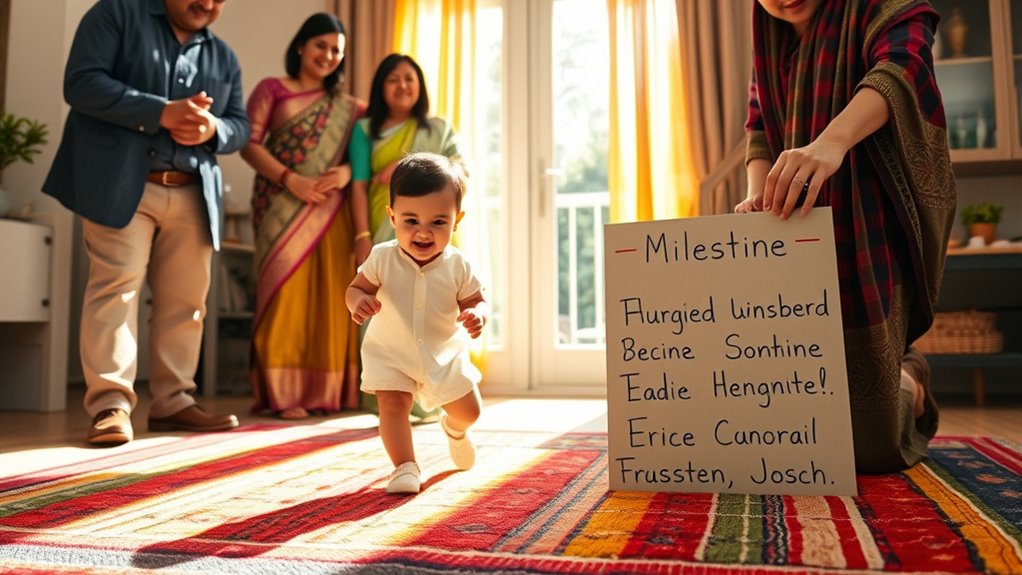
Have you ever wondered why families celebrate a child’s first steps and words? These moments mark significant milestones in a child’s development, symbolizing growth, independence, and the beginning of a new chapter. Across cultures, these achievements are celebrated with unique traditions, often reflecting deep-rooted values and societal norms. One aspect that plays a role in how these milestones are observed is gender roles. In some societies, specific rituals or celebrations are tailored to boys and girls, emphasizing different qualities or expectations. For instance, a boy might be encouraged to take confident first steps as a sign of strength and leadership, while a girl’s milestones might be celebrated with an emphasis on nurturing and beauty. Such distinctions can influence the way families mark these moments, shaping perceptions of gender and societal roles from an early age.
Family celebrations of first words and steps serve more than just acknowledging a child’s progress; they reinforce family bonds and cultural identity. In many cultures, these milestones are communal events, involving relatives and neighbors who gather to witness and honor the child’s growth. These gatherings often feature specific rituals—such as singing, dancing, or offering symbolic gifts—that highlight the importance of the moment. The way families celebrate can also reflect broader cultural values, such as the importance of community, tradition, or religious beliefs. For example, some families might hold a small ceremony or blessing, asking for the child’s continued health and happiness, while others might simply mark the occasion with a special meal or gift. Additionally, such celebrations can sometimes be influenced by cultural values that emphasize specific gender roles and expectations from an early age.
Celebrations can vary widely, from elaborate ceremonies to simple family moments, but their purpose remains consistent: to recognize the child’s development and to instill a sense of pride and encouragement. These traditions often serve as rites of passage, helping children understand their place within the family and community. They also foster a sense of continuity, connecting the present with cultural history. Additionally, these celebrations can influence how children view themselves and their roles in society. When a child’s first words or steps are celebrated publicly, it reinforces their significance within the family and community—and can shape their understanding of gender roles and expectations in subtle but meaningful ways.
Ultimately, whether grand or modest, family celebrations of milestones like first steps and words underscore the universal importance of growth, connection, and tradition. They remind us that these small moments are opportunities to honor a child’s journey, reinforce cultural values, and nurture a sense of belonging that lasts a lifetime.
Frequently Asked Questions
How Do Different Cultures Celebrate a Child’s First Birthday?
You’ll find that different cultures celebrate a child’s first birthday through unique rituals and family traditions. For example, some communities hold large feasts, while others perform specific cultural rituals to mark the milestone. You might see symbolic gifts, special prayers, or community gatherings. These celebrations honor the child’s growth and connect generations, making the event a meaningful expression of cultural heritage and family bonds.
Are There Specific Gifts Associated With Early Developmental Milestones?
Think of gift-giving customs for developmental milestones as planting seeds for growth. When your child takes their first steps, a special toy or personalized keepsake marks that moment, symbolizing progress. For early words, books or musical toys celebrate language milestones. These thoughtful gifts not only honor achievements but also encourage further development, turning everyday items into meaningful symbols of your child’s growth journey.
What Are Traditional Songs or Rituals for Celebrating First Words?
You can celebrate your child’s first words with traditional songs like cultural lullabies, which often soothe and honor the moment. Ceremony rituals, such as dedicating a special song or holding a small gathering, also mark this milestone. These customs help you connect with your culture and create lasting memories. Singing traditional lullabies or participating in ritual ceremonies makes the first words celebration meaningful and deeply rooted in your heritage.
How Do Rural and Urban Communities Differ in Milestone Celebrations?
Think of a community garden where each plant’s growth signifies milestones. In rural areas, celebration timing often aligns with agricultural cycles, fostering close-knit community engagement through outdoor rituals. Urban communities, like city skylines, showcase more frequent, smaller gatherings, emphasizing individual achievement. You notice that rural celebrations symbolize shared labor and patience, while urban ones highlight personal progress and diversity, reflecting differing values and social structures in milestone festivities.
Are There Any Health Considerations Linked to Early Milestone Celebrations?
Early milestone celebrations can impact your child’s health if not managed properly. You should consider vitamin supplementation to support their growth and confirm developmental screenings are up-to-date, catching any delays early. While celebrating, avoid overexertion or unsafe environments that could cause injury. Keep a balanced approach, and consult healthcare professionals to align festivities with your child’s health needs, promoting safe and healthy development.
Conclusion
As you reflect on these heartfelt traditions, one thing becomes clear: every step your little one takes and every word they utter marks a new beginning. These moments connect cultures, stories, and hopes for the future. But as you celebrate today’s milestones, remember—there’s always more to come. The next chapter is just around the corner, waiting to unfold in ways you never imagined. Are you ready to see what’s next?