
Balancing yourself and motherhood varies greatly between India and the US due to cultural norms. In India, family and traditional roles often prioritize motherhood, which can blur boundaries between work and home. In contrast, US women focus on individual achievement and personal fulfillment, seeking flexible work and setting boundaries. Both cultures are evolving, recognizing that personal identity and motherhood can coexist. Keep exploring to discover how these differences shape women’s journeys toward balance and fulfillment.

Turn the school run and nap time into listening time
- Thousands of audiobooks, podcasts and originals
- Listen on your phone, tablet or Echo — also offline
- Cancel anytime
Key Takeaways
- Indian culture emphasizes family and motherhood as primary roles, often prioritizing them over personal ambitions, whereas US culture promotes individual achievement alongside motherhood.
- Women in India face societal pressures to blur work and home boundaries, while US women focus on setting boundaries and delegating tasks for balance.
- Recognizing personal needs and pursuing passions are increasingly valued in both cultures to foster fulfilling parental and personal identities.
- Evolving norms allow women in both countries to redefine motherhood beyond traditional caregiving, integrating career goals and personal growth.
- Strategies like routines, support systems, and boundary-setting help women in India and the US achieve work-life harmony and maintain their evolving identities.
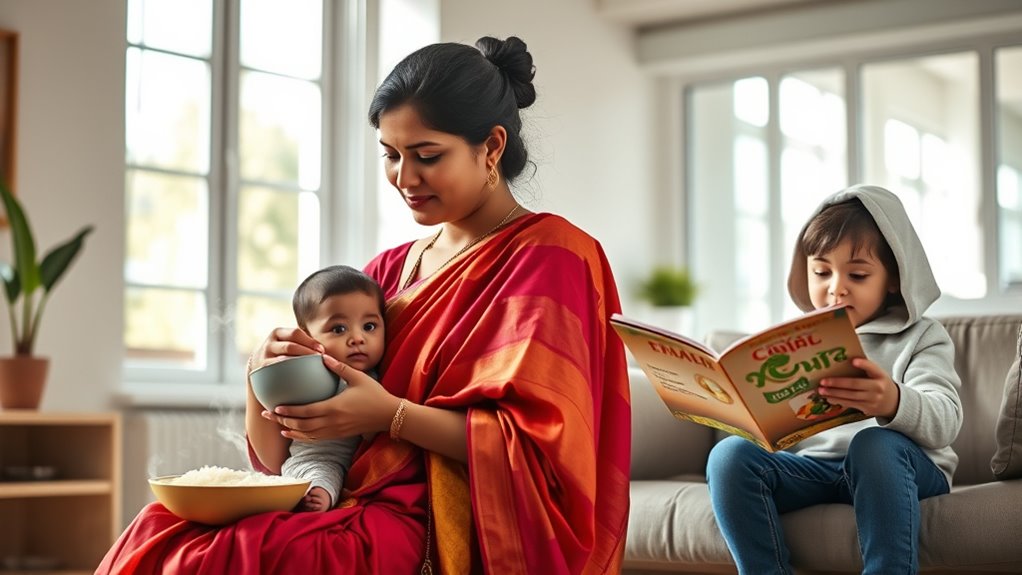
Have you ever wondered how to find harmony between caring for your children and maintaining your own identity? Striking this balance can feel overwhelming, especially when cultural expectations and personal aspirations collide. In both India and the US, women often grapple with managing their work life harmony while nurturing their parental identity. The challenge lies in integrating your role as a mother with your individual goals without feeling guilty or stretched too thin. Recognizing that your needs matter is the first step. It’s about creating a space where you can pursue your passions, advance your career, and still be present for your children. In India, societal norms tend to emphasize the importance of family and motherhood, often making it seem like a woman’s primary role. This can pressure you to prioritize family above personal or professional ambitions, leading to a blurred boundary between work and home life. However, modern Indian women increasingly seek to redefine their parental identity by balancing career aspirations with family responsibilities. They look for ways to achieve work life harmony, such as flexible work arrangements or sharing household duties with their partners. In the US, the cultural landscape encourages individualism and personal achievement, which can empower you to prioritize your career alongside motherhood. There’s a more open dialogue about women’s rights to pursue their interests and maintain their identities beyond motherhood. However, this comes with its own set of challenges, like guilt associated with leaving children in care or feeling torn between professional ambitions and family needs. Many American mothers actively seek work life harmony by setting boundaries, delegating tasks, or choosing flexible careers that allow them to stay engaged both at work and at home. Both cultures are evolving, with more women recognizing that parental identity isn’t just about caring for children but also about nurturing your sense of self. Whether it’s through career development, hobbies, or social connections, maintaining your individuality helps you become a more fulfilled mother and person. An understanding of common cultural norms can help in navigating these challenges more effectively. The key is to accept that your identity as a mother and your personal ambitions aren’t mutually exclusive; they can coexist and enrich each other. You don’t have to sacrifice one for the other. Instead, focus on creating routines and support systems that foster work life harmony, allowing you to be present for your children while also honoring your own needs. Finding this balance requires ongoing effort, self-awareness, and sometimes, redefining what motherhood means to you. Remember, you’re not alone in this journey—and your parental identity can grow stronger when you nurture your own well-being alongside your role as a mother.
flexible work from home products for moms
As an affiliate, we earn on qualifying purchases.
As an affiliate, we earn on qualifying purchases.
Frequently Asked Questions
How Do Cultural Expectations Influence Maternal Self-Care Practices?
Cultural expectations shape how you prioritize self-care through rituals and family involvement, often emphasizing collective well-being over individual needs. In some cultures, like India, family plays a central role, encouraging shared responsibilities and traditional practices that support maternal health. Conversely, in the US, individualism may lead you to focus more on personal self-care routines. These norms influence how you balance your needs with cultural values around motherhood.
What Role Does Government Policy Play in Supporting Mothers?
Did you know that countries with extensive government initiatives see a 30% higher rate of maternal well-being? Government policy plays a vital role in supporting mothers by implementing policy reforms that provide paid leave, accessible childcare, and healthcare. These initiatives ease the burdens of motherhood, allowing you to focus on your well-being and your child’s development. Strong policies create an environment where mothers can thrive both personally and professionally.
How Do Single Mothers Navigate Societal Pressures Differently?
You face societal pressures as a single mother, where stigma can be overwhelming. You navigate this by building resilience and seeking community support, which offers emotional strength and practical help. While societal views may differ, your ability to connect with others who understand your experience helps you challenge stigma and maintain your wellbeing. Relying on community networks empowers you to manage societal expectations and focus on your and your child’s growth.
Are There Differences in Mental Health Support for Mothers in India and the US?
You’ll find that mental health support for mothers differs greatly between India and the US. In India, community stigma often discourages seeking help, though peer support groups are emerging. In the US, access to professional mental health services is more widespread, but societal pressures still impact mothers’ willingness to seek help. Both countries benefit from increasing peer support networks, helping mothers navigate mental health challenges more openly.
How Does Workplace Flexibility Impact Maternal Well-Being?
Workplace flexibility considerably boosts your maternal well-being by allowing you to better manage work and family demands. When employers implement supportive workplace policies and offer generous parental leave, you feel less stressed and more supported. Flexibility means you can adjust your schedule, attend to your child’s needs, and recover postpartum. These benefits enhance your overall mental health, making it easier to balance motherhood and career without feeling overwhelmed or isolated.
supportive household organization tools
As an affiliate, we earn on qualifying purchases.
As an affiliate, we earn on qualifying purchases.
Conclusion
Balancing self and motherhood is a personal journey shaped by cultural norms and individual choices. Whether in India or the US, it’s clear that there’s no one-size-fits-all answer. Remember, you can’t pour from an empty cup—you need to prioritize yourself to be the best mom you can be. Ultimately, finding your own rhythm means understanding that sometimes you have to go against the grain to stay true to yourself and your family.
personal development books for working mothers
As an affiliate, we earn on qualifying purchases.
As an affiliate, we earn on qualifying purchases.
boundary-setting planner for women
As an affiliate, we earn on qualifying purchases.
As an affiliate, we earn on qualifying purchases.
Halloween Picks
halloween
As an affiliate, we earn on qualifying purchases.