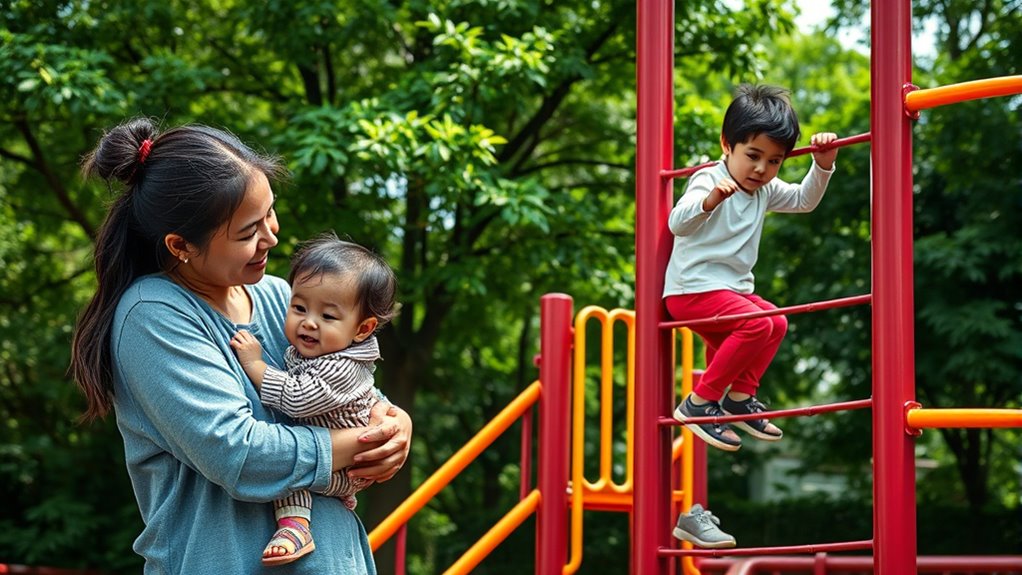

Globally, debates around attachment parenting and independence reflect cultural values, with some societies prioritizing emotional closeness through practices like co-sleeping and responsive caregiving. Others emphasize fostering independence through early self-sufficiency and letting children explore solo. Balancing these approaches depends on cultural norms, child development needs, and parent philosophies. Understanding these diverse practices can help you create a nurturing yet empowering environment. Stay with us to explore how you can harmonize both principles effectively.

Turn the school run and nap time into listening time
- Thousands of audiobooks, podcasts and originals
- Listen on your phone, tablet or Echo — also offline
- Cancel anytime
Key Takeaways
- Cultural norms influence whether attachment-focused or independence-promoting parenting practices are prioritized globally.
- Attachment parenting emphasizes emotional closeness, while independence encourages self-reliance, often reflecting societal values.
- Different cultures balance emotional bonds and autonomy based on social harmony and individual development goals.
- Global debates explore how integrating both approaches can support resilient, well-rounded children across diverse contexts.
- Practical parenting varies worldwide, with some cultures fostering early independence and others emphasizing secure attachment.

Have you ever wondered whether focusing on attachment parenting or fostering independence is better for your child’s development? This question sparks ongoing debates among parents, educators, and psychologists worldwide. At its core, the discussion revolves around how best to nurture your child’s emotional well-being and future resilience. Attachment parenting emphasizes building strong emotional bonds through closeness, responsiveness, and nurturing. It’s rooted in the idea that secure attachments early in life create a foundation of trust and confidence. On the other hand, fostering independence encourages children to explore, make decisions, and develop self-reliance, which is essential for their growth into autonomous adults.
Cultural norms play a significant role in shaping how parents approach this balance. In some societies, emphasizing emotional bonds is deeply ingrained, and parents are encouraged to stay physically close and highly responsive to their child’s needs. These cultures often see emotional closeness as essential for social harmony and personal security. Conversely, other cultures prioritize independence from a young age, expecting children to learn self-sufficiency early on. This can mean encouraging children to play alone, solve problems independently, or even sleep separately from parents. These practices reflect societal values about self-determination, resilience, and preparing children for adult responsibilities.
As you navigate this landscape, consider how your cultural background influences your perspectives on child-rearing. If your culture values emotional bonds, you might feel inclined to respond promptly to your child’s cries and spend considerable time engaging in close physical contact. This approach helps your child develop trust and a sense of safety, which research shows are essential for healthy emotional development. However, it’s also important to recognize that fostering independence doesn’t mean neglecting emotional bonds. You can still nurture a secure attachment while encouraging your child to explore their environment and make choices, which helps build confidence. Additionally, understanding the role of emotional alignment in supporting healthy relationships can guide you in creating a balanced approach.
Ultimately, the best approach may lie in blending these philosophies in a way that resonates with your values and your child’s needs. Understanding that cultural norms influence parenting styles can help you find a balance that feels authentic and effective. You might focus on creating a warm, responsive environment while gradually giving your child opportunities to develop independence. Remember, there’s no one-size-fits-all answer—what matters most is that your child feels loved, secure, and supported as they grow. Your awareness of these cultural and emotional factors will guide you toward nurturing a well-rounded, resilient individual.
attachment parenting baby sleep aids
As an affiliate, we earn on qualifying purchases.
As an affiliate, we earn on qualifying purchases.
Frequently Asked Questions
How Do Cultural Differences Influence Parenting Style Choices?
Cultural differences shape your parenting style by influencing your adherence to cultural norms and parenting expectations. In some cultures, you might prioritize close attachment and communal support, while others emphasize independence and self-reliance. Your approach depends on the values and traditions you grew up with, affecting how you discipline, communicate, and nurture your child. Recognizing these cultural influences helps you understand why parenting varies worldwide and adapt practices that align with your cultural context.
What Are the Long-Term Impacts of Attachment Parenting?
By practicing attachment parenting, you foster your child’s emotional security, which positively impacts their long-term development. This approach helps your child develop strong emotional bonds, resilience, and social skills. Over time, they tend to be more confident and better equipped to handle challenges. Your nurturing and responsiveness lay a foundation for healthy emotional and psychological growth, shaping their ability to form trusting relationships and succeed throughout their lives.
How Do Parents Balance Independence With Emotional Needs?
You can balance independence with emotional needs by setting clear emotional boundaries, ensuring your child feels safe to express themselves. Encourage autonomy development through age-appropriate choices, fostering confidence and independence. Be attentive to their emotional cues, offering support without overstepping boundaries. This approach helps your child develop self-reliance while feeling secure, creating a healthy balance between independence and emotional connection.
Are There Hybrid Parenting Approaches Combining Attachment and Independence?
Yes, hybrid parenting combines attachment and independence, like a dance where you follow your child’s lead while maintaining your rhythm. You can foster attachment independence by nurturing emotional bonds through responsive caregiving, while encouraging autonomy with gentle boundaries. This balanced approach helps your child feel secure yet confident, blending the best of both worlds. Embracing hybrid parenting allows you to adapt to your child’s evolving needs, creating a harmonious relationship built on trust and independence.
How Do Socioeconomic Factors Affect Parenting Practices Worldwide?
Socioeconomic disparities greatly influence your parenting practices worldwide. Limited parental resources mean you might struggle to provide consistent care, education, or emotional support, affecting how you balance attachment and independence. Wealthier families often have more options, enabling them to foster independence while maintaining attachment. Conversely, lower socioeconomic status can lead to reliance on community or extended family support, shaping your approach to parenting based on available resources and societal pressures.
independent play toys for toddlers
As an affiliate, we earn on qualifying purchases.
As an affiliate, we earn on qualifying purchases.
Conclusion
As you consider attachment parenting and independence, remember that nearly 70% of parents worldwide prioritize emotional closeness during early years. While attachment fosters strong bonds, independence encourages self-reliance. Striking a balance helps you nurture resilient, confident children. Ultimately, understanding diverse practices empowers you to choose what aligns best with your values, ensuring your child’s growth is both emotionally secure and adaptable to future challenges.
As an affiliate, we earn on qualifying purchases.
child development self-reliance toys
As an affiliate, we earn on qualifying purchases.
As an affiliate, we earn on qualifying purchases.
Cold & flu season Picks
humidifiers
As an affiliate, we earn on qualifying purchases.