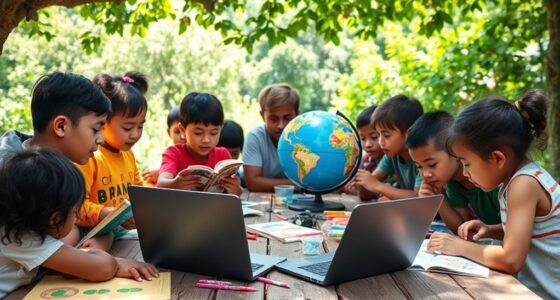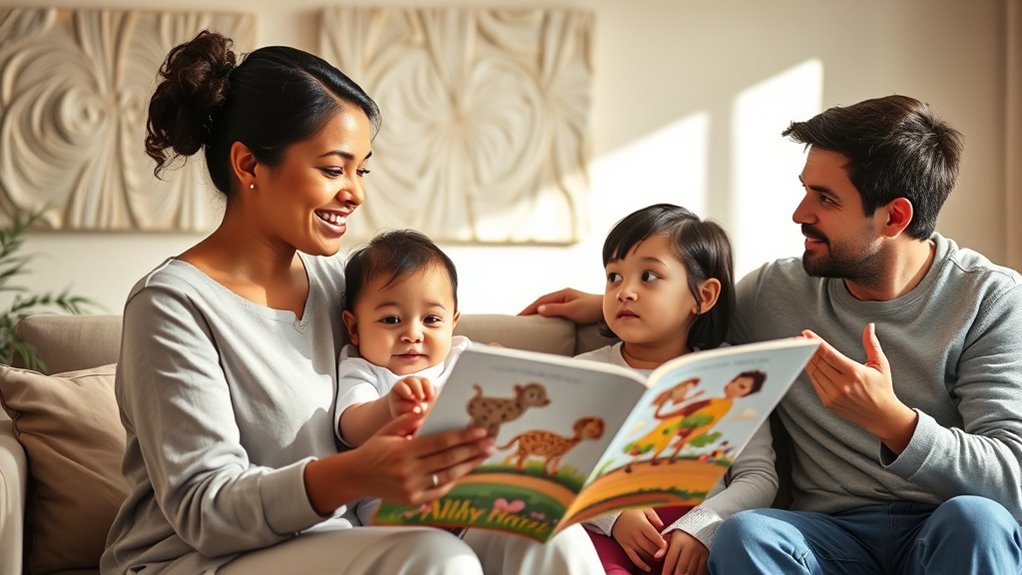
To manage language barriers in your family, actively support your child’s bilingual development by engaging in daily conversations, reading together, and celebrating cultural traditions. Involve teachers and community activities to reinforce language skills and cultural understanding. Be patient as your child learns at their own pace, and create a welcoming environment that honors both cultures. For practical tips on easing communication and fostering confidence, keep exploring how you can strengthen your family’s bilingual journey.
Key Takeaways
- Encourage daily bilingual conversations and reading to strengthen language skills at home.
- Collaborate with teachers to understand bilingual programs and support your child’s learning.
- Create a culturally welcoming environment by sharing traditions, stories, and community activities.
- Practice patience and celebrate small language milestones to boost confidence and motivation.
- Use active involvement and positive reinforcement to help children navigate social cues and cultural nuances.
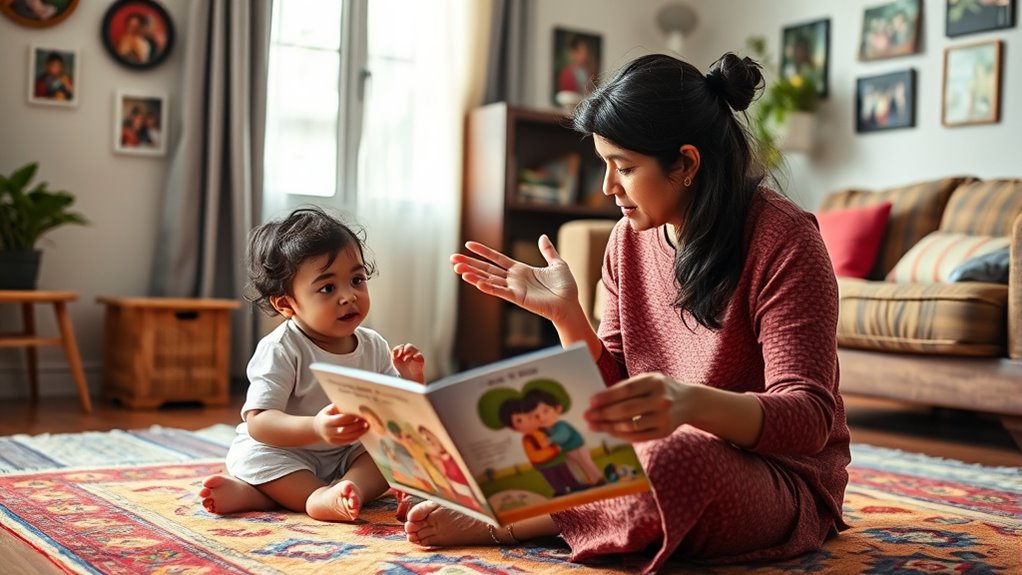
Finding your way through language barriers can be one of the most challenging aspects for immigrant families adjusting to a new country. When it comes to helping your children succeed, understanding the importance of bilingual education can make a significant difference. Bilingual programs are designed to support children in becoming fluent in both their native language and the new language spoken around them. This dual-language approach not only boosts their academic performance but also nurtures their cultural identity. As a parent, you might worry about your child’s integration, but embracing bilingual education can ease that process. It allows your child to communicate effectively at school and in the community while preserving their cultural roots. This balance encourages confidence and helps them navigate social situations better, reducing feelings of isolation often felt during cultural adaptation. Supporting your child’s bilingual development requires active involvement. You can start by encouraging daily practice at home through conversations, reading, or even watching shows in both languages. Engage with teachers and school staff to understand the bilingual programs offered and how they can support your child’s learning. Remember, each child’s pace differs, so patience is key. Celebrating small victories, like mastering a new phrase or understanding a story, can motivate your child and reinforce their language skills. When you prioritize bilingual education, you’re also fostering mutual respect for your culture and the new environment, easing cultural adaptation. It helps your children see their identity as a valuable asset rather than a barrier. Recognizing the importance of bilingual education can motivate you to actively support your child’s language journey. Cultural adaptation is a vital element intertwined with language learning. As your family adjusts, it’s essential to create a welcoming environment at home that honors your traditions while embracing new customs. Sharing stories, foods, and celebrations from your culture can strengthen your child’s sense of belonging. Simultaneously, exposing them to the local culture through community events, schools, or neighborhood activities helps them understand and appreciate their new surroundings. This dual exposure builds resilience and confidence, making the transition smoother. Keep in mind that language barriers aren’t just about words; they’re about cultural nuances, expressions, and social cues. By actively supporting bilingual education and cultural adaptation, you empower your children to thrive academically and socially. Your involvement helps them see that their background is a strength, not a hindrance, and that they can succeed in their new country while holding onto their roots.
Frequently Asked Questions
How Can Parents Practice Language Skills at Home Effectively?
You can practice language skills at home effectively by incorporating interactive activities into your daily routines. Engage in conversations during meal times, play language-based games, or read aloud together. Use everyday moments like shopping or cooking to introduce new vocabulary. Consistently practicing through these interactive activities helps your child gain confidence and fluency, making language learning a natural part of your daily life.
What Resources Are Available for Bilingual Education Programs?
Imagine a bridge connecting two islands—bilingual programs are that bridge, fostering cultural integration and community support. You can find resources like local school district programs, community centers, and nonprofit organizations offering dual-language immersion. Additionally, online platforms like Duolingo and local libraries often host bilingual storytimes or language classes. These resources help strengthen your child’s language skills, promote cultural understanding, and build a supportive community network, making integration smoother.
How Do Language Barriers Affect Children’s Social Development?
Language barriers can hinder your child’s social development by affecting their ability to connect with peers and express themselves. They might struggle to build friendships, feel isolated, or face challenges in understanding cultural cues, impacting their sense of cultural identity. To support them, encourage peer interactions, foster open conversations about culture, and create a safe space for them to practice language skills, helping them build confidence and strong social bonds.
What Are the Best Strategies for Non-Verbal Communication?
You can build understanding through gesture cues, visual aids, and facial expressions, making communication clear and heartfelt. Use consistent gestures to reinforce words, incorporate pictures or charts to illustrate ideas, and maintain eye contact to show engagement. These strategies foster connection, reduce frustration, and help your child feel loved and understood, even without spoken words. Embrace these non-verbal tools to strengthen your bond and bridge language gaps effectively.
How Can Parents Encourage Their Children to Embrace Bilingualism?
You can encourage your children to embrace bilingualism through language immersion experiences, like reading books, watching shows, or attending community events in both languages. Celebrate their progress to foster cultural pride and make language learning fun. Consistently speaking both languages at home and involving family members in language activities helps your kids see bilingualism as an enriching part of their identity, boosting their confidence and motivation.
Conclusion
By embracing patience and open communication, you can turn language barriers from towering walls into bridges that connect your family’s hearts. Imagine each conversation as a tiny spark igniting understanding, melting away confusion like ice in a summer sun. With every effort, you’re building a fortress of love so strong, it can withstand any storm. So keep trying, keep speaking, and watch your family’s bond grow so mighty, it could move mountains—one word at a time.