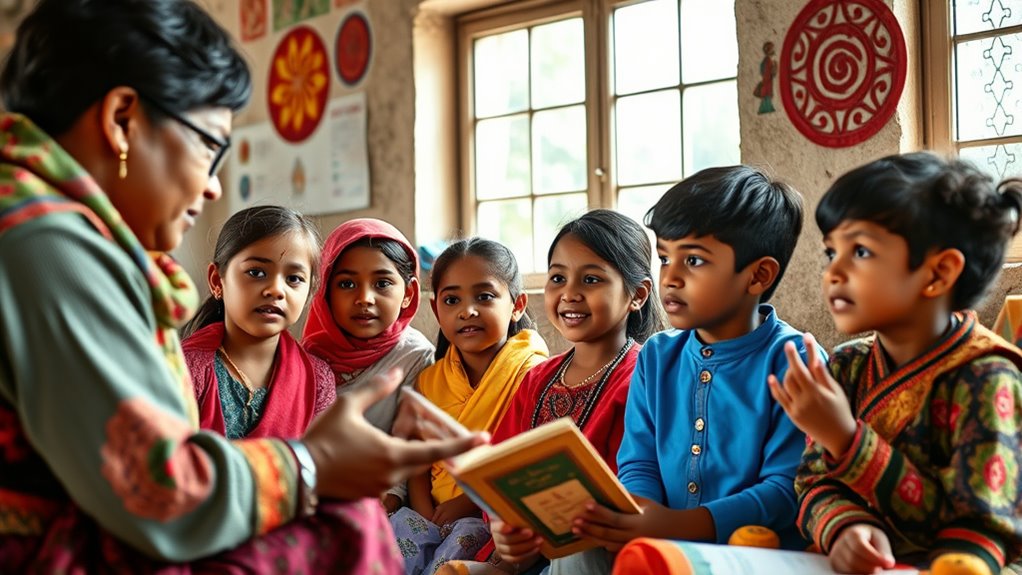

Cultures prepare children for adversity by fostering emotional regulation, encouraging social support, and sharing stories of resilience. They teach kids to manage feelings calmly, lean on family and community, and view challenges as opportunities for growth. Traditions, rituals, and role models highlight that setbacks are part of life and offer ways to overcome them. If you keep exploring, you’ll discover how these cultural practices can help build resilience in children.
Key Takeaways
- Cultures emphasize storytelling and rituals that teach children to view adversity as manageable and surmountable.
- Elders model emotional regulation and resilience skills, providing examples for children to emulate.
- Community activities foster shared support, reinforcing collective strength and resilience in children.
- Cultural norms shape emotional expression, encouraging openness or restraint to build emotional resilience.
- Support networks like family, peers, and teachers offer reassurance, guidance, and confidence during challenging times.

What makes some children bounce back from adversity while others struggle? It often comes down to how they manage their emotions and the support systems around them. Emotional regulation plays a vital role; children who learn to understand and control their feelings tend to navigate tough situations more effectively. When kids can calm themselves during stressful moments, they’re less likely to become overwhelmed or give up. Instead, they develop resilience, seeing setbacks as challenges they can overcome. Social support, meanwhile, acts as a safety net, providing reassurance, encouragement, and guidance when they need it most. Whether it’s a parent, teacher, or peer, having someone to lean on helps children build confidence and face difficulties head-on.
Managing emotions and strong support systems help children build resilience and overcome adversity.
Different cultures emphasize varied approaches to fostering these skills. For example, some cultures prioritize family cohesion and community involvement, guaranteeing children always have a network to turn to. This social support system not only offers emotional comfort but also models resilience through shared stories of overcoming hardship. Such environments teach children that they are not alone, and that seeking help is a sign of strength, not weakness. Additionally, cultural norms influence how children learn emotional regulation. In some societies, children are encouraged to express their feelings openly, which helps them process emotions healthily. In others, restraint and stoicism are valued, teaching children to manage their emotions internally. Both approaches, when balanced well, help children develop resilience by giving them tools to handle their feelings constructively.
Moreover, cultural practices such as storytelling, rituals, and community activities reinforce resilience skills. These traditions often involve sharing experiences of adversity and recovery, demonstrating that setbacks are universal but manageable. Children observe elders skillfully handling stress and emotions, learning through example. This modeling instills a sense of hope and perseverance, vital components of resilience. It also underscores the importance of social support, showing that collective strength can help individuals weather storms. When children see their community standing together, they internalize the idea that resilience isn’t just an individual trait but a shared value. In addition, the incorporation of evidence-based techniques like emotional regulation and social support in cultural practices strengthens their impact on developing resilient children.
Ultimately, resilience isn’t innate; it’s cultivated through a combination of emotional regulation and social support, shaped profoundly by cultural influences. By fostering environments where children feel supported and learn to regulate their emotions, cultures prepare them not just to survive adversity but to grow stronger because of it. When you understand these dynamics, you realize that resilience is a communal effort—one that involves nurturing emotional skills and nurturing relationships. This holistic approach ensures children develop the resilience they need to face whatever challenges come their way.

hand2mind See My Feelings Mirror, Play Therapy Toys, Mindfulness for Kids, Emotional Regulation for Kids, Social Emotional Learning Activities, Calm Down Corner Supplies, Calming Corner (Set of 1)
EMOTIONS FOR TODDLERS: Help children learn to label and identify emotions with the See My Feelings Mirror! Make…
As an affiliate, we earn on qualifying purchases.
As an affiliate, we earn on qualifying purchases.
Frequently Asked Questions
How Do Cultural Differences Influence Resilience Development in Children?
Cultural differences shape how you develop resilience in children through cross-cultural parenting practices. You might notice that some cultures emphasize community support, fostering resilience through collective strength, while others focus on individual perseverance. Resilience stereotypes can influence your approach, but understanding diverse cultural values helps you better prepare children for adversity. By embracing these differences, you empower children to adapt and thrive regardless of the challenges they face.
What Role Do Family Traditions Play in Building Resilience?
Family traditions like rituals and storytelling play a crucial role in building your resilience. When you participate in family rituals, you feel a sense of stability and belonging that strengthens your emotional endurance. Storytelling traditions help you learn how others faced challenges and overcame them, fostering a mindset of perseverance. By engaging in these practices, you develop the confidence and skills needed to handle adversity throughout life.
Are There Specific Resilience Traits Common Across All Cultures?
Did you know that research shows certain resilience traits are universal across cultures? You’re likely to find qualities like optimism, emotional regulation, and perseverance in resilient individuals worldwide. These cultural resilience traits help people adapt to adversity, regardless of their background. While each culture may emphasize different values, these common traits serve as a foundation for overcoming challenges, demonstrating that resilience has both universal and culturally specific elements.
How Can Educators Support Resilience in Culturally Diverse Classrooms?
You can support resilience in culturally diverse classrooms by integrating cultural storytelling, which helps students connect with their backgrounds and build strength. Conduct resilience assessments to identify individual needs and tailor your approach accordingly. Encourage open discussions about adversity, fostering a supportive environment where students feel valued and understood. By respecting cultural differences and emphasizing personal stories, you empower students to develop resilience that honors their unique experiences.
What Are Common Misconceptions About Resilience in Different Cultures?
Imagine resilience as a vibrant tapestry, yet many believe cultural stereotypes and resilience myths distort its true pattern. You might think some cultures are naturally tougher or less vulnerable, but resilience isn’t about toughness alone. It’s a universal trait shaped by diverse experiences. Don’t fall for these misconceptions—resilience varies individually, influenced by unique backgrounds, not stereotypes, and it’s something you can nurture across all cultures.

The Squish: An Uplifting Story of a Sand Castle Learning Resilience for Kids (Ages 4-8)
As an affiliate, we earn on qualifying purchases.
As an affiliate, we earn on qualifying purchases.
Conclusion
So, next time life throws a tantrum your way, remember it’s just a cultural lesson in disguise. Whether it’s tough love from a stern parent or a community’s silent nod to endurance, you’re practically being groomed for the grand circus of adversity. Who knew that resilience was less about superhero capes and more about messy, imperfect practice? Embrace the chaos—after all, it’s just your culture’s way of saying, “You’re tougher than this.”

Roll with It | CBT Coping Skills Kit | Emotional Regulation Tools for Kids | Anger Management & Social Emotional Learning | Anxiety Relief | Ages 5+ | Play Therapy Toys for Counselors
PSYCHOLOGIST-DESIGNED COPING DICE SYSTEM – Unique interactive dice set (anger, anxiety, sadness, boredom) makes emotional learning engaging and…
As an affiliate, we earn on qualifying purchases.
As an affiliate, we earn on qualifying purchases.

How to Parent Children with ADHD: 48 Techniques & Strategies to Understand and Support Your Neurodivergent Child. Manage and Improve Your Kid’s Emotional Regulation, Focus, and Self-Control
As an affiliate, we earn on qualifying purchases.
As an affiliate, we earn on qualifying purchases.