To perform c-section scar massage, start by ensuring your hands are clean and your scar has fully healed. Use gentle circular motions with your fingertips, gradually increasing pressure as tolerated, while applying soothing oils like coconut or jojoba carefully. Incorporate light tissue mobilization and gentle stretches to improve scar flexibility. Keep an eye on skin response and look for signs of infection. If you want to learn more about safe techniques, keep exploring to support your healing journey.

Turn the school run and nap time into listening time
- Thousands of audiobooks, podcasts and originals
- Listen on your phone, tablet or Echo — also offline
- Cancel anytime
Key Takeaways
- Ensure the scar is fully healed and clean before beginning gentle, controlled massage with fingertips or palms.
- Use light circular motions, gradually increasing pressure to stimulate blood flow and tissue remodeling.
- Incorporate gentle stretching and mobilization techniques to improve scar flexibility and reduce tightness.
- Choose hypoallergenic, fragrance-free oils like coconut or jojoba to minimize irritation during massage.
- Monitor for signs of infection or abnormal changes, and avoid aggressive manipulation to prevent damage.
As an affiliate, we earn on qualifying purchases.
Preparing for Your Scar Massage Routine

Before starting your scar massage routine, it’s important to prepare both your skin and your mindset. Begin by cleaning your hands thoroughly to prevent infection. Gently wash the area with mild soap and warm water, then pat it dry. Make sure your scar is fully healed and any stitches or adhesives are removed. Take a moment to relax and set a positive intention for the session, focusing on healing and comfort. Avoid rushing; your mindset should be calm and patient. Gather any tools or oils you plan to use beforehand, so everything’s within reach. This preparation helps you approach the massage with confidence and guarantees your skin is clean and ready to benefit from the process. Proper preparation sets the foundation for effective, safe scar care. Additionally, understanding the types of scar tissue involved can help tailor your massage techniques for better results.
hypoallergenic massage oils for scars
As an affiliate, we earn on qualifying purchases.
As an affiliate, we earn on qualifying purchases.
Gentle Circular Motions to Stimulate Healing

To effectively stimulate healing, start by using gentle circular motions over your scar. Lightly press your fingertips and move in small circles, gradually increasing pressure as comfort allows. This technique encourages blood flow, breaks down scar tissue, and promotes tissue regeneration. Focus on maintaining a steady, gentle rhythm to avoid irritation. Remember, patience is key—don’t rush the process. Consistency will help your scar heal more smoothly over time. Proper technique is essential for safe and effective massage. Use clean fingertips to prevent infection. Keep your movements slow and controlled. Pay attention to how your skin responds and adjust pressure accordingly. Perform this technique daily, and be mindful of any discomfort or sensitivity. Over time, gentle circular motions can help soften the scar and support overall healing.
As an affiliate, we earn on qualifying purchases.
Using Massage Oils and Lotions Safely

Using massage oils and lotions can enhance your scar massage routine, but it’s important to choose products that are safe for your skin. Look for hypoallergenic, fragrance-free options to reduce irritation. Always do a patch test first—apply a small amount and wait 24 hours to check for reactions. Avoid products with alcohol, dyes, or harsh chemicals. To help you decide, here’s a quick guide:
| Ingredient to Avoid | Safe Alternatives | Benefits |
|---|---|---|
| Artificial fragrances | Natural oils like coconut or jojoba | Gentle, soothing |
| Parabens | Organic, preservative-free lotions | Reduced irritation |
| Alcohol | Aloe vera gel | Moisturizes safely |
| Dyes | Unscented products | Less skin sensitivity |
Additionally, selecting safe skincare ingredients can promote better healing and minimize the risk of irritation during scar massage.
postpartum scar healing products
As an affiliate, we earn on qualifying purchases.
As an affiliate, we earn on qualifying purchases.
Incorporating Light Tissue Mobilization Techniques

Incorporating light tissue mobilization techniques into your scar massage routine can help improve flexibility and reduce adhesions around your C-section scar. By gently mobilizing the tissue, you encourage better blood flow and break down tight scar bands. Start with soft, circular motions around the scar, applying gentle pressure that doesn’t cause discomfort. Use your fingertips or palms for controlled movement, focusing on areas that feel tight or restricted. Consistency is key—perform these techniques daily to see progress.
Gently mobilize your scar tissue daily to improve flexibility and reduce adhesions.
- Use gentle, sweeping motions to lift and release tissue restrictions
- Focus on areas adjacent to the scar to promote mobility
- Maintain a slow, steady pace to avoid overstimulation and discomfort
Techniques to Improve Scar Flexibility and Comfort

To improve your scar’s flexibility and comfort, try gentle skin stretching exercises that gradually loosen the tissue. Incorporating deep tissue releases can help reduce tightness, while scar tissue mobilization encourages proper healing. These techniques work together to make your scar more comfortable and less restrictive over time. Additionally, understanding automation in business can inform how healthcare providers implement innovative techniques to enhance recovery processes.
Gentle Skin Stretching
Gently stretching the skin around your C-section scar can help improve its flexibility and reduce discomfort. This technique encourages your skin to move more freely and can ease tightness or soreness. To do this, use clean fingers or a gentle massage tool to lift and stretch the skin slightly beyond the scar area. Focus on slow, controlled movements, avoiding any pain or pulling. Regular practice helps break down scar tissue and promotes healthier skin mobility. Remember to breathe deeply and stay relaxed during each stretch. Incorporate these steps:
- Use gentle, steady pressure to lift the skin around the scar
- Hold each stretch for a few seconds before releasing
- Repeat daily to gradually improve skin flexibility and comfort
- Consistent practice enhances scar tissue breakdown and overall healing process
Deep Tissue Release
Deep tissue release techniques target the deeper layers of scar tissue to increase flexibility and reduce discomfort. Using firm, deliberate pressure, you can break up adhesions that limit movement and cause pain. Start by gently pressing and kneading the scar area with your fingertips or knuckles, gradually increasing pressure as tolerated. Focus on areas that feel tight or resistant, applying slow, controlled movements to loosen the tissue. Consistency is key; perform these releases regularly to see improvements. Remember to breathe deeply and relax your muscles to avoid unnecessary tension. Avoid rushing; patience helps the tissue adapt and become more pliable. Over time, these techniques can markedly enhance scar flexibility, easing discomfort and supporting better movement. Incorporating specialized techniques such as targeted massage tools can further optimize results.
Scar Tissue Mobilization
Have you considered incorporating mobilization techniques to improve your scar’s flexibility and comfort? Gentle scar tissue mobilization can help break down adhesions and enhance skin elasticity. By carefully massaging the area, you encourage better blood flow and tissue remodeling, which reduces tension and discomfort. Focus on applying light pressure and smooth, circular motions around the scar. Using the appropriate tools, such as fingertips or specialized massage devices, can also facilitate more effective mobilization. Consistency is key to seeing results.
When and How Often to Perform Scar Massage

Timing and frequency are essential to effective C-section scar massage. You should start scar massage once your incision has healed completely, usually around 4 to 6 weeks postpartum, but always follow your doctor’s advice. Initially, perform gentle massage sessions lasting about 5 minutes, once daily. As your tissue becomes more flexible, you can gradually increase the duration to 10-15 minutes, up to twice daily if comfortable. Consistency is vital—regular sessions help break down scar tissue and improve circulation. However, avoid overdoing it; if you experience pain, redness, or swelling, reduce frequency or stop and consult your healthcare provider. Establishing a routine ensures your scar heals smoothly and minimizes discomfort over time. Incorporating proper techniques can further enhance healing and reduce the risk of complications.
Monitoring Your Healing and Avoiding Complications
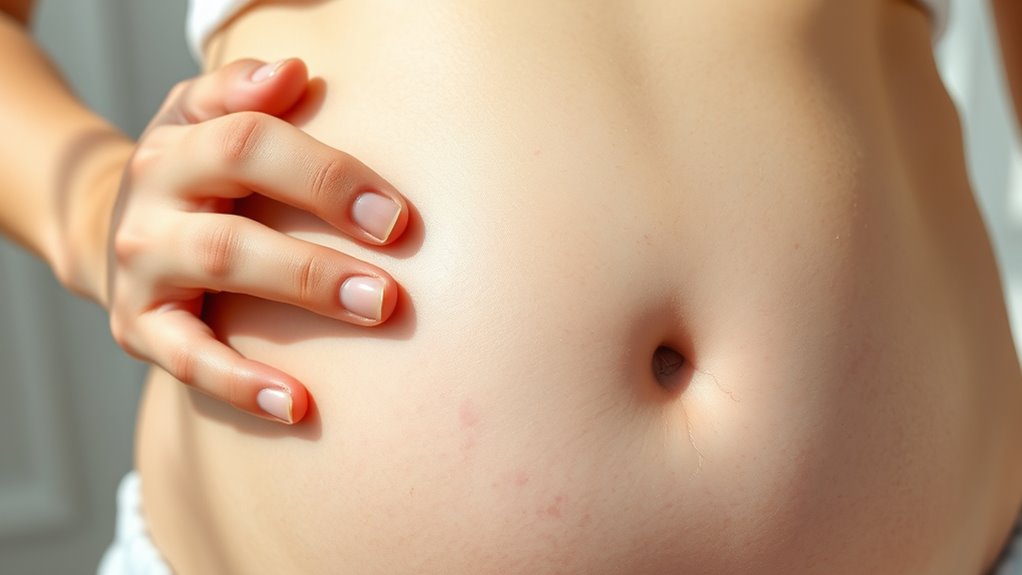
Monitoring your healing process is crucial to guarantee your scar develops properly and to catch any signs of complications early. Keep an eye on your incision for redness, swelling, or unusual pain—these can signal infection or other issues. Check for any discharge or foul smell, and monitor your temperature regularly, as fever may indicate infection. It’s also important to notice if the scar feels warm to the touch or if you experience increased pain that doesn’t improve. Staying vigilant helps you seek medical attention promptly and avoid setbacks.
- Look for persistent redness, swelling, or warmth around the scar
- Watch for unusual discharge, foul smell, or increased pain
- Track any fever or systemic symptoms that develop over time
- Regularly assess your environment to ensure proper air quality that supports healing and reduces the risk of airborne infections
Frequently Asked Questions
How Soon After Surgery Can I Start Scar Massage?
You’re wondering when you can start scar massage after surgery. Typically, it’s best to wait until your incision has healed and your doctor gives the go-ahead, usually around 4 to 6 weeks post-surgery. Once healed, gentle massage can help improve scar tissue flexibility and reduce discomfort. Be sure to follow your healthcare provider’s advice and avoid massaging if your scar is still tender, red, or healing.
Are There Specific Massage Tools Recommended for C-Section Scars?
You might wonder if specific tools can help with your C-section scar. While gentle massage with your fingertips is often effective, some people find silicone scar sheets or soft massage rollers helpful for added pressure and comfort. Always check with your healthcare provider before using any tools, especially early on. Remember, gentle, consistent massage can promote healing and improve scar appearance over time.
Can Scar Massage Help Reduce Visible Scarring or Pigmentation?
Sure, scar massage can substantially soften scars and diminish pigmentation. By gently massaging your scar regularly, you stimulate blood flow, encourage healing, and help break down excess tissue. This consistent care can lead to less visible scarring and a more even skin tone. Remember, patience is key—persevering with gentle, targeted touch can promote a smoother, more confident you, transforming scars from stubborn to subtle.
What Signs Indicate I Should Stop Scar Massage Immediately?
You should stop scar massage immediately if you notice signs like increased redness, swelling, warmth, or pain around the area. If you see any signs of infection, such as pus or a foul odor, or if the skin becomes overly sensitive or begins to blister, it’s best to cease massage and consult your healthcare provider. Listening to your body helps prevent complications and guarantees proper healing.
How Does Scar Massage Differ for Cesarean Versus Other Surgical Scars?
You might wonder how scar massage differs depending on the type of surgery. For cesarean scars, you’ll want to focus on gentle, circular motions, avoiding excessive pressure, especially in the early stages. Unlike other surgical scars, C-section massages often emphasize easing tension around the lower abdomen and fostering tissue flexibility without risking discomfort or damage. Always follow your healthcare provider’s advice to tailor the massage to your specific healing process.
Conclusion
Remember, patience is key as you work on your C-section scar. Consistent massage can promote healing, flexibility, and comfort, but don’t rush the process. Follow your routine gently, listen to your body, and adjust as needed. Like they say, “Slow and steady wins the race,” so stay committed and mindful. With time and care, you’ll help your scar heal beautifully and regain your confidence.
Cold & flu season Picks
humidifiers
As an affiliate, we earn on qualifying purchases.




![Every Parent Dreads That Call From School… 📞😱 [Litterbox Comics]](https://motherchronicle.com/wp-content/uploads/2026/10/every-parent-dreads-that-call-from-school-litterbox-comics-featured-260x140.jpg)