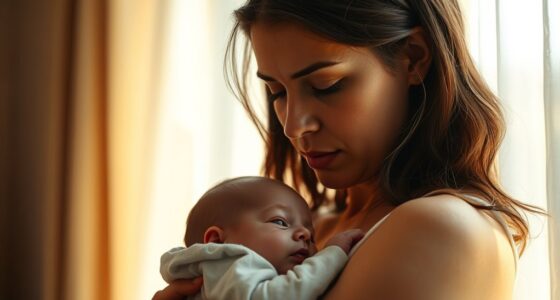
After birth, your hormones shift rapidly, especially drops in estrogen and progesterone, which can cause mood swings, anxiety, or sadness. Oxytocin encourages bonding but can also contribute to emotional ups and downs. Cortisol levels may rise, making you feel more stressed or anxious. These changes are normal and often temporary, though they can sometimes lead to postpartum depression. Understanding these hormonal effects can help you manage your emotions—keep exploring to learn more about how to support yourself during this time.

Turn the school run and nap time into listening time
- Thousands of audiobooks, podcasts and originals
- Listen on your phone, tablet or Echo — also offline
- Cancel anytime
Key Takeaways
- Postpartum hormonal shifts, especially declines in estrogen and progesterone, can cause mood swings and feelings of overwhelm.
- Elevated oxytocin promotes bonding but may also lead to emotional variability and swings.
- Increased cortisol levels can heighten anxiety and mood instability during the postpartum period.
- Emotional fluctuations are common in the first weeks postpartum as hormones stabilize and adapt to motherhood.
- Support, rest, and self-care are vital for emotional recovery; persistent symptoms should be medically evaluated.

After giving birth, your body undergoes significant hormonal shifts that are essential for recovery and bonding with your baby. These hormonal fluctuations are natural and necessary, but they can also profoundly affect your mood and emotions. During this time, your levels of estrogen and progesterone plummet rapidly, which can leave you feeling overwhelmed, tearful, or anxious. This sudden change is one of the key factors behind postpartum depression, a condition that impacts many new mothers. You might experience feelings of sadness, irritability, or fatigue that seem to come out of nowhere, and understanding the role of hormonal fluctuations can help you recognize that these feelings are often temporary.
Hormonal shifts after birth can cause temporary mood swings and feelings of overwhelm or sadness.
Your body is also producing high amounts of oxytocin, sometimes called the “love hormone,” which encourages bonding with your baby and promotes feelings of attachment. While oxytocin can bring feelings of warmth and closeness, it can also contribute to emotional swings, especially when combined with other hormonal shifts. Additionally, your cortisol levels, the stress hormone, may increase, heightening feelings of anxiety or mood instability. These hormonal changes are complex and can interact in ways that make your emotional state unpredictable. Recognizing the importance of hormonal balance can help you better understand these emotional fluctuations and support your recovery.
Many women notice that their mood fluctuates considerably during the first few weeks after birth. It’s common to feel elated one moment and tearful or irritable the next. This rollercoaster is driven by the body’s efforts to reset its hormonal balance and adapt to the new role of motherhood. However, for some, these fluctuations can become more intense, leading to postpartum depression. It’s important to remember that postpartum depression isn’t a sign of weakness or failure; it’s a medical condition caused by these hormonal shifts and other factors like sleep deprivation or emotional stress.
As your hormones stabilize over the following weeks, your emotional state often begins to level out. Support from loved ones, adequate rest, and self-care play crucial roles in this recovery process. If you notice that your feelings of sadness, hopelessness, or anxiety persist or worsen, it’s essential to seek help. Recognizing that hormonal fluctuations are a natural part of postpartum recovery can empower you to seek appropriate treatment and support, helping you navigate this challenging but temporary phase. Remember, your emotions are valid, and with time and care, your hormonal balance will restore, allowing you to enjoy your new family life more fully.
postpartum mood support supplements
As an affiliate, we earn on qualifying purchases.
As an affiliate, we earn on qualifying purchases.
Frequently Asked Questions
How Long Do Hormonal Fluctuations Typically Last Postpartum?
Hormonal fluctuations typically last for about six weeks postpartum, but they can vary based on factors like breastfeeding impact and sleep deprivation. If you’re breastfeeding, your hormones stay elevated longer, which can prolong mood swings. Sleep deprivation also intensifies emotional ups and downs, making recovery feel slower. Keep in mind that everyone’s experience is different, and your hormones will gradually stabilize as your body adjusts to this new chapter.
Can Hormonal Changes Cause Postpartum Personality Shifts?
Yes, hormonal changes can cause postpartum personality shifts, affecting your emotional resilience. You might notice mood swings, increased irritability, or feelings of sadness. While these shifts are common, hormonal therapy can sometimes help stabilize your mood. Remember, reaching out for support and practicing self-care are essential during this time. Your personality may temporarily shift, but with time and proper care, you’ll regain your emotional balance.
What Are the Signs of Imbalanced Hormones After Birth?
You might notice signs of imbalanced hormones after birth, like persistent sadness, anxiety, or difficulty bonding with your baby. You could also experience fatigue, changes in appetite, or trouble sleeping. These symptoms may point to postpartum depression, which hormonal therapy can sometimes help treat. If you suspect hormonal imbalance, it is crucial to talk with your healthcare provider for proper diagnosis and support.
Are Hormonal Changes Linked to Postpartum Weight Gain?
Imagine your body as a delicate balance beam, and hormonal fluctuations after birth can tip it, leading to postpartum weight gain. Yes, these changes are linked, especially with shifts in estrogen and progesterone. Focusing on postpartum nutrition helps stabilize hormones, while hormonal therapy can assist if imbalances persist. By supporting your body’s recovery, you can regain your equilibrium and manage weight more effectively during this transformative time.
How Do Hormonal Fluctuations Affect Postpartum Libido?
Hormonal fluctuations after birth can markedly impact your postpartum libido. Breastfeeding impacts hormone levels, often reducing estrogen and testosterone, which can decrease sexual desire. Hormone therapy may help rebalance these hormones, potentially improving libido. However, individual responses vary, and it’s important to discuss options with your healthcare provider. Understanding these changes can help you navigate your postpartum recovery and maintain intimacy with your partner.
As an affiliate, we earn on qualifying purchases.
Conclusion
As you navigate the days after birth, remember that your shifting hormones are like a storm brewing within—powerful yet temporary. These fluctuations can stir intense emotions, but just as storms pass to reveal clear skies, your mood will stabilize over time. Embrace this natural process, knowing it’s your body’s way of adjusting and healing. Soon, you’ll find calm after the storm, feeling more balanced and connected with your new life as a mother.
postpartum anxiety relief products
As an affiliate, we earn on qualifying purchases.
As an affiliate, we earn on qualifying purchases.
As an affiliate, we earn on qualifying purchases.
Cold & flu season Picks
humidifiers
As an affiliate, we earn on qualifying purchases.