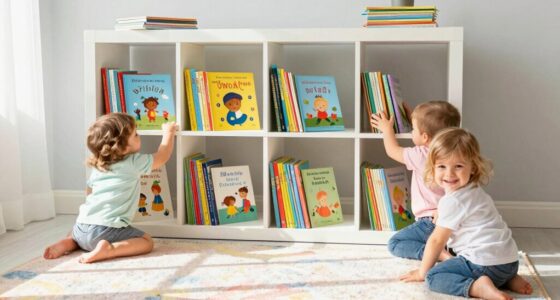
Implementing a toy rotation system helps reduce clutter and keeps your kids engaged longer by limiting overwhelmed choices and sparking curiosity. You can organize toys into manageable groups, select a few to swap weekly or biweekly, and involve your child in choosing which to play with. This simple trick encourages creativity, responsibility, and sustained interest. If you keep up with this approach, you’ll discover more tips to maintain interest and tidiness over time.
Key Takeaways
- Toy rotation reduces clutter and keeps kids interested by offering fresh, engaging options regularly.
- Limiting toys to a manageable set prevents overwhelm and encourages longer, focused play sessions.
- Regularly swapping toys maintains novelty, boosting children’s curiosity and extended engagement.
- Organized storage and scheduled rotations make tidying easier, promoting longer play without frustration.
- Involving kids in choosing and managing toys fosters responsibility and sustained interest over time.

Humble Crew Toy Storage Organizer with 12 Removable Storage Bins for Kids Playroom, 4-Tier Toddler Toy Organization, Grey/White
DURABLE AND STURDY: Engineered wood frame with steel dowels and stabilizing braces supports up to 20 lbs per…
As an affiliate, we earn on qualifying purchases.
As an affiliate, we earn on qualifying purchases.
What Are the Main Challenges of Toy Clutter and Short Attention Spans?

Have you ever felt overwhelmed by the mountain of toys cluttering your home and your child’s constant need for new distractions? Managing toy storage becomes a challenge when kids have too many toys, leading to mess and frustration. Short attention spans make it hard for children to focus on one toy for long, causing them to quickly lose interest. This creates a cycle where you constantly buy new toys to keep them entertained, which only adds to clutter. The key is offering a variety of toys, but without proper organization, it’s easy for the collection to spiral out of control. Too many toys can be overwhelming for kids and parents alike, making it difficult to foster meaningful play and maintain a tidy space. Implementing effective organization strategies can help keep toys manageable and encourage longer engagement, especially when combined with toy rotation techniques that introduce a fresh feel to familiar toys. Incorporating simple storage solutions that are accessible for kids can also promote independence and help sustain a clutter-free environment. Additionally, using a world clock tool can help coordinate playtimes and routines across different time zones, reducing scheduling stress. Being aware of the types of durable toys that withstand frequent use can also significantly reduce clutter caused by broken or worn-out items.

YOPCDJ 8 Packs 8 Colors Toy Storage Bags, Reusable Clear PVC Board Game Storage, Toy Organizers and Storage Bags with Zipper for Building Blocks, Puzzle and Handmade Accessories, Clear Toiletry Bag
LARGE CAPACITY TOY BAGS: 8 pcs 8 colors clear toy storage bags set, Size 13.1×9.4×3.9inch, Ideal for storing…
As an affiliate, we earn on qualifying purchases.
As an affiliate, we earn on qualifying purchases.
How Does Toy Rotation Help Keep Kids Interested and Reduce Clutter?

Toy rotation offers a practical solution to the challenges of clutter and short attention spans. By periodically swapping out toys, you keep your child engaged with fresh options while minimizing clutter. This method can also help nurture your child’s creativity and problem-solving skills, as they are encouraged to explore different toys over time. Additionally, incorporating diverse toy selections during each rotation can stimulate various areas of development and prevent boredom. Rotating toys also teaches children about organization and responsibility, as they learn to manage their playthings effectively. This process further reinforces storage solutions by encouraging you to use effective storage solutions, like bins or shelves, for easy access and neatness. When toys are rotated, fewer items are on display, making cleanup quicker and space more manageable. To maximize benefits, create a schedule for rotation and label storage containers for quick identification. This method ensures your child remains interested in their toys without feeling overwhelmed by excess. Ultimately, toy rotation promotes a more organized environment, reduces clutter, and keeps playtime exciting. Incorporating visual cues can further help children recognize which toys are available during each rotation.

SpaceAid Toy Storage Organizer with 6 Shelves and 12 Bins, Bookshelf/Bookcase, Kids Bin Shelf, Toys Box for Playroom Organization for Bedroom & Room Decor, White, 52.3" W
BEAUTIFUL AND ORGANIZED – Make your kids playroom space neat and organized with this toy storage organizer with…
As an affiliate, we earn on qualifying purchases.
As an affiliate, we earn on qualifying purchases.
How Can You Set Up a Simple and Effective Toy Rotation System?

Setting up a simple and effective toy rotation system starts with organizing your child’s toys into manageable groups. First, gather all toys and sort them by type or activity. Second, use storage solutions like bins or shelves to keep age-appropriate toys accessible. Third, select a limited number of toys for each group—this prevents overwhelm and encourages focused play. Fourth, designate specific storage areas for toys currently in rotation, making it easy to swap them out regularly. Keep in mind, rotating only a few groups at a time simplifies the process and minimizes clutter. Regularly switch toys to maintain interest and keep things fresh. Incorporating innovative storage solutions can further enhance your toy organization and rotation system. Additionally, understanding the psychological benefits of toy rotation can motivate you to stick with the system and foster your child’s independence and creativity. Utilizing efficient organizational tools can streamline the process and save time when managing multiple toy groups. Moreover, employing performance-enhancing strategies such as consistent scheduling can help establish a routine that benefits your child’s development.
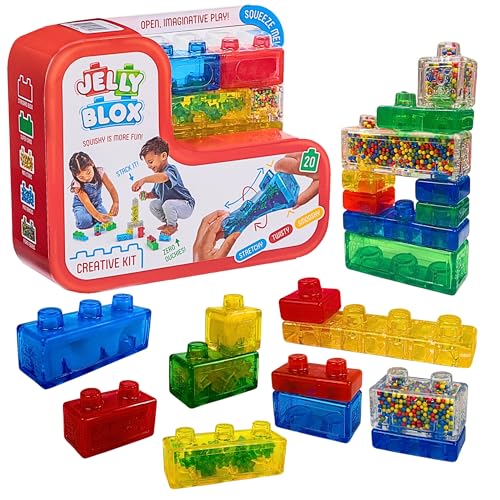
Goliath Jelly Blox Creative Kit | Includes 20 Blocks | Toddler & Preschool Building Blocks Kids Can Squeeze, Stretch, Squish | MESH ACCREDITED | Safety Tested & Ouch-Free | Sensory Play Toy Ages 2+
CREATIVITY UNLEASHED: Jelly Blox are a unique building system featuring soft, safe, sensory construction that kids can squeeze,…
As an affiliate, we earn on qualifying purchases.
As an affiliate, we earn on qualifying purchases.
Which Toys Should You Include in Rotation, and How Do You Pick Them?
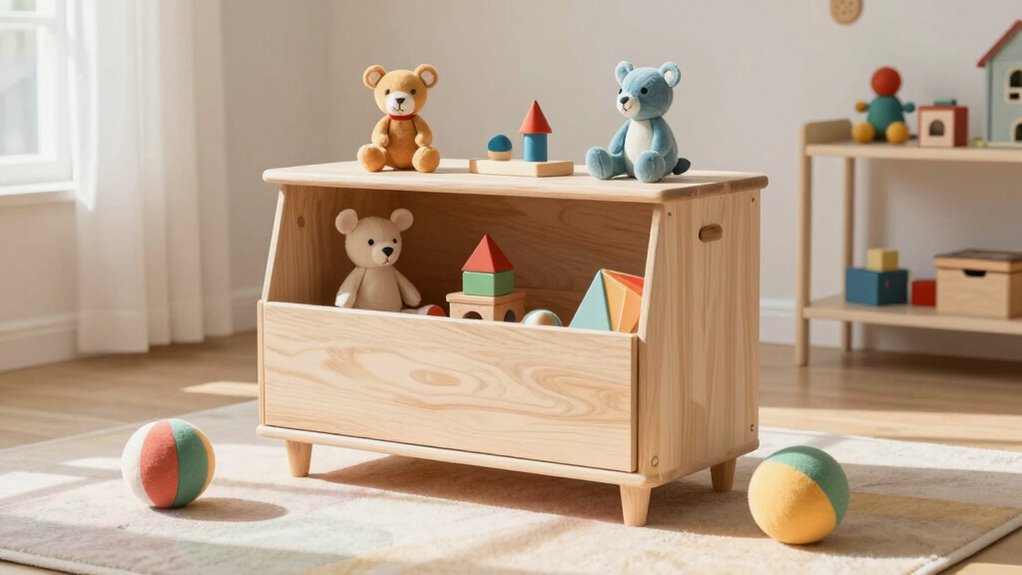
Choosing which toys to include in your rotation involves selecting items that promote varied play and development. Focus on toy selection by choosing toys that target different skills—imagination, problem-solving, fine motor, and gross motor. Include a mix of open-ended toys like blocks or art supplies and more structured options like puzzles or dolls. Keep the rotation schedule simple: around 4 to 6 toys per cycle, switching them out every week or two. Prioritize toys your child enjoys and that challenge them just enough to stay engaged without frustration. Regularly assess which toys spark the most interest and consider removing or replacing less engaging items. This way, your rotation remains fresh and tailored to your child’s evolving interests and developmental needs. Incorporating digital content can also complement physical toys and broaden your child’s play experiences. Additionally, understanding developmental milestones can help guide your toy choices to support your child’s growth effectively. Monitoring water damage and properly drying and cleaning toys can also ensure a safe environment for play. Being aware of personality traits can help you select toys that align with your child’s temperament, encouraging more meaningful engagement. Recognizing the importance of cultural activities can also inspire you to include toys and games that reflect diverse backgrounds and foster inclusivity.
How Can You Keep Toy Rotation Consistent and Kids Engaged Over Time?
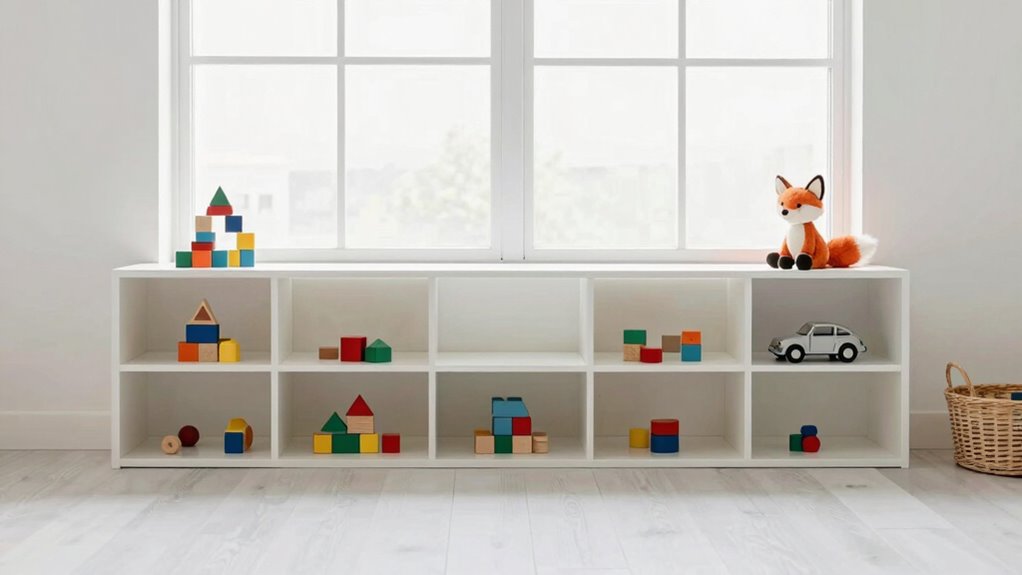
Maintaining a consistent toy rotation can be challenging, but establishing a simple routine helps keep kids engaged over time. To stay on track, involve yourself actively in the process.
- Set regular intervals—weekly or biweekly—to swap toys, creating predictability.
- Use smart storage solutions like bins or shelves to organize toys by category, making rotation easy.
- Keep kids involved; let them choose which toys to put away or bring out, boosting their interest.
- Track your rotations with a simple calendar or checklist to ensure consistency.
- Incorporate elements of golf history and milestones into your routine, making the process educational and fun for kids.
- Recognizing behavioral patterns can help you adapt the rotation schedule to maintain your child’s curiosity and prevent boredom.
- Emphasizing child development principles can further enhance how toy rotation benefits your child’s growth and learning.
Parent involvement is key to maintaining momentum. By staying organized and engaged, you make toy rotation a seamless part of your routine that keeps kids curious and entertained longer.
Frequently Asked Questions
How Often Should I Rotate Toys for Optimal Engagement?
You should rotate toys every 1 to 2 weeks to maintain ideal engagement. This keeps toy accessibility fresh, preventing boredom and encouraging your kids to explore new play options. By introducing a variety of toys through regular rotation, you enhance playtime variety, which stimulates their curiosity and creativity. Consistent rotation also helps you manage clutter while ensuring your children stay engaged with their toys for longer periods.
What Are Signs That My Child Is Bored With Current Toys?
Boredom indicators are like warning signs on a busy road; they tell you something needs attention. If your child shows less excitement, avoids toys, or quickly loses interest, they might be bored. You’ll notice playtime changes, like distracted behavior or repetitive actions. These cues signal it’s time to switch things up with toy rotation, keeping their curiosity alive and making playtime fresh and engaging.
Can Toy Rotation Work for All Age Groups?
Yes, toy rotation works for all age groups. You just need to select age-appropriate toys that promote sensory stimulation and suit your child’s developmental stage. By regularly switching out toys, you keep their interest high and encourage creative play. This approach helps prevent boredom and fosters learning, no matter your child’s age. Adapt the rotation to their evolving interests, ensuring each toy offers engaging sensory experiences.
How Do I Handle Special or Sentimental Toys During Rotation?
Isn’t it heartbreaking to part with sentimental toys? To handle these during rotation, gently set aside your child’s most cherished items in a special keepsake box. This preserves their sentimental attachment while preventing clutter. Rotate other toys regularly to keep play fresh, and periodically revisit the keepsake box. This way, you balance toy preservation and minimalist living, creating a respectful, meaningful approach to toy management that honors emotional value without overwhelming your space.
What Are Budget-Friendly Ways to Implement Toy Rotation?
You can implement budget-friendly toy rotation by using simple, inexpensive storage solutions like plastic bins or cardboard boxes. Create DIY rotation systems by labeling containers for different weeks or themes, making it easy to swap toys in and out. Store extras out of sight and bring out a few at a time. This approach keeps things organized, encourages longer play, and saves money, all while using items you already have at home.
Conclusion
By embracing toy rotation, you’re planting seeds of curiosity that bloom over time, transforming clutter into a carefully tended garden of discovery. This simple trick acts as a key, opening your child’s imagination and patience. When toys are like chapters in an unfolding story, each rotation refreshes the narrative. Ultimately, you nurture a space where play becomes a timeless journey, not just a fleeting moment—turning everyday objects into symbols of growth and endless possibility.