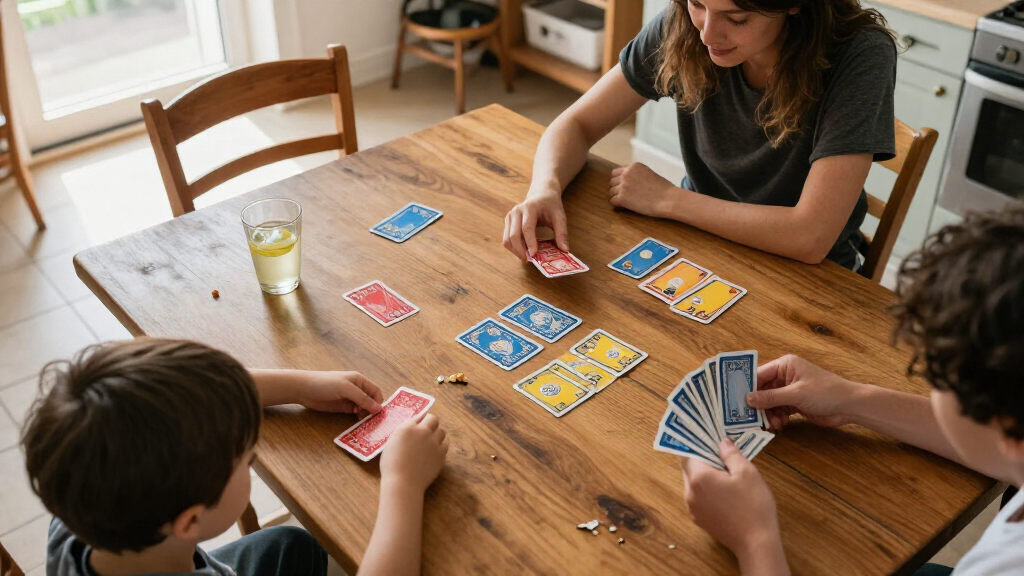

The best family card games are easy to teach, work for your group’s ages, and stay enjoyable after repeat plays. I rank UNO as the best overall pick for familiar rules and lively turns, while Spot It! stands out for quick rounds and Five Crowns for families who want more strategic play. The main tradeoffs are speed versus thinking time, simplicity versus variety, and playful competition versus conversation. A game that suits younger children may feel too light for teens, while a fast reaction game can leave some players behind. Read on for the full breakdown and advice on matching a game to your family.

Turn the school run and nap time into listening time
- Thousands of audiobooks, podcasts and originals
- Listen on your phone, tablet or Echo — also offline
- Cancel anytime
Complete the kit


Key Takeaways
- UNO leads for broad household appeal: its familiar, straightforward play makes it an easy default, though it offers less novelty than games with unusual formats.
- Spot It! and Taco Cat Goat Cheese Pizza favor short, energetic rounds: they suit families who want quick participation, but fast observation and reactions may not fit every player.
- Five Crowns gives card-game fans more to think about: its rummy-style play offers more planning than UNO, at the cost of a longer learning curve.
- The lineup spans very different kinds of family time: Do You Really Know Your Family? centers on conversation, while Dutch Blitz and Flip 7 lean into pace and risk.
- Player count and age fit can matter more than theme: a game may sound appealing but fall flat if it excludes a family member or asks younger players to keep up with rapid turns.
| Asmodee Spot It! Classic Card Game, 2024 Eco-Blister Edition |  | Best for Quick Family Rounds | Players: 2–8 | Playing time: About 10 minutes | Recommended age: 6 years and up | VIEW LATEST PRICE | See Our Full Breakdown |
| Play Nine: The Card Game of Golf |  | Best for Casual Strategy | Players: 2–6 | Recommended age: 8 years and up | Game duration: About 30 minutes | VIEW LATEST PRICE | See Our Full Breakdown |
| Happy Camper Trio Card Game |  | Best Compact Memory Game | Players: 3–6 | Recommended age: 8 years and up | Playing time: About 15 minutes | VIEW LATEST PRICE | See Our Full Breakdown |
| Do You Really Know Your Family? Family Card Game |  | Best for Family Conversation | Players: 3–8 | Age range: 8 years and up | Playing time: Approximately 3 minutes | VIEW LATEST PRICE | See Our Full Breakdown |
| Dutch Blitz Original Fast-Paced Family Card Game, 160 Cards |  | Best for Simultaneous Play | Players: 2–4 | Recommended age: 8 years and up | Cards included: 160 | VIEW LATEST PRICE | See Our Full Breakdown |
| Magilano SKYJO Card Game |  | Best for Number-Loving Families | Players: 2–8 | Recommended age: 8 years and up | Playing time: Approximately 30 minutes | VIEW LATEST PRICE | See Our Full Breakdown |
| Mattel Games UNO Card Game |  | Best for Mixed-Age Groups | Players: 2–10 | Recommended age: 7 years and up | Included components: 112 cards and instructions | VIEW LATEST PRICE | See Our Full Breakdown |
| Five Crowns Rummy-Style Card Game |  | Best for Rummy Fans | Players: 2–7 | Recommended age: 8 years and up | Included components: Cards and rulebook | VIEW LATEST PRICE | See Our Full Breakdown |
| Taco Cat Goat Cheese Pizza Card Game | 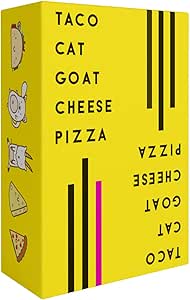 | Best for Quick, High-Energy Rounds | Recommended age: 7 years and up | Players: 2–8 | Play time: 10–15 minutes | VIEW LATEST PRICE | See Our Full Breakdown |
| Grandpa Beck’s Games Cover Your Assets Card Game |  | Best for Competitive Family Play | Players: 2–6 | Recommended age: 7 years and up | Playing time: 20–40 minutes | VIEW LATEST PRICE | See Our Full Breakdown |
| Monopoly Deal Card Game |  | Best for Property-Deal Energy | Players: 2 to 5 | Recommended age: 8 years and up | Playing time: About 15 minutes | VIEW LATEST PRICE | See Our Full Breakdown |
| USAOPOLY Flip 7 Card Game |  | Best for Press-Your-Luck Decisions | Players: 3+ | Recommended age: 8+ | Playing time: 20 minutes | VIEW LATEST PRICE | See Our Full Breakdown |
| Cards Against Humanity: Family Edition Card Game |  | Best for Large, Joke-Loving Groups | Players: 4–20+ | Recommended age: 8 years and up | Number of cards: 600 | VIEW LATEST PRICE | See Our Full Breakdown |
| Beat the Heat Family Card Game for Kids and Adults, Ages 8+, 2–10 Players |  | Best for Flexible Player Counts | Players: 2–10 | Recommended age: 8 years and up | Playing time: 20 minutes | VIEW LATEST PRICE | See Our Full Breakdown |
| Five Crowns Collectible Tin Card Game |  | Best for Multi-Round Rummy Play | Players: 1–7 | Recommended age: 8 years and up | Game type: Rummy-style card game | VIEW LATEST PRICE | See Our Full Breakdown |
| family card game | Players | Recommended age | Included components | Material |
|---|---|---|---|---|
| Asmodee Spot It! Classic Card | 2–8 | 6 years and up | 55 cards, 1 rulebook, 1 tin | Cardstock |
| Play Nine: The Card Game of Go | 2–6 | 8 years and up | 108 cards, scorecards, pencil, game instructions | — |
| Happy Camper Trio Card Game | 3–6 | 8 years and up | 36 cards and rules | Paper |
| Do You Really Know Your Family | 3–8 | — | Cards | Cardstock |
| Dutch Blitz Original Fast-Pace | 2–4 | 8 years and up | — | Cardboard, paper |
| Magilano SKYJO Card Game | 2–8 | 8 years and up | 150 game cards, 1 game notepad, 1 manual | Cardstock |
| Mattel Games UNO Card Game | 2–10 | 7 years and up | 112 cards and instructions | — |
| Five Crowns Rummy-Style Card G | 2–7 | 8 years and up | Cards and rulebook | — |
| Taco Cat Goat Cheese Pizza Car | 2–8 | 7 years and up | Cards | — |
| Grandpa Beck’s Games Cover You | 2–6 | 7 years and up | Cards | Paper |
| Monopoly Deal Card Game | 2 to 5 | 8 years and up | 110 cards and instructions | Plastic |
| USAOPOLY Flip 7 Card Game | 3+ | 8+ | 94 cards and rules | Paper |
| Cards Against Humanity: Family | 4–20+ | 8 years and up | — | Paper |
| Beat the Heat Family Card Game | 2–10 | 8 years and up | 104 cards, numbered 1–104, and game rules | Plastic |
| Five Crowns Collectible Tin Ca | 1–7 | 8 years and up | Cards and custom scorecard | — |
More Details on Our Top Picks
Asmodee Spot It! Classic Card Game, 2024 Eco-Blister Edition
Spot It! is the quickest pick for families who want a lively game without a long rules explanation. Players race to spot the one matching symbol between cards, so rounds can fit into a short break or serve as a warm-up before a longer game. Its five gameplay variations add variety, while support for two to eight players makes it more flexible for changing group sizes than Dutch Blitz, which is limited to four.
The tradeoff is that the fun depends on fast visual recognition and reflexes; younger children or players who prefer thoughtful turns may find the pace frustrating. Play Nine offers more room for strategy and a longer session, while Spot It! favors instant reactions. The compact tin and multilingual rules make this a practical travel choice, but the recommended age is six and up.
Pros:- Five variations give families more ways to play with the same deck.
- About 10-minute rounds work well for short sessions.
- Supports 2–8 players, including larger family groups.
- Compact tin is convenient for travel and storage.
Cons:- Fast visual matching can favor players with quicker reflexes.
- Recommended for ages 6 and up, so it may not suit younger children.
Best for: Families seeking a short, energetic game for mixed-size groups, travel, or a quick start to game night.
Not ideal for: Families who prefer turn-based strategy or have players who find rapid visual matching stressful.
- Players:2–8
- Playing time:About 10 minutes
- Recommended age:6 years and up
- Included components:55 cards, 1 rulebook, 1 tin
- Gameplay variations:5
- Material:Cardstock
- Languages:English, Spanish, French
- Packaging:Eco-Blister
Our verdict“Choose Spot It! for quick, reflex-driven family fun, but pick Play Nine if your group wants more deliberate strategy.”
Play Nine: The Card Game of Golf
Play Nine gives family game night a steady, score-focused rhythm rather than the reflex race found in Spot It! Players draw, flip, discard, and trade cards to lower their totals, balancing luck with decisions about which cards to keep. Its golf scoring theme gives the objective a clear hook, and the included scorecards and pencil mean the group can track progress without improvising.
At about 30 minutes, it asks for more time than Spot It! or Happy Camper Trio, but that longer session creates room for choices to matter. The rules are aimed at casual family play, though players who want fast, simultaneous action may find its turn-based pace less lively than Dutch Blitz. It supports two to six players and is recommended for ages eight and up; the supplied information lists no product warranty.
Pros:- Blends luck with decisions about drawing, trading, and discarding.
- Simple objective makes it approachable for casual family play.
- Scorecards and pencil are included for tracking results.
- Works for groups of 2–6 players.
Cons:- About 30 minutes is a longer commitment than Spot It! or Happy Camper Trio.
- Turn-based play can feel slower to groups who prefer Dutch Blitz-style simultaneous action.
- No product warranty is listed in the supplied information.
Best for: Families with children eight and older who enjoy turn-based choices, scorekeeping, and a game that lasts longer than a quick round.
Not ideal for: Groups looking for a very short, high-energy game or a game with simultaneous play and no waiting between turns.
- Players:2–6
- Recommended age:8 years and up
- Game duration:About 30 minutes
- Included components:108 cards, scorecards, pencil, game instructions
- Card values:-5 to 12
Our verdict“Pick Play Nine when your family wants an accessible, score-based strategy game and has time for a longer session.”
Happy Camper Trio Card Game
Happy Camper Trio is a small, memory-led option for families who want a simple mix of recall and luck. Players reveal cards and try to collect three of a kind, with two play modes and team rules offering a little flexibility beyond the core format. Its roughly 15-minute playing time sits between the quick bursts of Spot It! and the longer session of Play Nine.
The compact package suits travel, though the paper components may call for gentler handling than a more durable-feeling card set. Its main limitation is group size: at least three players are required, so it cannot fill the two-player role that Spot It! or Play Nine can. The memory element can also make it a less natural match for players who prefer score-building or rapid reflex challenges. It is recommended for ages eight and up.
Pros:- Combines memory and luck in an easy-to-follow objective.
- Two play modes and team rules add variety.
- About 15 minutes suits a short family session.
- Compact dimensions make it convenient to pack.
Cons:- Requires at least three players.
- Paper material may be less suited to rough handling than sturdier card materials.
- The memory focus may not appeal to players who prefer reflex or score-based games.
Best for: Families with at least three players who want a compact, easy-to-pack memory game for travel or short gatherings.
Not ideal for: Two-player households or players seeking a more strategic, score-based game like Play Nine.
- Players:3–6
- Recommended age:8 years and up
- Playing time:About 15 minutes
- Included components:36 cards and rules
- Material:Paper
- Item weight:0.23 kg
- Item dimensions:4.72 × 1.57 × 4.72 inches
- Model year:2023
Our verdict“Choose Happy Camper Trio for a portable memory game when you regularly have three or more players.”
Do You Really Know Your Family? Family Card Game
Do You Really Know Your Family? makes conversation the main event, using questions and silly challenges to get relatives sharing and laughing rather than competing over a score. That gives it a different role from Play Nine’s card decisions and Spot It!’s reflex test: the appeal comes from what players say and do together. Its simple format is aimed at kids, teens, and adults, with an age recommendation of eight and up.
The supplied playing-time figure is approximately three minutes, making it a natural choice for a brief activity or a low-pressure addition to a gathering. The tradeoff is that the experience relies on having at least three people willing to participate; it is not a good fit for a quiet two-player evening. With cards only listed as the included components, it also offers less defined game structure than Dutch Blitz’s sequence-based race. The tin helps keep the deck together.
Pros:- Questions encourage conversation across generations.
- Silly challenges create a more social experience than score-focused games.
- Designed for kids, teens, and adults from age eight.
- Tin container keeps the cards together.
Cons:- Requires at least three players.
- The format depends on players being comfortable answering questions and joining challenges.
- Less suited to groups seeking structured strategy like Play Nine.
Best for: Families with three or more willing participants who want a light conversation starter across kids, teens, and adults.
Not ideal for: Two-player households or families wanting a tactical game with a clear scoring and winning focus.
- Players:3–8
- Age range:8 years and up
- Playing time:Approximately 3 minutes
- Included components:Cards
- Material:Cardstock
- Language:English
- Container type:Tin
- Dimensions:2 × 4.7 × 6.7 inches
Our verdict“Choose this game when shared conversation matters more than competition, provided your group has at least three willing players.”
Dutch Blitz Original Fast-Paced Family Card Game, 160 Cards
Dutch Blitz is the pick for families who want everyone playing at once. There are no turns: players race to empty their Blitz piles by placing cards in sequence, so quick thinking and attention matter throughout. That gives it a more continuous, competitive feel than Play Nine, where players take turns managing their scores, and a more sequence-focused challenge than Spot It!’s symbol matching.
The 160-card set includes four decks and rules, making it a substantial option for repeat family game nights. Its clearest limitation is the player cap: it supports only two to four players, while Spot It! accommodates up to eight. The rapid pace may also feel chaotic to players who prefer a calmer, more deliberate game. Recommended for ages eight and up, it is a better match for families who enjoy lively competition than for groups seeking a relaxed conversation game.
Pros:- No-turn gameplay keeps all players involved at once.
- Quick to learn while leaving room to improve sequencing and strategy.
- Includes 160 cards across four decks.
- Works for both two-player and small family groups.
Cons:- Limited to 2–4 players, fewer than Spot It!’s maximum of eight.
- Simultaneous play can feel hectic for players who prefer calmer turns.
- Recommended for ages eight and up.
Best for: Families of two to four players, ages eight and up, who enjoy simultaneous play, sequencing, and a lively competitive pace.
Not ideal for: Larger family groups or players who prefer quiet, turn-based play and time to think through each move.
- Players:2–4
- Recommended age:8 years and up
- Cards included:160
- Contents:Four decks of cards and rules
- Material:Cardboard, paper
Our verdict“Choose Dutch Blitz for a small group that wants a fast, simultaneous card race, not a larger or more relaxed family gathering.”
Magilano SKYJO Card Game
SKYJO makes number watching the main event. Players uncover and exchange cards while trying to finish with as few points as possible, giving each turn a small decision about what to keep and what to risk. That makes it a stronger fit for families who enjoy light calculation and estimating what may be left than UNO, which focuses more on matching and action cards.
Its range of 2–8 players suits both small households and larger gatherings, and a roughly 30-minute game gives choices room to matter without taking up an entire evening. The rules and setup are described as simple, though the supplied manual’s English availability is not guaranteed. The number-focused play may also feel less lively to children who prefer quick physical reactions, such as in Taco Cat Goat Cheese Pizza.
Pros:- Supports 2–8 players, covering both small and larger family groups.
- Low-complexity rules and quick setup make it approachable for mixed ages.
- Card choices encourage calculation, probability estimation, and concentration.
- Around 30 minutes gives the game more room for decisions than a very short party game.
Cons:- The English language availability of the manual is not guaranteed.
- Its focus on reducing points may appeal less to players who want expressive or physical party play.
- A typical game takes longer than quick-round options such as Taco Cat Goat Cheese Pizza.
Best for: Families with children aged 8 and up who enjoy number patterns, estimating, and a moderate-length game for up to eight players.
Not ideal for: Households seeking a very short, high-energy game, or buyers who need confirmed English instructions in the box.
- Players:2–8
- Recommended age:8 years and up
- Playing time:Approximately 30 minutes
- Included components:150 game cards, 1 game notepad, 1 manual
- Languages:German, English, French, Spanish, Italian
- Material:Cardstock
- Origin:Made in Germany
Our verdict“Choose SKYJO for an accessible, number-focused family game that plays up to eight, but pick UNO for simpler color-and-number matching.”
Mattel Games UNO Card Game
UNO is the easiest all-purpose pick here to teach across generations. Matching by color or number gets a family playing quickly, while action cards and customizable Wild Cards add chances to change the pace. Compared with SKYJO, which asks players to track points and make estimates, UNO keeps the central decision simple: find a match, play an action, or draw.
The deck supports 2–10 players, making it particularly useful when a family gathering includes more people than some card games accommodate. Color-identifying symbols also help players who have difficulty distinguishing colors. That accessibility feature does not change the game’s competitive, take-that moments, and the rules may still need explaining to new players. This is a familiar, flexible choice rather than a strategy-heavy one; families wanting longer rounds and more number management may prefer Five Crowns.
Pros:- Matching by color or number makes the core rules quick to teach.
- Supports up to 10 players, more than SKYJO, Five Crowns, and Cover Your Assets.
- Color-identifying symbols support players who have difficulty distinguishing colors.
- Three customizable Wild Cards allow families to add their own rules.
Cons:- The familiar matching format offers less sustained number strategy than Five Crowns.
- Action cards can create abrupt changes that may frustrate players who prefer a calmer game.
- No warranty is listed, and colors or decorations may vary.
Best for: Families wanting a familiar, easy-to-teach game for mixed ages and gatherings of up to ten players, including players who benefit from color-identifying symbols.
Not ideal for: Players looking for sustained strategic decisions, or buyers who require a stated warranty.
- Players:2–10
- Recommended age:7 years and up
- Included components:112 cards and instructions
- Special features:Colorblind accessible cards; 3 customizable Wild Cards
- Language:English
- Model:GDJ85
Our verdict“Pick UNO for straightforward, flexible play with a large mixed-age group; choose Five Crowns if your family wants more involved card decisions.”
Five Crowns Rummy-Style Card Game
Five Crowns suits families who want a card game that builds toward more involved choices. Across 11 rounds, players form books and runs, with rotating wild cards changing which combinations are possible. Compared with UNO, it asks for more planning from one hand to the next; compared with SKYJO, its goal is to create sets and runs rather than simply reduce a score.
The rules are described as easy to learn, and the compact deck makes it a practical travel option for groups of 2–7 players. Its longer round structure is the tradeoff: families looking for a quick gap-filler may prefer Taco Cat Goat Cheese Pizza, whose listed play time is 10–15 minutes. Luck still affects which cards arrive, so this is a better fit for players who enjoy adapting than for anyone expecting strategy to control every outcome.
Pros:- Set-and-run play gives families more card-planning decisions than UNO.
- Rotating wild cards change the task across the 11 rounds.
- Works for 2–7 players and is suited to family groups.
- Compact card format makes it convenient to bring on trips.
Cons:- Completing all 11 rounds takes longer than a quick-play game such as Taco Cat Goat Cheese Pizza.
- Luck in the cards can limit how much planning determines the outcome.
- The multi-round structure may not suit players who want a game with a single short round.
Best for: Families with players aged 8 and up who already enjoy rummy-style sets and runs and want a multi-round game for up to seven.
Not ideal for: Families seeking a very short game, or players who dislike luck shaping the cards they can use.
- Players:2–7
- Recommended age:8 years and up
- Included components:Cards and rulebook
- Deck:Double deck with 5 suits; no aces or twos
- Rounds:11
- Brand:PlayMonster
- Model number:4001
Our verdict“Choose Five Crowns for a travel-friendly, multi-round rummy game, but skip it if your family needs short, fast turns.”
Taco Cat Goat Cheese Pizza Card Game
Taco Cat Goat Cheese Pizza is the liveliest short-round choice in this group. Players chant a sequence of words as cards are played, then race to slap the pile when the word and card match. That combination favors attention and quick reactions, unlike Five Crowns, where players spend more time building runs and books, or UNO, where the main task is matching cards.
With 2–8 players and a listed play time of 10–15 minutes, it works well as a quick family activity or travel game. The same speed that gives it energy is also its main limitation: repeated slapping may be uncomfortable or frustrating for some players, and it offers less space for measured strategy than SKYJO. The product data lists cards but no other components, so buyers should expect the appeal to rest on the group’s willingness to join in the fast, physical play.
Pros:- Short 10–15-minute play time suits brief game sessions.
- Supports 2–8 players, making it useful for group play.
- Simple word-and-card matching rules are quick to explain.
- Compact card format is convenient for travel.
Cons:- Fast slapping may not suit every player or family setting.
- Quick reactions matter more than longer-term strategy, unlike Five Crowns.
- No warranty is listed in the supplied product data.
Best for: Families with children aged 7 and up who want a compact, 10–15-minute game built around quick reactions and a lively group.
Not ideal for: Players who dislike slapping or fast physical play, or families looking for a calmer game with more planning.
- Recommended age:7 years and up
- Players:2–8
- Play time:10–15 minutes
- Included components:Cards
- Edition:Original
- Manufacturer:Dolphin Hat Games
Our verdict“Choose Taco Cat Goat Cheese Pizza for a portable burst of group energy, but pick SKYJO or Five Crowns for calmer, more deliberate play.”
Grandpa Beck’s Games Cover Your Assets Card Game
Cover Your Assets brings direct competition to family card night. Players build stacks of assets, steal from opponents, and defend their collections, so the central tension comes from protecting what you have as much as building it. That gives the game a sharper interaction style than SKYJO, where players focus on lowering their own points, and more direct conflict than the matching play of UNO.
Its simple rules and 20–40-minute playing time suit families who want lively choices without a complex setup. The small package also makes it easier to take along than a bulky board game. The tradeoff is built into the premise: stealing from another player can feel personal, especially for younger or more sensitive players. Its 2–6 player limit is also narrower than UNO’s 2–10 range, so larger gatherings may need another option.
Pros:- Simple rules make the asset-building and defense cycle accessible to family groups.
- Stealing and defending create more direct interaction than SKYJO.
- Supports 2–6 players and has a listed playing time of 20–40 minutes.
- Compact package dimensions make it convenient for trips and gatherings.
Cons:- Stealing from opponents may frustrate players who prefer cooperative or low-conflict play.
- The six-player maximum is lower than UNO’s ten-player capacity.
- A 20–40-minute session can be longer than Taco Cat Goat Cheese Pizza’s quick rounds.
Best for: Families with players aged 7 and up who enjoy playful rivalry, defending collections, and games that fit in a travel bag.
Not ideal for: Families with players who dislike having their progress stolen, or groups larger than six.
- Players:2–6
- Recommended age:7 years and up
- Playing time:20–40 minutes
- Included components:Cards
- Material:Paper
- Package weight:9.6 ounces
- Package dimensions:5.5 x 4 x 1.1 inches
- Warranty:30 days against manufacturer defects
Our verdict“Choose Cover Your Assets if your family enjoys direct, playful competition; avoid it if stealing another player’s progress could spoil the mood.”
Monopoly Deal Card Game
Monopoly Deal brings the property collecting and deal-making of Monopoly to a quick card format: collect three complete color sets while using rent, swaps, and steals to unsettle the table. At about 15 minutes, it suits families who want a brisk game rather than the longer arc of Five Crowns, which plays across 11 rounds. Its action cards give players direct ways to affect one another, so turns can feel lively, but that interaction cuts both ways: a nearly finished set can be disrupted, and luck can shift the lead quickly. The rules are aimed at ages 8 and up, though younger players may need help tracking property and action-card choices. I’d pick it for families who enjoy playful competition, not for a group that prefers low-conflict games.
Pros:- About 15 minutes per game makes it easy to fit into a family game night.
- Property-set goal is straightforward to explain to players ages 8 and up.
- Rent, swap, and steal cards create direct player interaction.
- 110 cards make a portable alternative to a full board game.
Cons:- Luck can change the outcome quickly.
- Stealing and swapping can undo another player’s progress and may frustrate some families.
Best for: Families with players ages 8 and up who enjoy quick, interactive property collecting and don’t mind having plans disrupted.
Not ideal for: Players who prefer a calm, low-conflict game or dislike luck and opponents stealing or swapping cards.
- Players:2 to 5
- Recommended age:8 years and up
- Playing time:About 15 minutes
- Cards:110
- Included components:110 cards and instructions
- Brand:Hasbro Gaming
- Model:B0965
- Material:Plastic
Our verdict“Choose Monopoly Deal for a short, lively family game where property collecting and playful take-that moves matter more than steady control.”
USAOPOLY Flip 7 Card Game
Flip 7 makes the central family-table question simple: keep drawing for a chance at more points, or bank what you have before a repeated number ends your round. Number, action, and modifier cards add variety to that risk calculation, while the goal of 200 points gives the game a longer match structure than Monopoly Deal’s roughly 15-minute property race. It is quick to teach, but it requires at least three players, so it won’t cover smaller family groups as well as Beat the Heat, which supports two. The bust condition creates tension, though it can also cut a round short just as a player is enjoying a run. I’d choose this for families who like making risk-and-reward calls together; those who want a steadier, more tactical pace may prefer Beat the Heat.
Pros:- Easy-to-teach rules make it accessible for mixed-age family groups.
- The choice to bank points or risk another draw gives players meaningful decisions.
- Action and modifier cards vary the flow beyond number draws.
- A 200-point target provides a clear goal across play.
Cons:- Requires at least three players.
- A repeated number can end a round abruptly.
- Press-your-luck decisions may feel less satisfying to players seeking consistent strategic control.
Best for: Families of three or more with players ages 8 and up who enjoy deciding when to stop and bank points.
Not ideal for: Two-player households or groups that dislike rounds ending suddenly when a number repeats.
- Players:3+
- Recommended age:8+
- Playing time:20 minutes
- Included components:94 cards and rules
- Material:Paper
- Language:English
- Edition:Standard Edition
- Game goal:Reach 200 points
Our verdict“Pick Flip 7 for a group of at least three that enjoys quick risk-taking choices and can accept the occasional early bust.”
Cards Against Humanity: Family Edition Card Game
Cards Against Humanity: Family Edition is the group pick here: it supports 4–20+ players and leans on silly, kid-friendly humor about toilets and other topics rather than property sets or number strategy. Its 600 cards give a large gathering plenty of prompts and responses to mix, making it a better fit for a busy family party than Five Crowns, which is designed for up to seven players and unfolds over 11 rounds. The tradeoff is that this is a humor-first game, not a strategic card challenge; much of the fun depends on the group enjoying the jokes and the answer combinations. It also needs at least four players, so it is a poor match for a small household wanting something to play as a pair. I’d save it for family gatherings where everyone is comfortable with goofy humor.
Pros:- Supports large groups of 4–20+ players.
- Designed for kids and adults to play together, starting at age 8.
- 600 cards offer a broad mix of prompts and responses.
- Humor-led play gives a gathering a different feel from number- or set-based games.
Cons:- Requires at least four players.
- Its appeal depends heavily on the group enjoying the humor and joke combinations.
- Offers less strategic decision-making than games such as Beat the Heat.
Best for: Families with at least four players, including kids ages 8 and up, who want a joke-driven game for a larger gathering.
Not ideal for: Small households, players who want tactical decisions, or families whose humor preferences don’t fit toilet and silly-topic jokes.
- Players:4–20+
- Recommended age:8 years and up
- Number of cards:600
- Language:English
- Material:Paper
- Item dimensions:8 × 4.1 × 2.7 inches
- Weight:2.7 pounds
- Brand:Cards Against Humanity
Our verdict“Choose this edition for a large, joke-loving family gathering, rather than a small group seeking strategy or a two-player option.”
Beat the Heat Family Card Game for Kids and Adults, Ages 8+, 2–10 Players
Beat the Heat earns its place through unusual player-count flexibility: it works for 2–10 players, while Flip 7 needs at least three and Cards Against Humanity: Family Edition needs four. Players add numbered cards to four rows and try to keep their score low; placing a sixth card means taking the first five and their points. That rule makes row placement a light strategy puzzle, with consequences that are easy to explain to players ages 8 and up. Games take about 20 minutes, similar to Flip 7, but the tension comes from managing rows rather than deciding whether to risk another draw. The penalty for playing the sixth card can sting, and players who want a purely relaxed game may dislike that setback. I’d favor it for families with changing group sizes who want more planning than a simple luck-based round.
Pros:- Supports a broad range of group sizes, from two to ten players.
- Light row-management strategy gives players choices beyond drawing cards.
- About 20 minutes per game suits a short family session.
- 104 numbered cards and compact play make it suitable for travel.
Cons:- Playing the sixth card in a row forces the player to collect the first five cards and their points.
- The penalty can feel harsh when a player has limited control over how a row fills.
Best for: Families with players ages 8 and up whose group size varies, especially households that want one game for two to ten people.
Not ideal for: Players who dislike collecting penalty cards or want a game with little consequence when a turn goes wrong.
- Players:2–10
- Recommended age:8 years and up
- Playing time:20 minutes
- Included components:104 cards, numbered 1–104, and game rules
- Designer:Wolfgang Kramer
- Model:G2953
- Material:Plastic
Our verdict“Choose Beat the Heat when you need a quick, light-strategy card game that can accommodate both small and large family groups.”
Five Crowns Collectible Tin Card Game
Five Crowns is the choice for families who want a sustained card game rather than a quick, self-contained round. Its rummy-style play spans 11 rounds, with five suits and a rotating wild card changing the challenge from round to round; players aim for the lowest score. That evolving structure offers more variety over a full session than Monopoly Deal’s roughly 15-minute property race, but it also asks for more time and attention. The game supports one to seven players, making its group range more flexible than the large-group Cards Against Humanity: Family Edition, though it won’t seat as many people. It is listed for ages 8 and up, but score tracking and changing wild cards may take patience for younger players. I’d choose it for families who enjoy classic set-making and don’t mind completing all 11 rounds.
Pros:- Rotating wild cards change the challenge across the 11 rounds.
- Supports one to seven players, including solo play.
- Rummy-style rules offer a familiar starting point for card-game fans.
- The included tin keeps the cards together for storage and travel.
Cons:- A full game requires 11 rounds, which may be too long for a quick family session.
- Chance still affects outcomes alongside player decisions.
- The maximum of seven players is less accommodating than large-group party games.
Best for: Families with players ages 8 and up who enjoy rummy-style set making, score tracking, and a full multi-round session.
Not ideal for: Groups looking for a very short game, or gatherings with more than seven players.
- Players:1–7
- Recommended age:8 years and up
- Game type:Rummy-style card game
- Number of suits:5, including a star suit
- Rounds:11
- Container:Tin
- Included components:Cards and custom scorecard
- Dimensions:6.5 × 4.25 × 1.5 inches
- Weight:9.6 ounces
Our verdict“Pick Five Crowns for a family that enjoys rummy-style play and has time for an evolving 11-round game.”

How We Picked
I compared the 15 games on the factors that shape a family game night: how quickly new players can learn the rules, how well the play suits mixed ages, how much downtime players face, and whether repeat sessions offer enough variety. I also looked at player-count flexibility, the kind of interaction each game encourages, and practical fit for travel or a short session. A family game needs to work for the people around the table, not just sound entertaining on the box.
The ranking favors versatile, approachable choices that can fit a broad range of households, which puts UNO first. Games with a strong but narrower appeal rank lower: Spot It! is a better match for quick visual play, while Five Crowns suits groups ready for more planning. Conversation games, take-that formats, and high-speed games are included for families seeking those experiences, but their specific social or pace preferences make them less universal. The list reflects distinct strengths and tradeoffs rather than treating every game as interchangeable.
| family card game | Material |
|---|---|
| Asmodee Spot It! Classic Card | Cardstock |
| Play Nine: The Card Game of Go | — |
| Happy Camper Trio Card Game | Paper |
| Do You Really Know Your Family | Cardstock |
| Dutch Blitz Original Fast-Pace | Cardboard, paper |
| Magilano SKYJO Card Game | Cardstock |
| Mattel Games UNO Card Game | — |
| Five Crowns Rummy-Style Card G | — |
| Taco Cat Goat Cheese Pizza Car | — |
| Grandpa Beck’s Games Cover You | Paper |
| Monopoly Deal Card Game | Plastic |
| USAOPOLY Flip 7 Card Game | Paper |
| Cards Against Humanity: Family | Paper |
| Beat the Heat Family Card Game | Plastic |
| Five Crowns Collectible Tin Ca | — |
Factors to Consider When Choosing Best Family Card Games
Before choosing, I’d match the game to your group’s ages, patience, and preferred kind of interaction. These broader factors can help avoid a common mismatch: a well-liked game that rarely makes it to the table because it takes too long to teach, moves too quickly, or leaves one player out.
Match the Rules to Your Youngest Regular Player
Start with the youngest person who will play regularly, not the oldest person in the household. A game can list a suitable age and still rely on reading, arithmetic, memory, or quick reactions that make participation uneven. When children are learning, choose rules that can be explained in a few turns and avoid adding house rules at the start. Adults can usually enjoy a simpler game more easily than young players can compensate for a large skill gap. If ages vary widely, favor games where luck or simultaneous play gives newer players a chance. Check that the listed age guidance fits your group rather than treating it as a guarantee of suitability.
Choose a Pace Your Group Can Enjoy
Fast games create energy, but speed can turn into pressure when players need extra time to read, think, or react. Slower card games give people room to plan and chat, though long waits between turns can test younger players’ patience. Ask whether your family wants a brief filler between activities or a game that can anchor the evening. For mixed preferences, a game with short rounds is often a safer choice than one that depends on sustaining focus for a long session. Don’t confuse a quick round with a quick teach; some games are speedy once everyone understands the rules but need a few practice turns first. Set expectations about the pace before choosing a game for a group with different comfort levels.
Think About the Kind of Interaction You Want
Family card games can create very different moods: direct competition, cooperative problem-solving, playful interruption, or personal conversation. A take-that game may be funny for one family and frustrating for another, especially if a player feels repeatedly targeted. Conversation prompts can bring people together, but they may feel awkward for relatives who prefer to focus on the cards. Reaction games reward attention and timing, which can be exciting but may sideline anyone who dislikes pressure. Decide whether you want the game to spark discussion or let people talk casually while playing. Choosing by social style can prevent a mismatch that the theme alone won’t reveal.
Check Player Count and Downtime
Look at the player range, then think about how the game behaves at your usual group size. A title that works for a large group on paper may have long waits between turns, while a small-group favorite may not stretch comfortably to a full family gathering. Consider whether all players act at once or take turns; simultaneous play can keep a crowd involved, while turn-based play may give people more time to plan. If your family size changes from week to week, flexibility matters more than a perfect fit for one fixed group. Also check whether anyone can be eliminated early, since sitting out can be disappointing during a short game night. These details can matter more to the experience than extra cards or a more elaborate theme.
Weigh Replay Value Against Learning Effort
A familiar ruleset is easy to bring back to the table, but repetition can make a game feel predictable for players who want new decisions. More layered games can offer greater variety, yet they ask for more teaching time and may be harder to introduce casually. Think about who will explain the rules and how often your group likes to learn something new. If you expect occasional play with guests, easy-to-teach rules may deliver more real-world value than extra depth. If the same group plays often, a little complexity may keep sessions fresh. The best balance is a game your family will actually replay, not simply one with the most options.
Consider Portability and Table Practicalities
Compact card games are convenient for travel, visits, and small tables, but tiny components or a crowded play area can make handling harder for some players. A larger deck or many cards may be comfortable at home yet awkward to pack or keep organized. Think about where the game will be played and whether the cards need a clear surface, room to spread out, or careful sorting between rounds. If you play with younger children, simple setup and easy cleanup can make a bigger difference than a special storage format. A tin can protect cards in a bag, but it does not automatically make a game easier to teach or play. Choose the format that suits your routine rather than assuming every card game travels equally well.
Frequently Asked Questions
Which game is the safest first choice for a family with mixed ages?
I’d start with UNO if your group wants familiar mechanics and a low barrier to joining in. Its broad appeal makes it easier to bring together players with different levels of game experience. If younger players enjoy visual matching and short rounds, Spot It! may suit them better, though its quick reactions can be a drawback for some. Choose based on who will be playing most often, rather than aiming for a game that sounds ideal for every possible guest. A short practice round can help you see whether the pace fits.
What should I choose if my family dislikes fast reaction games?
Skip games whose main challenge is spotting a match or reacting before someone else. Look instead for a turn-based option where players can pause and consider their choices, such as a rummy-style game. A slower pace can make it easier for mixed ages and different reading speeds to stay involved. Keep in mind that turn-based games may create more downtime, especially with a large group. For a relaxed night, choose a player count and session length that won’t leave anyone waiting too long.
Are conversation-based card games a good pick for family gatherings?
They can work well when your family enjoys sharing opinions and stories, but they are not a universal fit. Some players may prefer to keep the focus on cards rather than answer personal or opinion-based prompts. Check the tone and subject matter before bringing a conversation game to a gathering with children or relatives who may not know one another well. A useful choice gives players room to participate comfortably without making every answer feel like a spotlight moment. If you’re unsure, begin with a group that already enjoys talking together.
How can I tell whether a card game will work for a large group?
Check the stated player range, then look beyond the number to the turn structure. Games with simultaneous actions can keep more people active, while turn-based games may slow down as the group grows. Ask whether players who fall behind remain involved and whether anyone can be eliminated before the session ends. A game that technically accommodates your group may still feel cramped if cards need lots of table space. For a gathering with changing attendance, favor flexible player counts and rules that are easy to explain to late arrivals.
Should I choose a simple game or one with more strategy for repeat play?
That depends on how often the same people play and how much time they want to spend learning. Simple games are easier to bring out with guests and can be satisfying when the group wants a brief, relaxed round. More strategic play may reward repeat sessions with additional decisions, but it can slow down a first game and create a skill gap. If your family is split, try a game that teaches in stages: start with the basic rules, then add options only if everyone wants more depth. The right pick is the one your group will return to, not the one with the most rules.
Conclusion
For the best overall fit, I recommend UNO for families who want an approachable, familiar game with lively turns. For value and quick play, consider Spot It! if visual matching suits your group; it is less suitable for players who dislike reaction pressure. For beginners, UNO is also the easiest starting point, while Five Crowns is my pick for families ready to trade a little teaching time for more planning. For conversation, choose Do You Really Know Your Family? when personal prompts fit the group; for a fast, high-energy session, look at Dutch Blitz or Taco Cat Goat Cheese Pizza. I’d treat a premium pick as one that best matches your household’s preferred play style, rather than assuming a special edition will be a better game for everyone.