When searching for family-friendly educational toys, the goal is to find options that entertain while fostering learning across different ages. The Magnetic Wooden Fishing Game stands out as a versatile choice for preschoolers, combining counting and color recognition. For slightly older kids, the Gravity Maze offers engaging STEM challenges that promote critical thinking. Meanwhile, the PicassoTiles Magnetic Blocks provide endless creative building fun for a wide age range. However, balancing affordability, durability, and educational value can be tricky, as some toys excel in one area but fall short in another. Keep reading to see how these options compare and which are best suited for your family’s needs.
Complete the kit


Turn the school run and nap time into listening time
- Thousands of audiobooks, podcasts and originals
- Listen on your phone, tablet or Echo — also offline
- Cancel anytime
Key Takeaways
- Top picks balance educational value with durability and age appropriateness.
- STEM-focused toys like Gravity Maze stand out for critical thinking development.
- Building sets such as PicassoTiles offer versatile creative play for multiple ages.
- Cost and complexity vary widely; simpler toys are often more durable and easier for younger kids.
- Considering the child’s interests and developmental stage is key to selecting the right toy.
| Magnetic Wooden Fishing Game Toy for Preschoolers, Alphabet Fish Catching and Counting Puzzle |  | Best Overall Educational Toy for Young Learners | Material: Wood | Age Range: 36 months – 5 years | Set Includes: Alphabet & Number Fishing Game Set | VIEW LATEST PRICE | See Our Full Breakdown |
| Montessori Busy Book Color Sorting Toys for Toddlers 3-5 |  | Best Portable Educational Toy for Travel and On-the-Go Learning | Number of Colors: 12 | Number of Stickers: 48 | Size: 7.8″ x 6.2″ | VIEW LATEST PRICE | See Our Full Breakdown |
| Montessori Busy Book Color Sorting Toys for Toddlers 2-4 Years |  | Best Durability and Shared Play for Early Learning | Brand: MUONE | Age Range: 36 months – 6 years | Number of Packs: 1 | VIEW LATEST PRICE | See Our Full Breakdown |
| ThinkFun Gravity Maze – Falling Marble Logic Game – STEM Toy for Kids 8-12 |  | Best STEM Challenge for Older Kids | Number of Towers: 9 | Marbles: 3 | Challenges: 60 | VIEW LATEST PRICE | See Our Full Breakdown |
| Melissa & Doug Pattern Blocks and Boards with 120 Multi-Colored Wooden Shape Tiles, 5 Double-Sided Puzzle Boards, Tangram Puzzles, Montessori Toys for Kids |  | Best Hands-On Pattern Recognition and Math Skills Builder | Number of Tiles: 120 | Shape Types: Various (including geometric shapes) | Colors: Multiple colors | VIEW LATEST PRICE | See Our Full Breakdown |
| See & Spell CVC Word Spelling Toy for Kids Age 3-6 |  | Best for Early Reading and Phonics Skills | Number of Cards: 28 | Number of Letters: 52 | Material: Wood | VIEW LATEST PRICE | See Our Full Breakdown |
| Educational Insights Kanoodle | 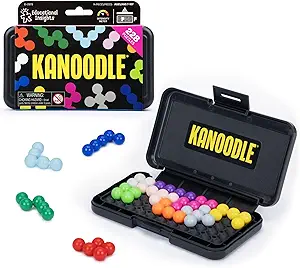 | Best for Critical Thinking and Portable Brain Teasers | Number of puzzles: 228 | Puzzle pieces: 12 colorful pieces | Includes: Puzzle case, guidebook | VIEW LATEST PRICE | See Our Full Breakdown |
| PicassoTiles 100 Piece Magnetic Tiles, Clear 3D Building Blocks for Kids 3+ |  | Best for Creativity and Spatial Awareness | Number of Pieces: 100 | Recommended Age: 3+ | Material: Magnetic plastic | VIEW LATEST PRICE | See Our Full Breakdown |
| Speak & Spell Educational Learning Toy, Spelling Games, Retro Handheld |  | Best for Nostalgic Learning and Spelling Practice | Brand: PlayMonster | Number of Packs: 1 | Set Name: Speak & Spell Handheld Game | VIEW LATEST PRICE | See Our Full Breakdown |
| Matching Letter Game for Preschool & Kindergarten Kids |  | Best for Word Recognition and Parent-Child Interaction | Includes: 1 tray, 8 letter cubes, 30 cards (60 words) | Recommended Age: 3-8 years | Educational Focus: Memory, spelling, vocabulary, word recognition | VIEW LATEST PRICE | See Our Full Breakdown |
| Talking Flash Cards for Toddlers Ages 1-4, 224 Words, Blue |  | Best Interactive Learning Tool for Early Vocabulary Building | Brand: Airbition | Educational Objective: Cognitive Skills | Age Range: 1+ Years | VIEW LATEST PRICE | See Our Full Breakdown |
| Chuckle & Roar Alphabet Matching Memory Game for Toddlers |  | Best for Letter Recognition and Memory Skills Development | Ages: 3+ | Material: Cardboard | Type: Memory game | VIEW LATEST PRICE | See Our Full Breakdown |
| family-friendly educational toy | Material |
|---|---|
| Magnetic Wooden Fishing Game T | Wood |
| Montessori Busy Book Color Sor | Non-toxic, safe materials |
| Montessori Busy Book Color Sor | — |
| ThinkFun Gravity Maze | — |
| Melissa & Doug Pattern Blocks | Solid wood |
| See & Spell CVC Word Spelling | Wood |
| Educational Insights Kanoodle | — |
| PicassoTiles 100 Piece Magneti | Magnetic plastic |
| Speak & Spell Educational Lear | — |
| Matching Letter Game for Presc | — |
| Talking Flash Cards for Toddle | — |
| Chuckle & Roar Alphabet Matchi | Cardboard |
More Details on Our Top Picks
Magnetic Wooden Fishing Game Toy for Preschoolers, Alphabet Fish Catching and Counting Puzzle
This wooden fishing game stands out for its combination of safety and educational value. Made from eco-friendly, non-toxic painted wood, it offers a tactile experience that promotes hand-eye coordination and early literacy skills, making it ideal for preschoolers. Compared to the Melissa & Doug Pattern Blocks, which focus more on spatial skills, this toy emphasizes letter and number recognition through interactive play. Its main tradeoff is that it provides only basic literacy and numeracy, so it may need to be supplemented for advanced learning. However, its durable construction and simple design make it a reliable choice for parents seeking a safe, engaging entry point into educational play.
Pros:- Made from eco-friendly, non-toxic painted wood with smooth edges for safety
- Helps develop hand-eye coordination, color recognition, and early literacy skills
- Engages children in fun, interactive learning activities
Cons:- Limited to basic alphabet and number recognition, requiring additional tools for advanced skills
- Requires adult supervision for safe use with small children
Best for: Families seeking a safe, versatile toy that combines motor skills with foundational literacy for children aged 3-5
Not ideal for: Parents looking for more complex STEM activities or advanced learning tools for older children
- Material:Wood
- Age Range:36 months – 5 years
- Set Includes:Alphabet & Number Fishing Game Set
- UPC:046432481369
- Manufacturer:NASHRIO
- Warranty & Support:Amazon.com Return Policy, 30-Day Guarantee
Our verdict“This pick makes the most sense for parents wanting a safe, engaging introduction to literacy and motor skills for preschoolers.”
Montessori Busy Book Color Sorting Toys for Toddlers 3-5
This Montessori busy book excels for its portability and engaging color-sorting activities. With 12 vibrant colors and 48 cartoon stickers, it encourages children to practice fine motor skills and cognitive development during travel or quiet time. Compared with the similar product B0FHWXNGHG, which is slightly more durable with tear-resistant cardboard, this version is more compact and easier to carry around. Its main challenge is that it focuses solely on color sorting, which might limit its long-term educational scope unless combined with other toys. Still, its safe, non-toxic materials and simple design make it perfect for parents seeking a compact, educational activity for preschoolers on the move.
Pros:- Educational and engaging activities that promote learning and development
- Portable and travel-friendly design
- Safe, non-toxic materials suitable for preschool children
Cons:- Requires assembly, which could be challenging for some parents
- Limited to color sorting activities, may need supplementary toys for variety
Best for: Parents of children aged 3-5 needing a portable, hands-on activity to reinforce color recognition
Not ideal for: Those seeking a broader range of cognitive skills or more complex puzzles for older children
- Number of Colors:12
- Number of Stickers:48
- Size:7.8″ x 6.2″
- Material:Non-toxic, safe materials
Our verdict“This toy is ideal for parents wanting a compact, colorful learning tool to reinforce color skills on the go.”
Montessori Busy Book Color Sorting Toys for Toddlers 2-4 Years
This Montessori-inspired busy book is tailored for toddlers, with a focus on mastering 12 colors through over 48 stickers. Its durable, tear-resistant cardboard and safety features make it suitable for younger children, especially when shared among siblings or peers. Compared with the B0FQMWBQFK, which emphasizes portability, this version offers reinforced durability and a slightly broader age range. The main limitation is its narrow focus on color sorting, which might require parents to add more variety for sustained engagement. Still, it encourages vocabulary, fine motor skills, and collaborative play, making it a strong choice for early cognitive development.
Pros:- Promotes color recognition, vocabulary, and fine motor skills
- Durable, tear-resistant cardboard with safety features
- Encourages shared play and cognitive development
Cons:- Limited to color sorting activities
- May require adult supervision for younger children
- Some stickers may lose adhesion over time
Best for: Parents seeking a durable, shared activity for toddlers that promotes color recognition and vocabulary
Not ideal for: Families wanting a multi-activity set with broader skill development beyond color sorting
- Brand:MUONE
- Age Range:36 months – 6 years
- Number of Packs:1
- Included Components:Sticker book, Hook-and-loop fastener
- Manufacturer Part Number:Mu-04
- Best Sellers Rank:#408 in Toys & Games
Our verdict“This pick makes sense for parents wanting a tough, shared activity that strengthens early color and language skills.”
ThinkFun Gravity Maze – Falling Marble Logic Game – STEM Toy for Kids 8-12
The Gravity Maze stands out for fostering critical thinking and engineering skills through hands-on construction. With 9 towers, 3 marbles, and 60 challenges, it offers a wealth of problem-solving opportunities for children aged 8-12. Compared to the Pattern Blocks, which focus more on spatial and math skills, this game emphasizes logical reasoning and spatial planning. Its complexity can be overwhelming for younger children, and it requires ample space for setup. However, it provides an engaging, screen-free way for older kids to develop STEM skills, making it a valuable addition to any educational toy collection.
Pros:- Encourages critical thinking and problem-solving skills
- Promotes STEM learning through hands-on construction
- Endless creative building possibilities
Cons:- May be challenging for children under 8
- Requires space for building and play
- Some users may find the complexity overwhelming
Best for: Parents seeking a challenging, screen-free STEM activity for children aged 8-12
Not ideal for: Younger children under 8 or families with limited space for building activities
- Number of Towers:9
- Marbles:3
- Challenges:60
- Recommended Age:8-12
- Includes:Game grid, target piece
Our verdict“This game suits older children ready for challenging puzzles that develop engineering and spatial reasoning skills.”
Melissa & Doug Pattern Blocks and Boards with 120 Multi-Colored Wooden Shape Tiles, 5 Double-Sided Puzzle Boards, Tangram Puzzles, Montessori Toys for Kids
This comprehensive set of pattern blocks excels at fostering early math, shape recognition, and spatial skills. With 120 wooden tiles in various shapes and colors, plus five double-sided puzzle boards, it offers versatile, open-ended play that can extend over time. Compared with the simpler Montessori Busy Book, which is more portable and focused on color sorting, this set emphasizes pattern creation and geometric understanding through tactile manipulation. Its main drawback is that it may be too basic for older children or those seeking more complex puzzles, and the storage box might be cramped for all the pieces. Still, it provides a solid foundation for early math and spatial reasoning without screens.
Pros:- Encourages pattern recognition and spatial skills
- Durable wooden construction
- Promotes hands-on, screen-free learning
Cons:- May be too simple for older children
- Limited to pattern-based activities
- Storage box size could be small for many pieces
Best for: Parents of preschool or early elementary children wanting a durable, pattern-focused activity
Not ideal for: Families looking for activities beyond pattern and shape recognition or for older children
- Number of Tiles:120
- Shape Types:Various (including geometric shapes)
- Colors:Multiple colors
- Puzzle Boards:5 double-sided
- Material:Solid wood
- Storage:Portable toy storage box
Our verdict“This set is perfect for early learners developing foundational math and pattern skills through tactile play.”
See & Spell CVC Word Spelling Toy for Kids Age 3-6
This set stands out for its focus on foundational literacy, helping children recognize and spell CVC words through colorful picture cards and wooden letters, making it ideal for introducing phonics. Compared with the Magnetic Wooden Fishing Game, which emphasizes fine motor skills and counting, this toy centers on language development. While it promotes independent play and enhances fine motor skills, it requires adult supervision for younger children due to small parts, and its scope is limited to basic CVC words, necessitating additional sets for more advanced learners. Durable, non-toxic wood ensures safety, but the limited vocabulary range means it’s best as an initial step rather than a comprehensive reading tool.
Pros:- Encourages early reading and phonics skills
- Durable, non-toxic wooden materials
- Promotes fine motor skills and visual matching
- Great for independent or group play
Cons:- Requires adult supervision for younger children
- Limited to basic CVC words, may need extra sets for progress
Best for: Families seeking to foster early literacy skills in preschoolers and kindergarteners
Not ideal for: Parents looking for a broad reading curriculum or advanced spelling practice for older children
- Number of Cards:28
- Number of Letters:52
- Material:Wood
- Age Range:3+ years
- Includes:Drawstring storage bag, gift box
Our verdict“This toy is perfect for parents wanting a sturdy, straightforward introduction to phonics and early reading for young children.”
Educational Insights Kanoodle
This puzzle game excels at enhancing spatial reasoning and problem-solving, offering 228 puzzles in various difficulty levels, making it a versatile choice for curious minds. Unlike the See & Spell set, which targets early literacy, Kanoodle challenges older children and adults to think critically and manipulate colorful pieces to solve puzzles, supporting STEM skills. Its portability makes it great for travel, but the lack of an age-specific guide can make some puzzles too challenging for younger kids, and it offers no electronic features for interactive play. Ideal for screen-free entertainment and critical thinking development, but less suitable for very young children or those seeking structured learning content.
Pros:- Portable and travel-friendly design
- Provides a wide range of puzzles from beginner to expert
- Encourages critical thinking and problem-solving skills
- Screen-free entertainment for all ages
Cons:- Limited information on specific age suitability
- Some puzzles may be too difficult for younger children
- No electronic or digital features
Best for: Families looking for a versatile, travel-friendly mental challenge for children and adults
Not ideal for: Parents seeking a structured educational toy for preschoolers or early learners
- Number of puzzles:228
- Puzzle pieces:12 colorful pieces
- Includes:Puzzle case, guidebook
- Recommended age:Not specified
Our verdict“This versatile puzzle game makes a strong choice for families wanting engaging, screen-free mental challenges across ages.”
PicassoTiles 100 Piece Magnetic Tiles, Clear 3D Building Blocks for Kids 3+
This set makes the most sense for children eager to explore architectural designs and develop spatial skills through hands-on building. Compared with the See & Spell set, which focuses on language, these magnetic tiles foster creative thinking and visual-spatial understanding. They are easy for young children to manipulate, but the magnetic strength can be insufficient for larger structures, and the fragile nature of plastic tiles requires careful handling. Suitable for solo or collaborative building projects, yet they might fall short for children who prefer more structured learning or more durable materials.
Pros:- Encourages creativity and spatial skills
- Suitable for solo or group play
- Easy to assemble and store
Cons:- Magnetic tiles can be fragile if mishandled
- Limited to children 3 and older
- Some users find magnetic strength insufficient for large structures
Best for: Families wanting to encourage open-ended creativity and spatial skills in children aged 3 and up
Not ideal for: Parents seeking a highly durable construction toy for rough handling or children under 3
- Number of Pieces:100
- Recommended Age:3+
- Material:Magnetic plastic
- Color:Clear
- Type:Building blocks
Our verdict“This magnetic tile set is ideal for fostering creative architectural play in young children, with some caution needed for handling fragile pieces.”
Speak & Spell Educational Learning Toy, Spelling Games, Retro Handheld
This retro-inspired device makes a compelling choice for children aged 7 and up who enjoy classic handheld games, offering multiple modes to learn over 200 words through engaging spelling challenges. Compared to the See & Spell set, which is tactile and physical, the Speak & Spell adds a digital dimension with varied game modes that can motivate older children. However, it requires batteries and is limited to spelling and educational games, making it less versatile for broader learning or for children outside the target age. Its nostalgic design appeals to parents and kids alike, but its digital-only format may not satisfy those seeking more tactile or open-ended play.
Pros:- Nostalgic design with modern functionality
- Multiple game modes and challenge levels
- Helps children learn to spell over 200 words
- Engaging for kids who enjoy electronic toys
Cons:- Requires batteries (not included)
- Limited to spelling and educational games
- Less engaging for children outside the target age range
Best for: Families wanting a nostalgic, engaging spelling tool for children aged 7 and above
Not ideal for: Parents seeking a comprehensive early literacy set for preschoolers or younger children
- Brand:PlayMonster
- Number of Packs:1
- Set Name:Speak & Spell Handheld Game
- UPC:093514251419
- Included Components:Speak & Spell Handheld Game
- Item Type:Handheld Educational Toy
Our verdict“This device offers a fun, nostalgic way to reinforce spelling for older children, but isn’t suited for early literacy development in younger kids.”
Matching Letter Game for Preschool & Kindergarten Kids
This game makes the list for its focus on early literacy skills like spelling, memory, and word recognition, offering a simple setup with a tray, 8 letter cubes, and 30 word cards. Compared to the See & Spell set, which emphasizes structured phonics, this game encourages strategic thinking and parent involvement, making it ideal for interactive learning. It promotes hand-eye coordination and social skills but includes small parts that pose a choking hazard for children under 3, limiting its safe use to slightly older kids. The limited number of pieces might restrict long-term play and expansion.
Pros:- Helps develop spelling, memory, and vocabulary skills
- Encourages parent-child interaction and teamwork
- Enhances hand-eye coordination
Cons:- Small parts pose a choking hazard for children under 3
- Limited to children who can safely handle small pieces
Best for: Parents of preschool and kindergarten children who enjoy interactive, parent-guided activities
Not ideal for: Families seeking a durable, all-in-one learning system for very young children or children with fine motor challenges
- Includes:1 tray, 8 letter cubes, 30 cards (60 words)
- Recommended Age:3-8 years
- Educational Focus:Memory, spelling, vocabulary, word recognition
- Number of Players:2 or more
Our verdict“This game is a great choice for fostering early literacy and interactive play, with safety considerations for younger kids.”
Talking Flash Cards for Toddlers Ages 1-4, 224 Words, Blue
This set of talking flash cards stands out for its vibrant illustrations and sound features that make learning engaging for children aged 1 to 4. Unlike the simpler flash cards that rely solely on visual cues, this product incorporates animal sounds and a rechargeable battery, promoting active participation. It’s particularly suited for parents who want a safe, screen-free way to boost vocabulary. However, the manual operation might feel less immersive for tech-savvy kids, and its content is limited to English, which may not appeal to bilingual families. Durability of the electronic parts could also vary with frequent use. Compared to the Chuckle & Roar alphabet game, these cards provide more auditory stimulation but lack the tactile and matching elements for further cognitive development.
Pros:- Includes 224 colorful illustrations to enhance vocabulary.
- Features animal sounds and a rechargeable battery for extended use.
- User-friendly with volume control and auto-off function.
Cons:- Requires manual operation, which may be less engaging for some children.
- Limited to English language content only.
Best for: Families seeking a highly interactive, audio-based tool to expand preschoolers’ vocabulary in a safe, screen-free format.
Not ideal for: Parents of children who prefer tactile, hands-on activities or bilingual households requiring multi-language support.
- Brand:Airbition
- Educational Objective:Cognitive Skills
- Age Range:1+ Years
- School Type:Preschool
- Unit Count:1
- Included Components:flash cards
- Color:Blue
- Model Number:KPJ01
- Best Sellers Rank:#36 in Toys & Games, #1 in Educational Flash Cards
Our verdict“This pick makes the most sense for parents wanting an engaging, sound-enabled flash card set that promotes safe, screen-free learning for preschoolers.”
Chuckle & Roar Alphabet Matching Memory Game for Toddlers
This alphabet matching memory game excels at helping children aged 3 to 5 recognize uppercase and lowercase letters through a simple, engaging matching format. Compared with the flash cards, this game offers a tactile experience with durable cardboard tiles, making it ideal for travel and classroom use. It promotes focus, memory, and social interaction, making it versatile for solo or group play. However, its scope is limited to alphabet recognition, so it may not satisfy children ready for more complex cognitive challenges. For families looking to introduce broader vocabulary or STEM concepts, products like the Magnetic Wooden Fishing Game might be more suitable. Still, for straightforward letter learning, this game balances durability and fun effectively.
Pros:- Enhances letter recognition and memory skills.
- Durable, travel-friendly cardboard design.
- Suitable for both solo and group play.
Cons:- Limited to alphabet learning only.
- May be too simple for children beyond age 5.
Best for: Parents of preschoolers and early kindergarteners seeking a sturdy, portable game to reinforce alphabet skills and social play.
Not ideal for: Children older than 5 or those who need more advanced language or STEM activities, as the game may feel too simple.
- Ages:3+
- Material:Cardboard
- Type:Memory game
- Theme:Alphabet
Our verdict“This game is perfect for parents wanting a durable, easy-to-transport activity that reinforces basic alphabet skills for young children.”
How We Picked
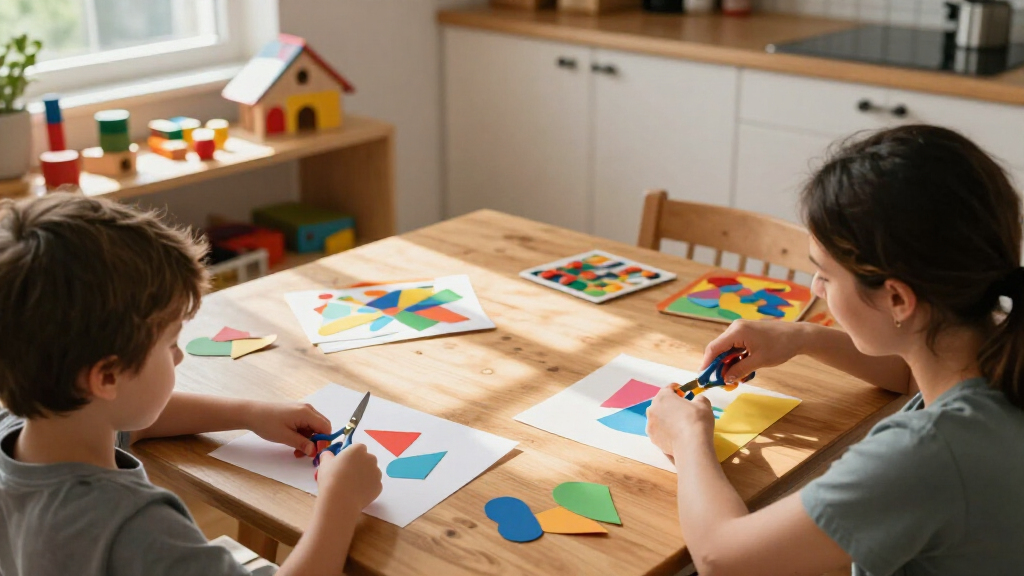
To evaluate these family-friendly educational toys, I focused on factors that matter most to parents and caregivers: learning potential, ease of use, durability, safety, and value for money. I prioritized toys that support developmental skills like problem-solving, creativity, and literacy, while also considering the age range and complexity. Toys that offer multiple ways to play or expand with additional components earned higher rankings. Cost-effectiveness was also a factor, especially for families looking for long-term value. Ultimately, the selection aims to present options that blend fun with meaningful learning, ensuring each toy is suited to different family needs and budgets.| family-friendly educational toy | Material |
|---|---|
| Magnetic Wooden Fishing Game T | Wood |
| Montessori Busy Book Color Sor | Non-toxic, safe materials |
| Montessori Busy Book Color Sor | — |
| ThinkFun Gravity Maze | — |
| Melissa & Doug Pattern Blocks | Solid wood |
| See & Spell CVC Word Spelling | Wood |
| Educational Insights Kanoodle | — |
| PicassoTiles 100 Piece Magneti | Magnetic plastic |
| Speak & Spell Educational Lear | — |
| Matching Letter Game for Presc | — |
| Talking Flash Cards for Toddle | — |
| Chuckle & Roar Alphabet Matchi | Cardboard |
Factors to Consider When Choosing Family-friendly Educational Toys
Choosing the right educational toy for your family involves considering multiple factors beyond just the price or brand. A well-selected toy can support development, sustain interest, and last through years of play. To help you make an informed decision, here are some key considerations to keep in mind when shopping for family-friendly educational toys.Age Appropriateness and Developmental Stage
Always match the toy to your child’s current developmental level to maximize engagement and safety. Toys that are too simple may bore older children, while overly complex options can frustrate younger ones. Look for age labels and developmental benefits listed by manufacturers, but also consider your child’s unique interests and skills. This ensures the toy supports their growth without becoming a source of frustration or boredom.
Educational Focus and Skill Development
Identify what skills you want to promote—be it literacy, math, problem-solving, or creativity. Some toys excel at specific areas, like spelling games or building blocks, while others offer broader learning opportunities. Combining different types of toys can provide a balanced developmental experience. Be cautious of toys that claim to be educational but lack meaningful engagement or clear skill targets.
Durability and Safety
Since children can be rough with toys, durability is critical. Look for high-quality materials that can withstand frequent use, especially for active or younger kids. Safety features such as non-toxic paints, rounded edges, and secure parts are non-negotiable. Reading reviews about long-term wear can reveal how well a toy holds up over time, saving you money and worry.
Ease of Use and Maintenance
Educational toys should be intuitive and simple to set up, especially for younger children who are learning independence. Consider how easy it is to clean and store the toy, as clutter and mess can reduce the likelihood of regular use. Toys with clear instructions and minimal assembly tend to promote more frequent and independent play.
Price and Longevity
While investing in higher-priced toys can mean better quality and more features, it’s vital to evaluate whether they offer lasting value. Durable, expandable, or multi-skill toys can provide years of use, making the higher initial cost worthwhile. Conversely, very inexpensive toys might not withstand heavy use or may lack educational depth, requiring frequent replacement.
Frequently Asked Questions
How do I choose age-appropriate educational toys for my preschooler?
Select toys that are labeled for preschool ages and support key developmental skills like fine motor control, counting, or early literacy. Observe your child’s current interests and abilities to pick options that challenge them just enough without causing frustration. Toys with simple rules, safety features, and engaging visuals tend to be most effective at this stage. Rotating toys periodically can also keep their interest high and introduce new learning opportunities.
Are STEM toys suitable for all children or only certain ages?
Most STEM toys are designed with specific age ranges in mind, ensuring the complexity and safety are appropriate. For younger children, look for simplified versions that introduce basic concepts like building or sorting, while older kids can handle more advanced problem-solving challenges. It’s best to choose toys aligned with your child’s current skills and gradually introduce more complex options to promote ongoing learning.
How can I tell if a toy is truly educational or just a toy with a label?
Assess whether the toy encourages active engagement and skill-building rather than passive play. Educational toys should promote critical thinking, creativity, or literacy, and often include features like problem-solving puzzles or prompts. Reading reviews or exploring the learning outcomes listed by the manufacturer can also help distinguish meaningful educational value from superficial labels.
What safety standards should I look for in educational toys?
Ensure the toy complies with safety standards such as ASTM, EN71, or other relevant certifications in your country. Check for non-toxic paints, small parts that pose choking hazards, and sturdy construction that won’t break easily. Prioritize toys with rounded edges, secure fastenings, and clear age recommendations to reduce any risk of injury.
Is it better to buy one high-quality educational toy or several cheaper options?
Generally, investing in a few high-quality, versatile toys that support multiple skills provides better value and durability over time. Quality toys often last longer and offer more engaging learning experiences. Cheaper toys may need frequent replacement and often lack depth, which can limit their educational benefits. Balancing cost with durability and developmental value helps ensure your investment makes a meaningful difference.
Conclusion
For families seeking the best overall balance of fun and learning, the Magnetic Wooden Fishing Game offers a versatile and engaging experience for preschoolers. If you’re prioritizing long-term value and creative possibilities, the PicassoTiles Magnetic Blocks serve as a durable, expandable set suitable for multiple ages. For those new to educational toys, simpler options like the Matching Letter Game provide straightforward introduction to literacy skills. Meanwhile, parents focused on STEM development will find the Gravity Maze a challenging and rewarding choice. Ultimately, selecting the right toy depends on your child’s age, interests, and your educational goals.