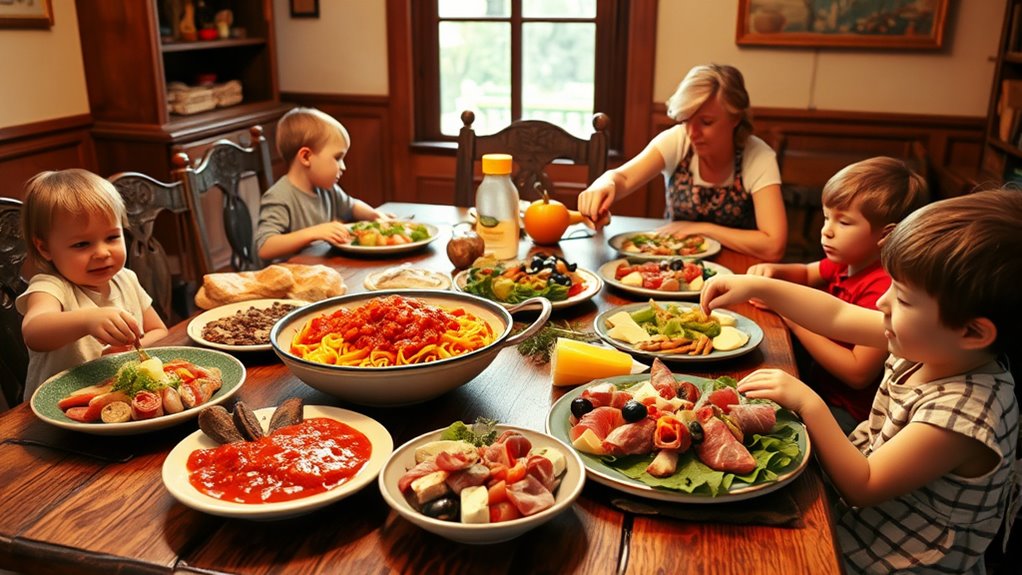

Introducing children to Italian family dining means involving them in meal preparations, such as setting the table or helping with ingredients. Share stories about regional dishes and the history behind traditional recipes, emphasizing the cultural importance of food. Encourage patience during multi-course meals that promote conversation and connection. By actively engaging kids in these customs, they learn to appreciate family bonds, regional diversity, and the heritage behind each dish—discover more about these rich traditions as you continue.
Key Takeaways
- Involve children in meal preparation to teach practical skills and cultural significance of ingredients.
- Use mealtimes as opportunities for storytelling, sharing family news, and reinforcing bonds.
- Introduce children to regional Italian dishes to foster appreciation for local traditions and diversity.
- Emphasize the importance of patience and savoring each course during slow-paced family meals.
- Explain the cultural meanings behind foods and customs to deepen children’s understanding of Italian heritage.
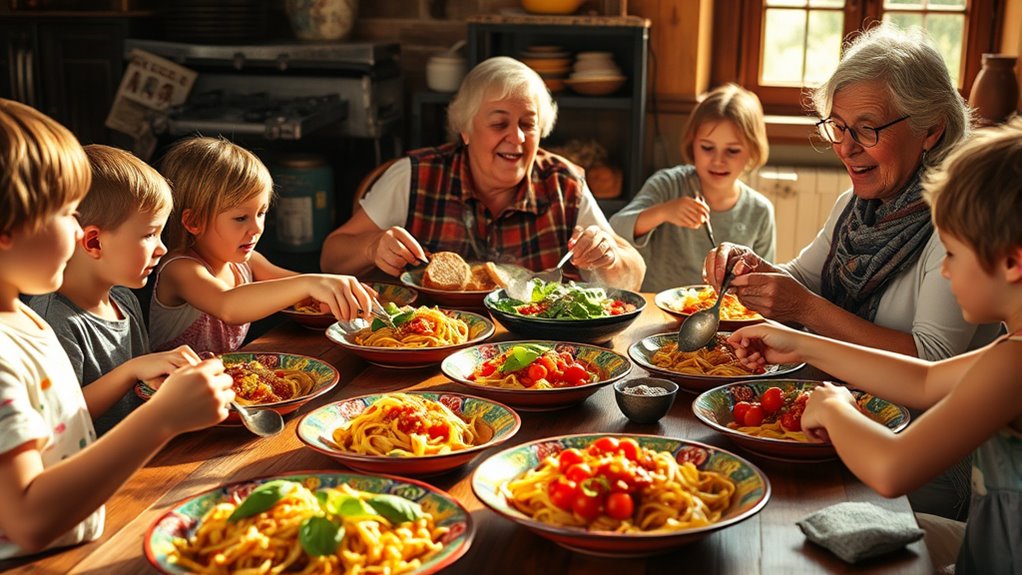
Italian meal traditions are deeply rooted in history and culture, shaping how families gather and enjoy food together. When you introduce children to these traditions, you’re not just teaching them about what to eat; you’re passing down a way of life that emphasizes connection, respect, and shared experiences. Each meal becomes an opportunity to bond, to learn about your heritage, and to appreciate the cultural significance behind every dish. Italian cuisine is diverse, with regional variations that influence how meals are prepared and enjoyed. For example, in the north, you might find rich butter-based sauces and hearty risottos, while in the south, olive oil, fresh vegetables, and seafood take center stage. Recognizing these regional differences helps children understand that Italian food isn’t uniform—it’s a reflection of local history, climate, and resources.
As you teach your children about Italian meal traditions, emphasize the importance of family gatherings. These meals often serve as a platform for storytelling, sharing news, and celebrating special occasions. It’s customary to have multiple courses, starting with antipasti or appetizers, followed by pasta, then a main dish, and finishing with dessert. This structure teaches children patience and appreciation for each part of the meal. You might also explain the significance of certain foods, like why pasta is a staple and how it varies regionally—think of the different shapes and sauces that symbolize local identities. In some areas, meals are slow-paced, encouraging conversation and savoring every bite, reinforcing the idea that food is meant to be enjoyed, not rushed. Additionally, understanding the zodiac signs of each family member can sometimes influence meal traditions and how family members interact during these gatherings.
Involving children in meal preparation is another way to instill these traditions. Let them help set the table, choose ingredients, or even cook simple dishes. This hands-on approach not only teaches practical skills but also deepens their understanding of the cultural significance behind each ingredient and recipe. Encourage them to ask questions about why certain foods are eaten and how they’re connected to family history or regional customs. Over time, kids learn to appreciate the ritual of sharing a meal, understanding that it’s more than just sustenance—it’s a celebration of community and heritage. By highlighting regional variations and cultural significance, you help your children develop a genuine respect for Italian food traditions and the values they carry forward.

Tuscany 13-Inch Stoneware Pasta Bowl – Vibrant Printed Countryside Design – Wide Deep Serving Bowl for Pasta, Salads, Risotto & Shared Meals – Durable Italian-Inspired Serveware
Celebrate the beauty of Italian countryside living with this spacious Tuscany 13-inch pasta bowl, designed to echo the…
As an affiliate, we earn on qualifying purchases.
As an affiliate, we earn on qualifying purchases.
Frequently Asked Questions
How Do Italian Families Choose Their Weekly Menus?
You usually choose your weekly menus based on traditional Italian meal planning, balancing seasonal ingredients and family favorites. You source ingredients from local markets or trusted suppliers to guarantee freshness. You often plan around fresh vegetables, pasta, and meats, creating a variety of dishes that reflect regional influences. This approach helps you keep meals authentic, enjoyable, and easy to prepare, making family dinners a cherished routine.
What Are Common Italian Table Manners for Children?
You should teach children to use proper dining etiquette, like saying “please” and “thank you,” keeping their hands visible, and not reaching across the table. Respectful behavior includes waiting for everyone to be served before eating, using utensils correctly, and engaging politely in conversation. Encourage them to show appreciation for the meal and avoid loud noises or interrupting. These habits help children understand the importance of respectful behavior during family meals.
How Do Italian Meal Traditions Vary Across Regions?
You’ll find that Italian meal traditions vary across regions, each with its own regional flavors and culinary influences. For example, in the north, you might enjoy hearty risottos and polentas, while in the south, vibrant seafood and pasta dishes prevail. These differences show that you can’t judge a book by its cover; regional customs shape dining habits, making each area’s traditions uniquely flavorful and rich.
At What Age Do Children Typically Start Helping With Cooking?
You’ll find that children typically start helping with cooking around age 4 or 5, reaching early cooking milestones. At this age, they can handle age-specific tasks like stirring, washing vegetables, or simple pouring. As they grow, around ages 8 to 10, they can take on more complex tasks like chopping soft ingredients or assisting with dough. Encouraging participation early fosters skills and appreciation for family dining traditions.
How Are Special Occasions Celebrated During Italian Family Meals?
During special occasions, you’ll notice festive rituals and holiday customs that bring everyone together. You might light candles, share traditional dishes, or say a prayer before eating. Children often participate in these celebrations by helping set the table or reciting a toast. These moments strengthen family bonds, teach cultural values, and create lasting memories. Embracing these customs makes every holiday meal a meaningful experience for you and your loved ones.

Baketivity 31-Piece Kids Baking Tools Set – Real Cooking Utensils for Children – Safe, Durable, and Fun Kitchen Accessories – Gift for Young Chefs
REAL TOOLS FOR REAL BAKING – This 31-piece kids’ baking set includes a whisk, rolling pin, cookie scoop,…
As an affiliate, we earn on qualifying purchases.
As an affiliate, we earn on qualifying purchases.
Conclusion
By embracing Italian meal traditions, you’re planting seeds of family bonds that grow stronger with each shared dish. Introducing children to these customs isn’t just about food; it’s like passing down a treasure chest of love, culture, and togetherness. As you gather around the table, remember that these traditions are the threads weaving your family’s story, turning simple meals into lifelong memories. Keep these customs alive, and watch your family’s bond blossom like a vibrant Italian garden.

The Italian Celebration Cookbook: 130 Recipes Inspired by Family Traditions and Seasonal Joy
As an affiliate, we earn on qualifying purchases.
As an affiliate, we earn on qualifying purchases.

Mikasa Italian Countryside 12 Piece Melamine Outdoor Dinnerware Set, Service for 4
OUTDOOR DINNERWARE SET: The fluted bands and column like detailing of this dinnerware recall classical Italian architecture
As an affiliate, we earn on qualifying purchases.
As an affiliate, we earn on qualifying purchases.