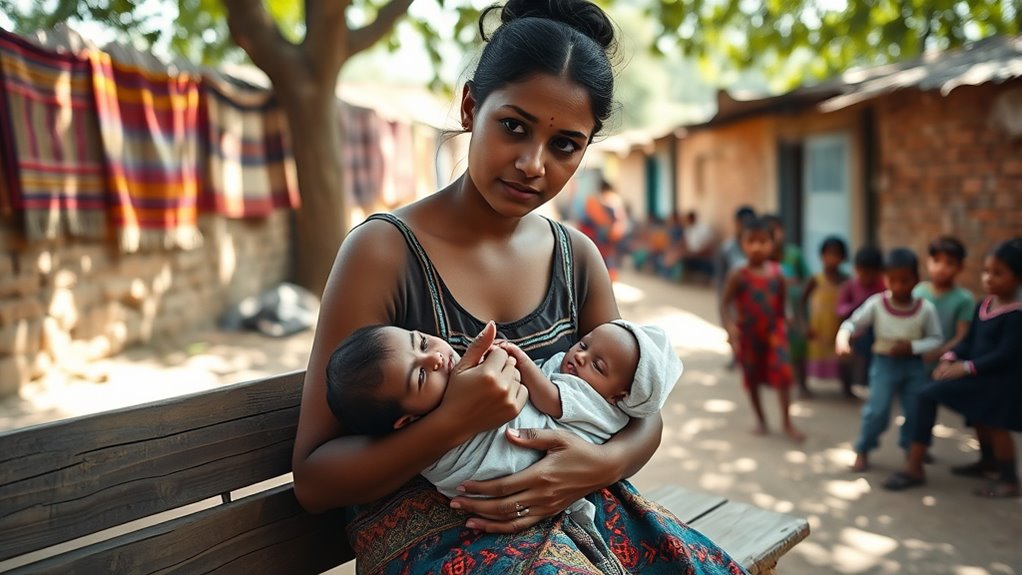

In low and middle-income countries, maternal mental health often gets overlooked due to stigma, misconceptions, and lack of awareness. Women face barriers like social judgment and limited access to support, which prevent many from seeking help. Community engagement, open conversations, and integrating mental health into routine maternal care can reduce stigma and promote awareness. Continuously, efforts are underway to create safe spaces and inclusive support systems—exploring these solutions further can give you a clearer understanding.
Key Takeaways
- Maternal mental health issues like depression and anxiety are prevalent but often go unrecognized and untreated in LMICs.
- Stigma, social misconceptions, and fear of judgment significantly hinder women from seeking mental health support.
- Community engagement and awareness campaigns are essential to normalize mental health conversations and reduce stigma.
- Integrating mental health services into routine maternal healthcare and training providers improve access and early intervention.
- Collective community efforts and safe spaces are crucial to creating an inclusive environment that prioritizes maternal mental well-being.
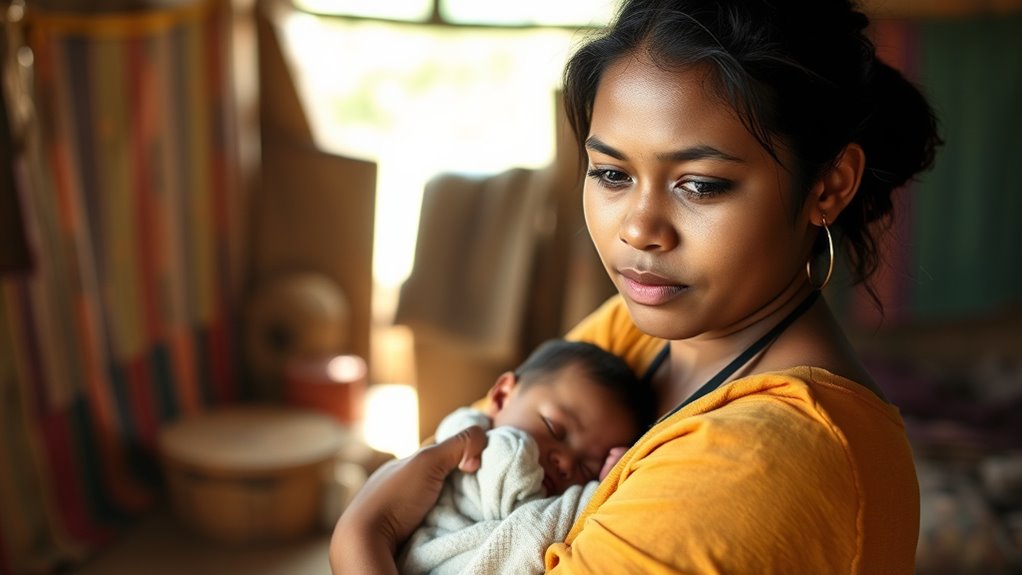
Maternal mental health often remains overlooked in low and middle-income countries, despite its critical impact on both mothers and their children. Many women experience depression, anxiety, and other mental health issues during and after pregnancy, yet these conditions frequently go unnoticed or untreated. One of the biggest barriers to addressing this challenge is stigma. In many communities, mental health struggles are misunderstood, dismissed, or seen as a sign of personal weakness. This stigma discourages women from seeking help, fearing judgment or social exclusion. To make real progress, efforts must focus on stigma reduction. You can help by promoting open conversations about mental health, sharing information that normalizes these experiences, and challenging harmful stereotypes. When communities become more accepting, women feel safer and more empowered to seek support.
Community engagement plays a crucial role in transforming how maternal mental health is perceived and managed. You can involve local leaders, health workers, and community members in awareness campaigns that highlight the importance of mental well-being during and after pregnancy. These efforts create a supportive environment where women don’t feel isolated with their struggles. By organizing community dialogues, educational workshops, and peer support groups, you foster understanding and empathy. When people see mental health as a shared concern rather than an individual failing, stigma begins to diminish. Community engagement also helps identify women who might be suffering silently, ensuring they receive the care they need. When trusted community figures endorse mental health services, women are more likely to access help without fear of judgment.
Furthermore, integrating mental health services into existing maternal healthcare programs enhances accessibility and acceptance. When mental health care is normalized as part of routine prenatal and postnatal care, women are more inclined to seek assistance early. Training healthcare providers to recognize and address mental health issues ensures that support is available at every touchpoint. As you work toward these solutions, remember that reducing stigma isn’t a quick fix—it’s a continuous process that relies on collective effort. Building awareness, fostering community participation, and creating safe spaces for women to share their experiences are essential steps. In this way, you help create a more inclusive, understanding environment where maternal mental health receives the attention it deserves, ultimately benefiting mothers, children, and entire communities.
The Perinatal Patient: A Compassionate Approach to Treating Postpartum Depression, Anxiety, and Related Disorders
As an affiliate, we earn on qualifying purchases.
As an affiliate, we earn on qualifying purchases.
Frequently Asked Questions
How Do Cultural Beliefs Influence Maternal Mental Health Perceptions?
Cultural beliefs shape how you perceive maternal mental health, often emphasizing traditional practices and stigmas. You might see mental health issues as a sign of weakness or spiritual weakness, creating barriers to seeking help. These beliefs can lead to stigma barriers, making women hesitant to discuss their struggles. Understanding and respecting these cultural influences helps you address misconceptions and encourages more supportive, culturally sensitive approaches to maternal mental health care.
What Role Can Technology Play in Improving Mental Health Support?
You can leverage technology by using digital interventions and mobile health solutions to improve mental health support. These tools provide accessible, affordable, and discreet care options, especially in remote or underserved areas. By offering psychoeducation, screening, and counseling through apps or messaging platforms, you empower mothers to seek help early and regularly. This approach bridges gaps in mental health services and fosters ongoing support tailored to their needs.
How Can Community-Based Programs Be Effectively Implemented?
You can effectively implement community-based programs by prioritizing home visits and peer support networks. Studies show that women engaged in peer groups are 30% more likely to seek mental health help. Start by training community members to conduct home visits, fostering trust and understanding. Encourage peer support groups where mothers share experiences, provide encouragement, and reduce stigma, creating a supportive environment that improves maternal mental health outcomes.
What Are the Long-Term Impacts of Untreated Maternal Mental Health Issues?
If you leave maternal mental health issues untreated, you risk experiencing long-term psychological effects like depression and anxiety, which can persist for years. These issues may lead to intergenerational trauma, affecting your child’s development and well-being. Over time, unresolved mental health problems can impair your ability to bond, care for your family, and maintain relationships, creating a cycle that impacts future generations. Addressing these issues early can prevent lasting emotional and psychological consequences.
How Can International Policies Better Address Maternal Mental Health Needs?
You can’t fix what you don’t address, so international policies need to close gaps in understanding maternal mental health. To do this, prioritize funding strategies that boost mental health services and integrate them into maternal care. Address policy gaps by including diverse stakeholders, ensuring culturally sensitive approaches, and promoting global collaboration. These steps will better meet maternal mental health needs and create sustainable, impactful solutions for women worldwide.

Ancestral Supplements Grass Fed Beef Placenta Supplement with Liver, 180 Ct
- Supports Hormone Balance and Energy: Grass-fed beef organ supplement for women
- Promotes Skin Elasticity and Youthfulness: Rich in nutrients for skin and menopause support
- Whole Food Nutrition Source: Contains beef placenta and liver with essential vitamins and minerals
As an affiliate, we earn on qualifying purchases.
As an affiliate, we earn on qualifying purchases.
Conclusion
You might wonder if change is possible amid these challenges. The truth is, with increased awareness, community support, and integrated healthcare, you can help bridge the gap in maternal mental health. Just as a single seed can grow into a mighty tree, your efforts can foster hope and resilience in low and middle-income countries. Remember, every small step you take can spark a brighter future for mothers and their children.

Good Moms Have Scary Thoughts: A Healing Guide to the Secret Fears of New Mothers
As an affiliate, we earn on qualifying purchases.
As an affiliate, we earn on qualifying purchases.

Maternal Mental Health Matters Floral Mom Postpartum Support T-Shirt
- Design Symbolizes Care and Support: Floral design for maternal mental health awareness
- Ideal for Awareness Events: Perfect for awareness month and community events
- Suitable for Moms and Supporters: Worn by postpartum mothers and caregivers
As an affiliate, we earn on qualifying purchases.
As an affiliate, we earn on qualifying purchases.