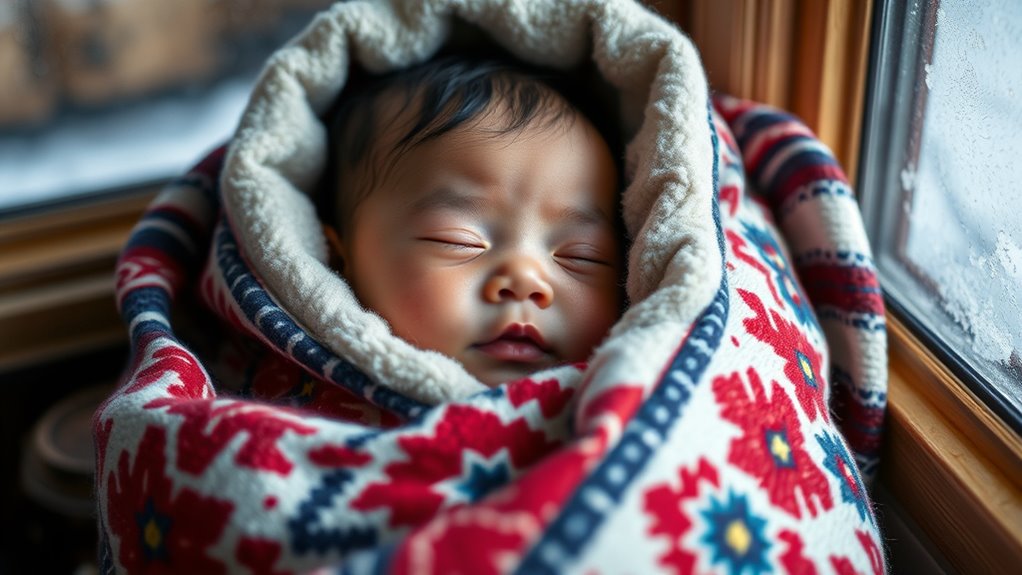

Inuit baby-bundle sleep sacks are rich in history and cultural significance, designed to protect infants from harsh Arctic conditions. Made from local materials like animal skins and fur, they blend traditional craftsmanship with practical features such as waterproof and wind-resistant layers. These bundles often feature symbolic motifs and vibrant patterns that connect children to their heritage. Continuing to explore reveals how these garments embody resilience, community values, and the enduring spirit of Inuit culture.
Key Takeaways
- Inuit baby bundles are traditional garments designed to protect infants from Arctic cold, symbolizing care, resilience, and cultural heritage.
- They are crafted using sustainable Arctic materials like caribou fur, seal skin, and whale bone, reflecting environmental respect.
- The designs incorporate meaningful motifs, geometric patterns, and animal symbols passed down through generations, preserving cultural stories.
- Colors such as red, blue, white, and black carry spiritual and protective significance, enhancing the garment’s cultural symbolism.
- Modern adaptations blend traditional craftsmanship with eco-friendly materials and contemporary features, supporting cultural continuity and innovation.
The Origins and Historical Significance of Inuit Baby Sleep Sacks
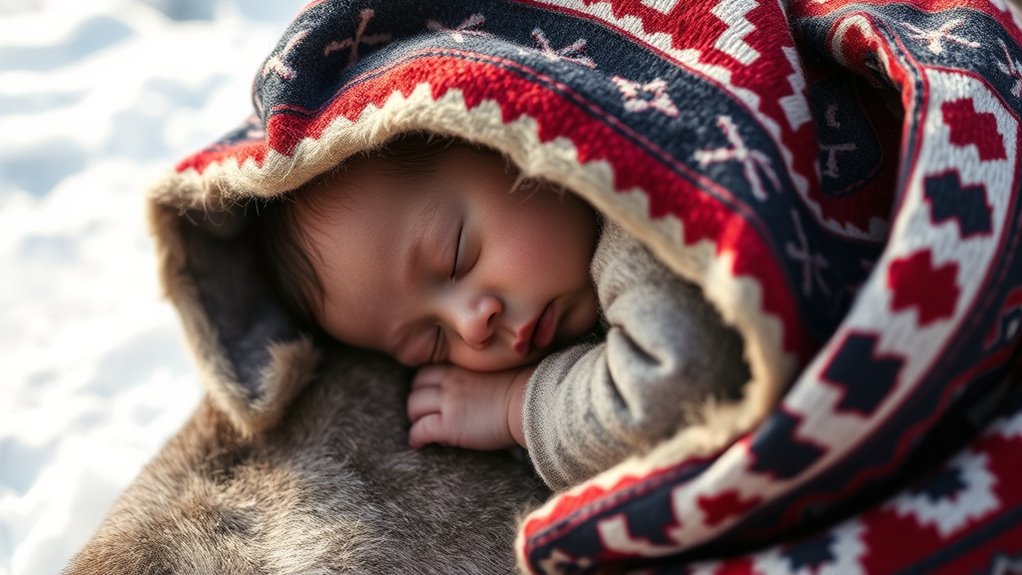
The origins of Inuit baby sleep sacks trace back centuries, rooted in the practical needs of Arctic life. You might imagine families creating these warm coverings to protect infants from freezing temperatures, wind, and snow. Inuit communities needed reliable ways to keep their babies safe and comfortable during harsh winters, so they crafted sleep wear that provided insulation and security. These early sleep sacks weren’t just functional; they represented care, resilience, and cultural ingenuity. Over generations, they became integral to Inuit parenting, symbolizing protection and warmth. The design reflects a deep understanding of the environment and a commitment to safeguarding their youngest members. Additionally, the development of traditional clothing highlights how these garments were adapted to the unique Arctic climate. Today, these traditional sleep sacks hold cultural significance, connecting families to their history and environment.
Materials and Craftsmanship Behind Traditional Inuit Sleep Wear
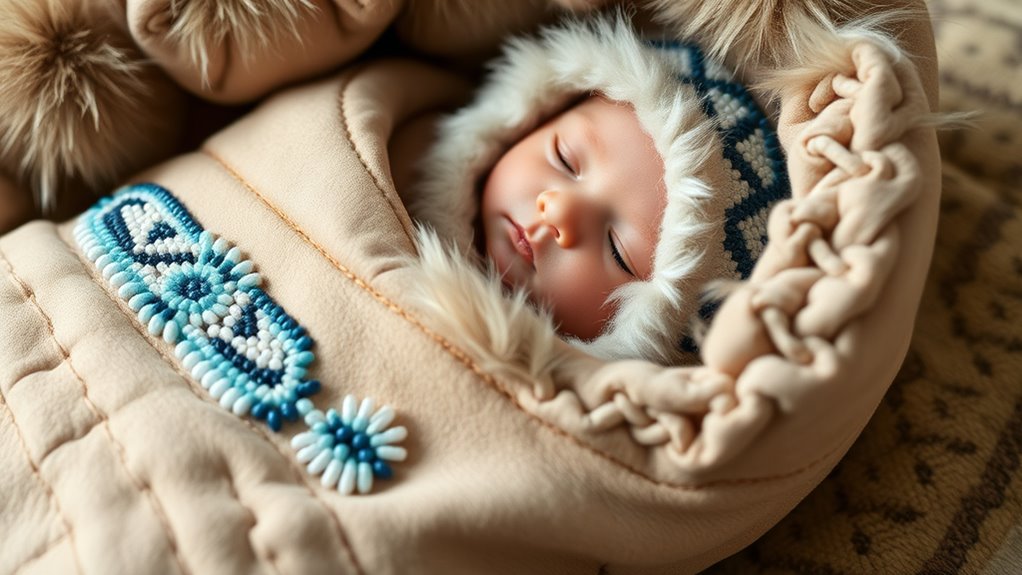
Inuit artisans have historically crafted sleep sacks using materials sourced directly from their environment, demonstrating a deep understanding of their harsh climate. They select materials that provide insulation and durability, ensuring comfort and protection for infants. The key components include:
- Caribou fur – prized for its warmth and water resistance, used in lining for insulation.
- Seal skin – lightweight yet durable, often employed for outer layers.
- Whale bone and sinew – utilized in the construction of fastenings and structural elements.
- Toughened skins and hides – carefully prepared for long-lasting wear and weather resistance.
These materials reflect a mastery of craftsmanship, blending functionality with resourcefulness. Every element is chosen to withstand extreme cold while maintaining comfort, showcasing the artisans’ skill and adaptability. Additionally, understanding material selection plays a crucial role in creating durable and effective sleep wear.
Symbolism and Artistic Elements in Inuit Baby‑Bundles
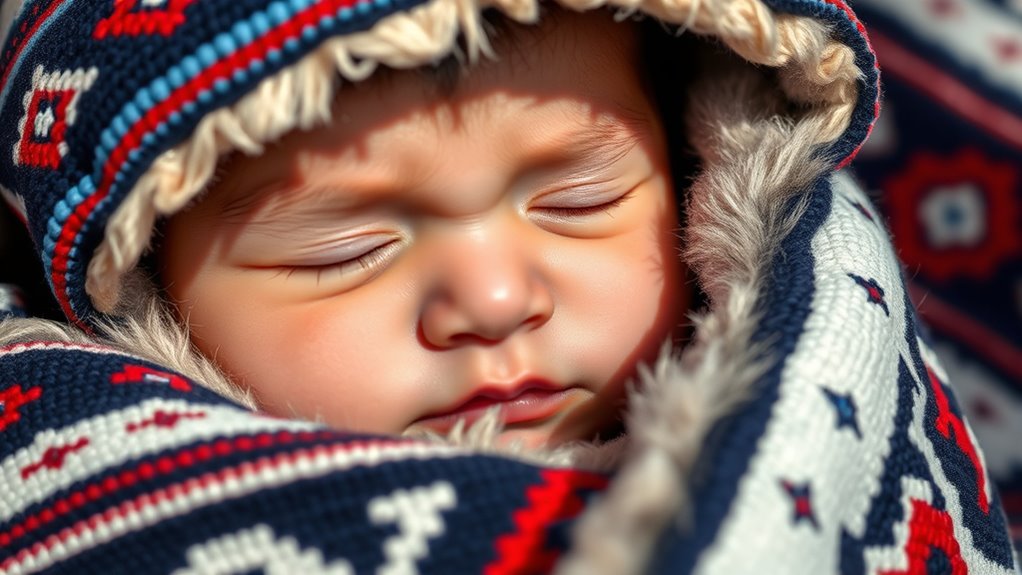
You’ll notice the traditional motifs and patterns woven into Inuit baby‑bundles, each carrying cultural meaning. The use of natural materials not only reflects practicality but also symbolism tied to the environment. Color choices often hold symbolic significance, adding deeper layers to the artistic design. Incorporating cultural symbols into the patterns emphasizes the rich storytelling tradition of the Inuit community.
Traditional Motifs and Patterns
Traditional motifs and patterns woven into Inuit baby‑bundles carry deep symbolism and artistic significance. These designs reflect cultural stories, spiritual beliefs, and community identity. When you examine these patterns, you’ll notice they often incorporate:
- Animal symbols, representing strength, guidance, or protection.
- Geometric shapes, symbolizing natural elements like ice, snow, or wind.
- Repeated motifs, emphasizing continuity and tradition.
- Color combinations, conveying specific meanings like vitality or tranquility.
Each pattern is carefully chosen, often passed down through generations. These motifs serve not only decorative purposes but also embody values and narratives central to Inuit culture. Recognizing these designs connects you with a history rooted in resilience, spirituality, and artistic expression. Cultural symbolism plays a key role in understanding the significance behind these intricate patterns.
Use of Natural Materials
The craftsmanship behind Inuit baby‑bundles is deeply rooted in the use of natural materials, which carry their own symbolic meanings and artistic qualities. You’ll notice that animal skins, such as caribou, seal, and fox fur, aren’t just practical; they embody respect for the animals and their essential roles in survival. These materials also reflect a connection to the land and environment, emphasizing harmony with nature. The soft, insulating qualities of these materials ensure warmth and comfort for the baby in harsh Arctic conditions. Artists select and prepare these resources with care, often incorporating traditional techniques that highlight their natural textures and patterns. By using natural materials, Inuit artisans preserve cultural heritage and create functional, beautiful items that honor their environment and spiritual beliefs. Additionally, the horsepower of traditional and modern tools used in crafting these bundles demonstrates the blend of innovation and tradition in Inuit craftsmanship.
Symbolic Color Significance
Colors in Inuit baby-bundles are more than just aesthetic choices; they carry deep symbolic meanings rooted in cultural beliefs and spiritual traditions. You’ll notice specific colors representing protection, life, and spiritual connection. For example:
- Red symbolizes vitality and life force, believed to ward off evil spirits.
- Blue signifies the sky and water, connecting the child to nature and spiritual domains.
- White reflects purity and the snow-covered landscape, offering protection and clarity.
- Black often represents strength and resilience, emphasizing endurance through harsh conditions.
These colors are carefully chosen, often combined with intricate patterns, to convey cultural stories and spiritual beliefs. They serve as visual language, embedding protective and meaningful qualities into each baby-bundle, which is an example of how cultural symbolism plays a vital role in traditional Inuit attire.
Practical Design Features for Arctic Climate Adaptation
You’ll want to contemplate how insulation and materials keep babies warm in extreme cold. Wind and moisture resistance are vital to prevent heat loss and keep them dry. Additionally, ergonomic design ensures babies can move comfortably without compromising protection.
Insulation and Material
To keep Inuit babies warm in extreme Arctic conditions, sleep sacks are crafted with high-quality insulation and durable, insulating materials. These materials trap heat effectively, ensuring your baby stays warm even in the harshest cold. The insulation often includes natural materials like down or wool, which provide excellent thermal retention. You’ll also find that the outer fabric is made from sturdy, wind-resistant textiles that protect against cold drafts. Here are key features:
- Thick, natural insulation like down or wool for maximum warmth
- Outer fabrics that are durable and wind-resistant
- Seam-sealed construction to prevent heat escape
- Lined with soft, insulating layers for added comfort
These features combine to create a reliable barrier against the Arctic cold while maintaining comfort for your baby.
Wind and Moisture Resistance
Because the Arctic environment involves constant wind and moisture, Inuit baby sleep sacks are designed with wind-resistant and waterproof features that provide essential protection. The outer fabric is tightly woven and treated with waterproof coatings, preventing rain, snow, and wind from penetrating. These materials help keep your baby dry and shielded from chilling drafts. Additionally, the design often includes sealed seams and adjustable closures to enhance water resistance and block out cold air. The sacks are crafted to withstand harsh weather, ensuring your baby remains warm and dry during outdoor activities or winter camps. This practical approach reflects the Inuit’s deep understanding of their environment, offering crucial protection that preserves body heat and promotes safe, comfortable sleep in extreme cold conditions. Incorporating natural materials like wool or hides can further improve insulation and moisture management.
Ergonomic and Movement Ease
The design of Inuit baby sleep sacks prioritizes ergonomic features that allow for easy movement and comfort in extreme cold. These sacks are tailored to support your baby’s natural posture, reducing strain and promoting healthy development. They incorporate practical features such as:
- Flexible, stretchable fabric that adapts to your baby’s movements
- Wide armholes for unrestricted arm mobility
- Zipper placements that minimize discomfort and allow quick dressing
- Seamless construction to prevent chafing during active movement
These elements combine to ensure your baby can shift, stretch, and move comfortably without sacrificing warmth or protection against the cold. The focus on ergonomic design helps your little one stay cozy while maintaining agility, critical in Arctic conditions.
The Role of Community and Cultural Values in Crafting Sleep Sacks
Community and cultural values deeply influence how Inuit sleep sacks are crafted, ensuring they reflect the traditions and needs of the people. You see, these items aren’t just practical; they embody stories, beliefs, and social bonds. The designs often incorporate symbols and motifs passed down through generations, connecting infants to their cultural heritage. Gathering as a community, artisans prioritize warmth, durability, and functionality, respecting the Arctic environment’s demands. You’ll notice that the techniques and materials used—like animal skins and furs—are chosen with care, emphasizing sustainability and respect for nature. These craft processes foster a shared identity and transmit cultural knowledge, making each sleep sack more than just a garment. Instead, it becomes a meaningful expression of collective values and ancestral traditions. Additionally, the cultural significance of these items helps to strengthen community bonds and preserve Inuit heritage for future generations.
Modern Adaptations and Preservation of Inuit Baby‑Bundles
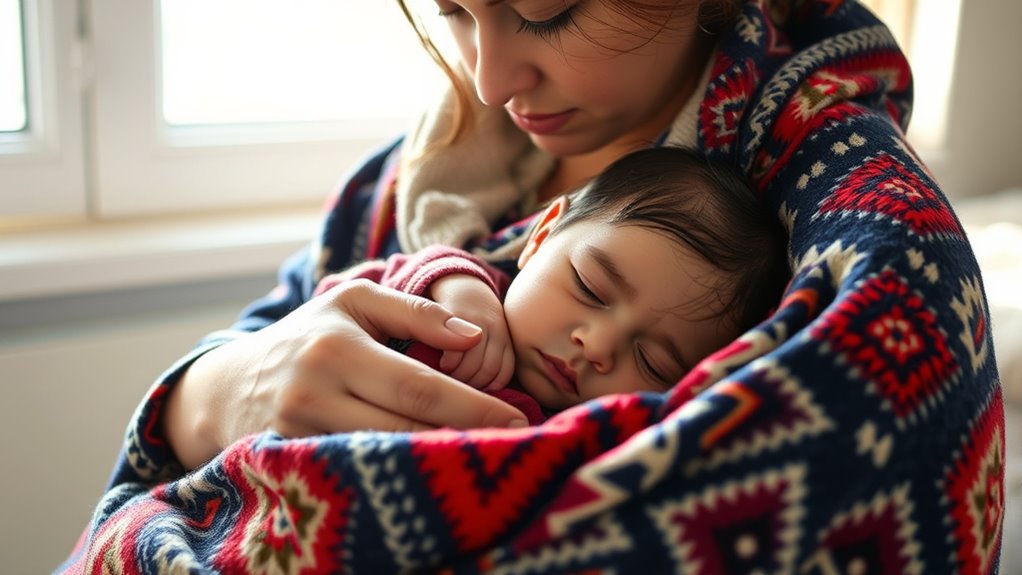
Modern adaptations of Inuit baby bundles blend traditional techniques with contemporary materials and designs to meet today’s needs while honoring cultural heritage. These innovations guarantee the bundles remain functional, safe, and relevant in modern settings. You might see:
- The use of breathable, lightweight fabrics that improve comfort and safety.
- Incorporation of vibrant, culturally inspired patterns that celebrate Inuit artistry.
- Adjustable designs that accommodate growth and changing needs.
- Integration of sustainable, eco-friendly materials to support environmental stewardship.
- Cultural preservation efforts ensure that traditional craftsmanship and stories continue to be passed down through these modern adaptations.
These adaptations help preserve the cultural significance of Inuit baby-bundles while making them accessible and practical for contemporary families. By balancing tradition with innovation, communities ensure these customs endure and continue to serve new generations.
Personal Stories: Inuit Mothers and Their Baby‑Bundles
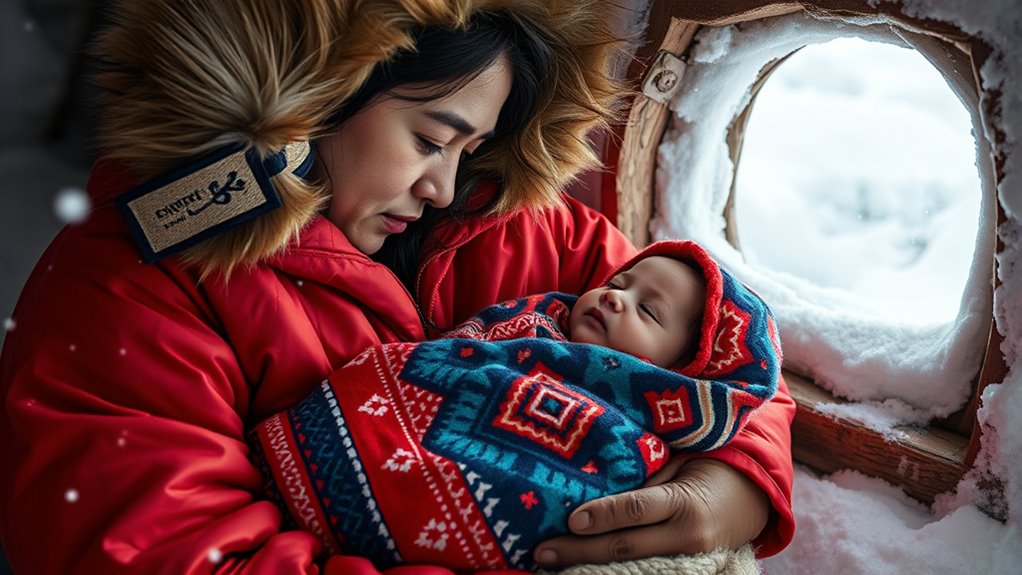
Many Inuit mothers cherish the tradition of crafting and using baby bundles, seeing them as a vital link to their ancestors and cultural identity. They often share personal stories of how making and wrapping their babies in these bundles connects them to their heritage. These stories highlight the deep respect for tradition and the importance of cultural continuity. For many, creating a baby bundle is a rite of passage, symbolizing love and protection. Additionally, the practice of passing down techniques helps preserve cultural practices across generations.
The Future of Inuit Cultural Practices in Infant Care
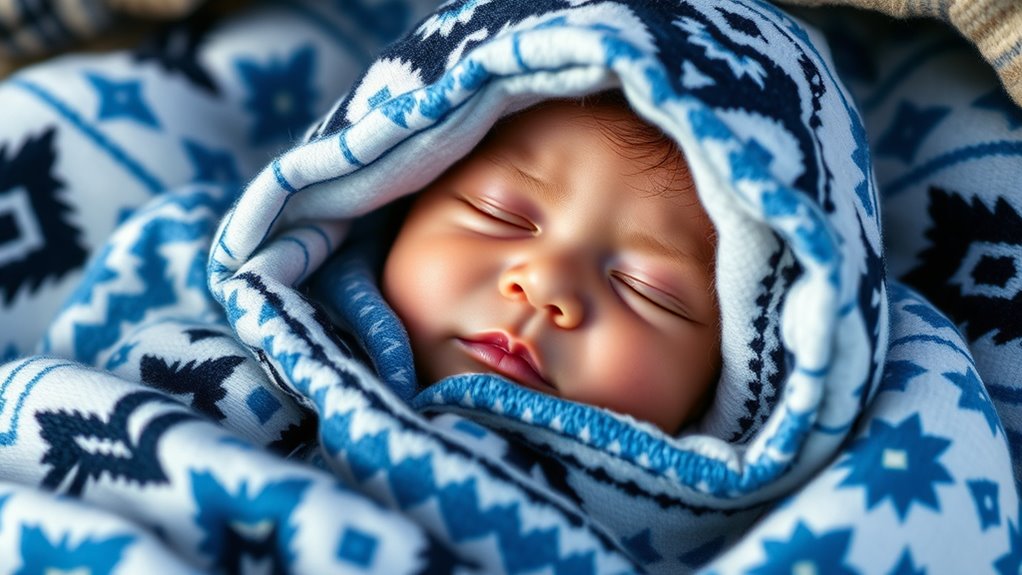
As Inuit mothers continue to cherish the tradition of crafting baby bundles, there’s growing interest in how these practices will evolve in the future. You can expect several key changes shaping this cultural practice.
- Increased integration of modern materials while maintaining traditional designs
- Greater emphasis on sustainable and eco-friendly resources
- Adoption of new techniques influenced by technological advancements
- Preservation efforts through community-led workshops and education programs
These developments aim to honor Inuit heritage while adapting to contemporary needs. As younger generations embrace innovation, the core values of warmth, safety, and cultural identity remain central. The future of Inuit infant care will likely blend tradition and innovation, ensuring these practices endure and evolve for generations to come.
Frequently Asked Questions
How Are Inuit Baby Sleep Sacks Passed Down Through Generations?
You might wonder how Inuit baby sleep sacks are passed down through generations. Typically, elders gift or handcraft these traditional items to younger family members, preserving cultural practices. You could also see them as family heirlooms, with stories and techniques shared during gatherings. By doing so, the community keeps its heritage alive, ensuring that the knowledge of making and using these sleep sacks continues to thrive across generations.
What Specific Symbols Are Commonly Used in Inuit Baby‑Bundles?
Think of Inuit baby-bundles as a treasure chest of symbols passed through generations. You’ll notice animals like polar bears and foxes, representing strength and adaptability, along with geometric patterns that tell stories of tradition and environment. These symbols aren’t just decorations; they carry deep meaning, connecting your child to their ancestors and the Arctic’s spirit. Every stitch and symbol in the bundle is a thread woven into your family’s cultural fabric.
How Do Inuit Sleep Sacks Differ From Other Indigenous Infant Wear?
You’ll notice that Inuit sleep sacks differ from other indigenous infant wear through their unique materials and design. Inuit sleep sacks are often made from animal skins and furs, providing exceptional warmth suited for Arctic climates. They’re crafted to protect babies from extreme cold, unlike many other indigenous garments that focus on mobility or cultural expression. This specialized design guarantees infants stay warm and safe in harsh environments.
Are There Regional Variations in Inuit Baby‑Bundle Designs?
You’ll find regional variations in Inuit baby-bundle designs, reflecting local climates and materials. In colder areas, the sleep sacks tend to be thicker and more insulated, using caribou or seal fur for warmth. In milder regions, they might be lighter, using fewer materials. These differences help guarantee babies stay warm and comfortable regardless of where their community is located. So, design adapts to the environment, showing the Inuit’s resourcefulness.
How Do Inuit Communities Incorporate New Materials Into Traditional Sleep Sacks?
You see that Inuit communities adapt traditional sleep sacks by incorporating new materials like synthetic fabrics or modern insulation, balancing cultural heritage with practicality. They often blend traditional techniques with these innovations, ensuring the sleep sacks remain warm and functional. You might notice the use of waterproof or breathable fabrics alongside natural materials, reflecting a respect for tradition while embracing technological advancements to better protect infants in changing environments.
Conclusion
As you explore the rich tradition of Inuit baby-sleep sacks, you see how they’re more than just warm coverings—they’re woven stories of resilience and community. Like a guiding star in an Arctic sky, these bundles connect generations, blending history, artistry, and care. Embracing them, you honor a cultural legacy that keeps Inuit values alive, illuminating a path forward where tradition and innovation shine together, shaping the future of Arctic motherhood with warmth and purpose.